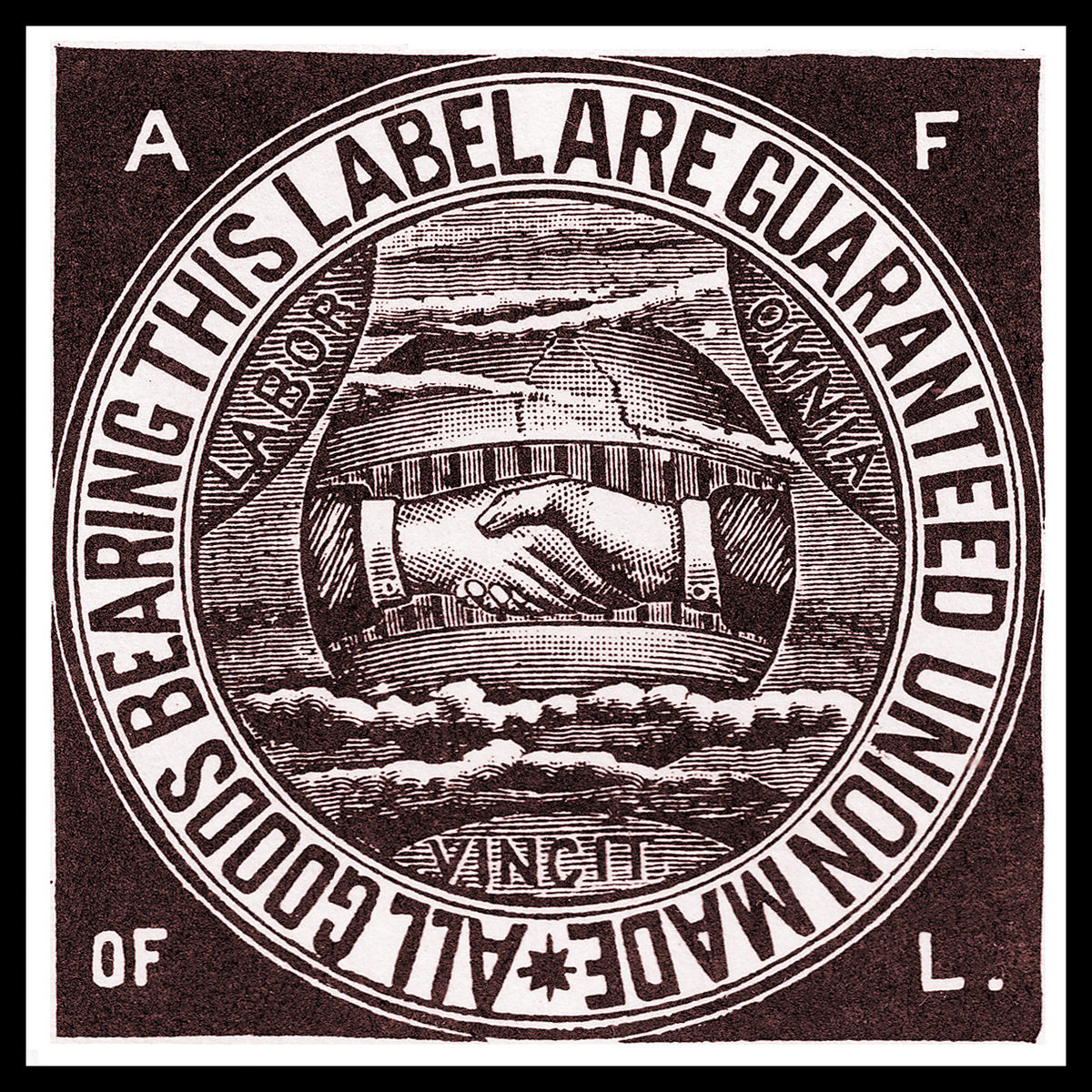
American Federation of Labor
54
MENTIONS
21
EPISODES
20
PODCASTS
Search complete. 54 mentions across 21 episodes found for "American Federation of Labor".
Oct 30, 2026

Ramneet ManraiGUEST
It called on all of these trade unions to have unrestricted admission of immigrant workers to the trade unions of every single country, for these trade unions to have low initiation fees, and for there to be a development of international trade union agreements.
Ramneet ManraiGUEST
And this resolution, it spoke almost directly against the backward policies adopted by the American Federation of Labor, or the AFL, that we learned a lot about this morning.
Ramneet ManraiGUEST
And as we learned, instead of organizing skilled and unskilled workers into a large industrial trade union, the AFL was adopting this policy of organizing only skilled workers into these small craft unions.
Ramneet ManraiGUEST
And naturally, this policy excluded immigrant workers.

speaker_0NARRATOR
The visually impaired men made brooms, whisks, carpets and other goods, and their home had increased the rent with no increase in their wages.
speaker_0NARRATOR
They formed a union and affiliated with the American Federation of Labor.
speaker_0NARRATOR
The boss told the New York Times that the men, quote, like the rest of the world, have got strike fever, end quote.
speaker_0NARRATOR
Music

Fred WestonGUEST
Now, the leaders of the AFL had actually made a deal after 29.
Joe AttardHOST
In case anybody doesn't know, the AFL is the American Federation of Labor.
Joe AttardHOST
So this is basically the overarching body that represented trade unions across
Fred WestonGUEST
the USA.

Shawn GudeGUEST
But that, I think that was the, that was the biggest one.
Shawn GudeGUEST
And so like, you know, take the 1908 or 1912 election when the party is growing, the labor movement in the U S is, as I said, a lot smaller and the labor movement, The labor movement, AFL, American Federation of Labor, the kind of dominant federation of labor, they're endorsing the Democratic Party.
Shawn GudeGUEST
And they're not endorsing the Socialist Party as they would in other countries.
Shawn GudeGUEST
So there's this kind of unbridgeable divide that the Socialist Party has never... able to overcome.

Matt PayneHOST
And then, less than a month later, on February the 12th, both Jane Addams and Lucy Parsons organized another hunger march.
Matt PayneHOST
And this time, the march was officially supported by not only Hull House, but also by Samuel Gompers and the American Federation of Labor.
Matt PayneHOST
What you may remember was the more moderate union that often competed with the wobblies of the IWW, which Lucy Parsons had helped found.
Matt PayneHOST
And after this second march, city officials would agree to a temporary relief program, offering employment to the hungry, giving them work on city infrastructure projects.
20 MINS LATER
Matt PayneHOST
But let us finally return to the subject at hand.
Matt PayneHOST
State power.
Matt PayneHOST
Because even if we accept that Hull House is an example of biopower, then how is it related to the state? And well, we need look no further than the Hunger March because Jane Addams, the American Federation of Labor, and Lucy Parsons all work together to pressure city officials to implement reforms to alleviate hunger and unemployment.
Matt PayneHOST
and they succeeded.

Shawn GudeGUEST
But that, I think that was the, that was the biggest one.
Shawn GudeGUEST
And so like, you know, take the 1908 or 1912 election when the party is growing, the labor movement in the U S is, as I said, a lot smaller and the labor movement, The labor movement, AFL, American Federation of Labor, the kind of dominant federation of labor, they're endorsing the Democratic Party.
Shawn GudeGUEST
And they're not endorsing the Socialist Party as they would in other countries.
Shawn GudeGUEST
So there's this kind of unbridgeable divide that the Socialist Party has never... able to overcome.

Jason BeltonGUEST
That eventually got me as a crisis director for National Action Network.
Jason BeltonGUEST
Eventually, I went to being the state director for the legislative progressive caucus in our state house, and then on to leadership over the American Federation of Labor, where I still am on that executive board.
Jason BeltonGUEST
But I recently stepped down as the state director to take on this election, knowing that how important a midterm is.
Jason BeltonGUEST
One of the things that got me so excited in this race was doing a primary.

Rick WagnerHOST
He saw political organization by workers as an instrument for systemic change.
Rick WagnerHOST
And his approach differed from Samuel Gompers, who was running the AFL, American Federation of Labor, who's also somebody you'll hear popping up here and there.
Rick WagnerHOST
He generally pursued economic gains through bargaining within capitalism.
Rick WagnerHOST
But it was... very heavy-handed way of doing business, and it was the growth of some of these big unions, and it was tumultuous.

Richard JohnsonHOST
And that's Samuel Gompers.
Richard JohnsonHOST
So Samuel Gompers was the president of the American Federation of Labor from 1886 until 1924, so nearly 40 years.
Richard JohnsonHOST
And Under his leadership, he was one of the founding members of the AFL.
Richard JohnsonHOST
He grew that organization from just over 100,000 members to nearly 3 million members at the time of his death.
Richard JohnsonHOST
And Samuel... takes up working as a cigar maker in New York.
Richard JohnsonHOST
He becomes involved in the Cigar Makers Union in the United States.
Richard JohnsonHOST
And it's through that that he eventually rises through the union in America and in 1886 is one of the founders of the AFL, the American Federation of Labor.
Richard JohnsonHOST
So that's the broad brushstrokes of his story.

Rick SmithHOST
On this day in labor history, the year was 1933.
Rick SmithHOST
That was the day that the Executive Council of the American Federation of Labor decided to call for a boycott of Nazi Germany's goods and services.
Rick SmithHOST
Jewish labor leaders in the United States led the push for the boycott.
Rick SmithHOST
They were alarmed about the news coming from Germany since Adolf Hitler had taken over as chancellor that January.
Rick SmithHOST
The day after the boycott decision, American Federation of Labor President William Green spoke with a reporter saying, "We found fresh justification for our action yesterday in today's announcement of Germany's withdrawal from the League of Nations and Disarmament Conference." In the months that followed the boycott, Jewish labor leaders continued to organize.
Rick SmithHOST
In 1934, they formed the Jewish Labor Committee, a new organization headquartered in New York City.
Rick SmithHOST
That year, the head of the Jewish Labor Committee, Baruch Charney Vellecek, addressed the convention of the American Federation of Labor in San Francisco.
Rick SmithHOST
He urged for more union action.
11 more episodes mention American Federation of Labor.
Create an account to see the whole feed, search across every transcript, and follow the entities you care about.