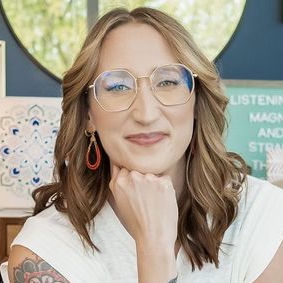
Amanda Stretcher Lewis
Co-Founder and Licensed Professional Counselor-Supervisor (LPC-S) at Crescent Counseling Dallas, specializing in trauma, CPTSD, attachment, and Brainspotting
2
APPEARANCES
1
PODCASTS
Aug 13, 2026


15:06
So if someone's listening to this podcast right now and really relating with CPTSD, like, what you did then worked in some way, 'cause here you are listening, taking in this information.
15:17
So it got you here, but if you're starting to recognize you're, you're not feeling as close in relationships as you'd like to, or you're just so exhausted by this, like, inner critic, that negative track that just keeps replaying in your mind, you're, you're really ready to feel more connected to your body, to your emotions than those, you might be in a place where you're starting to recognize, hey, something in the past is impacting me in the present, and I, I can't go back in time and change the past-
17 MINS LATER
33:09
Which can be validating at first, but it might miss that, that piece of, "Hey, but we're safe now, and maybe we can do something different." Uh, it can almost contribute to the stuckness.
33:21
I, I think there can be, um, a trauma bonding as well where, um, maybe one person does recognize the other person has trauma and becomes almost, like, codependent with that, is, is trying to fix.
33:35
We're saying relationship's an important part of the healing, but one person alone can't heal trauma for you.
16:10
It's gonna have happened during periods of time when the brain was developing, and again, there's often that sense of powerlessness or, um, a lack of ability to escape the environment.
16:22
So some of the ways, some of the causes of CPTSD could look like environments that were abusive, so emotional abuse, uh, verbal abuse, um, physical, sexual abuse.
16:37
Um, it could look like having witnessed or experiencing domestic violence.
16:42
Um, could look like growing up in an environment that was chronically dysfunctional, dysregulated, or really unstable.
26 MINS LATER