Altiplano
Plateau in PeruWikipedia
23
MENTIONS
10
EPISODES
8
PODCASTS
Search complete. 23 mentions across 10 episodes found for "Altiplano".
Sep 29, 2026

Anthony RosickHOST
Flor de Loto proudly celebrate their geographical inheritance as well as their cultural inheritance.
Anthony RosickHOST
The quena flute, the charango, the rhythms of the Altiplano, these aren't decorative additions to their music, they are the music, and progressive rock in Peru becomes the channel through which something much older speaks, a modern form, if you like, of expressing an ancient identity.
Anthony RosickHOST
On their 2025 album, which is called Cosmos, they invited Fates Warning vocalist Ray Alder to join them on a track called Crossfire, and I think it's interesting in that the collaboration itself speaks to an important aspect of South American prog, namely that it's locally grounded and, and there's no two ways about that.
Anthony RosickHOST
The sounds are distinctively South American, but it's also globally connected.

BrewHOST
They had simply never seen anything like this in their lives.
BrewHOST
High up in the Altiplano, there was little to do but tend to their flock, farms, and families.
BrewHOST
The meteor screeched through the sky closer to the town until, finally, It smashed into the ground, kicking up dirt and debris in the process.
BrewHOST
The ground beneath it, and Carancas itself, shook.
BrewHOST
The chief handed him one of the samples which, according to some reports, appeared to be emitting some kind of smoke.
BrewHOST
Neither the chief nor Trujillo had a clue what it was.
BrewHOST
The locals of Carancas were confused and news of the incident quickly spread through all of the Altiplano.
BrewHOST
Many of them began to panic.

speaker_2HOST
So we are gonna start at the absolute highest, most brutal agricultural elevations on Earth, looking at a plant called quinoa.
speaker_2HOST
The text positions this as the ultimate safety net of the Altiplano.
speaker_3HOST
A very necessary safety net.
speaker_2HOST
Yeah.
speaker_2HOST
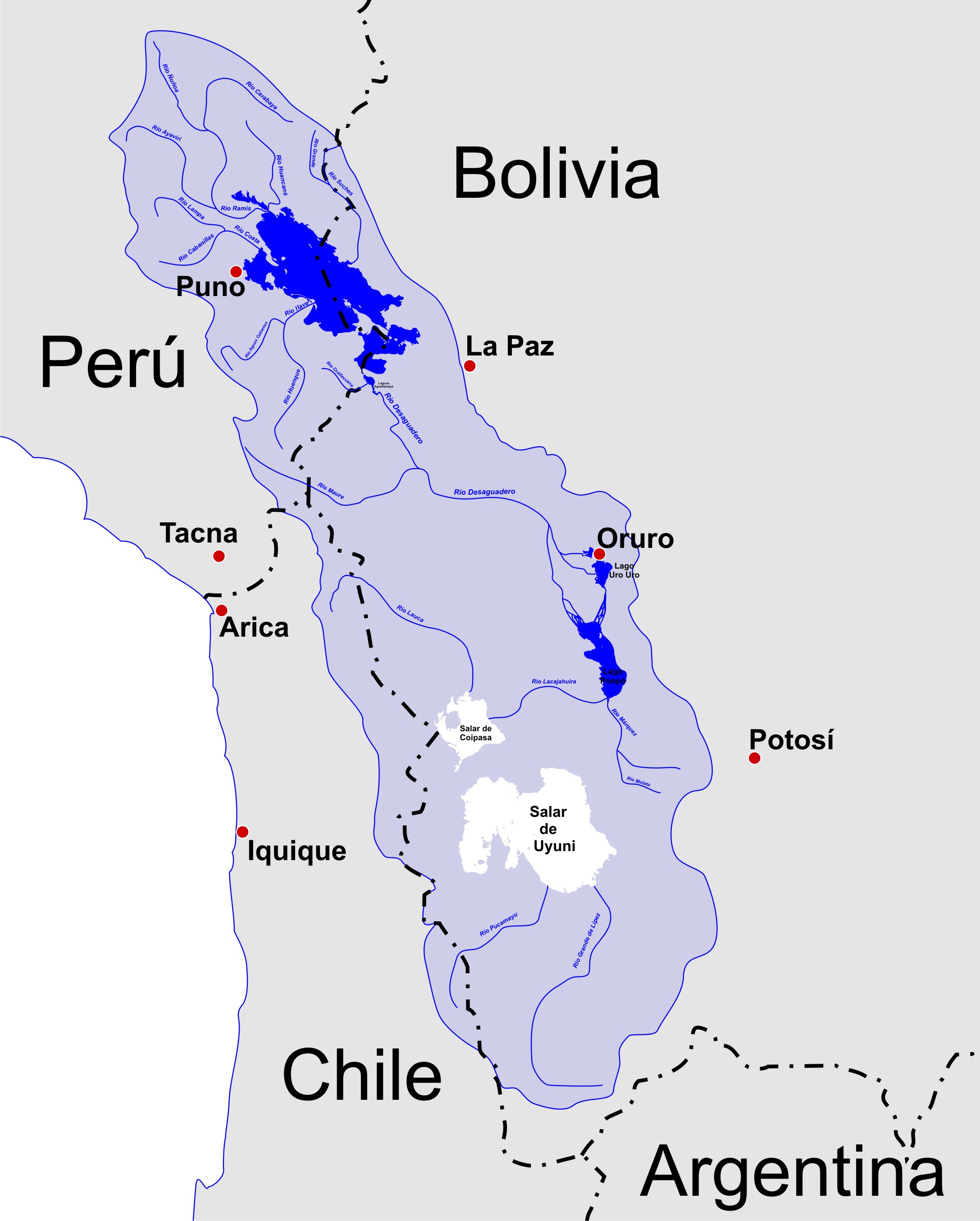
And for you listening, the Altiplano is this lofty semiarid plateau hemmed in by the high ranges of the central Andes.
speaker_2HOST
I was reading the environmental data in the source text, and I have to admit, I was a bit skeptical of the math.
speaker_3HOST
Oh, the frost data.
speaker_3HOST
Well, it exists entirely because of life support crops.

speaker_2HOST
So we are going to start at the absolute highest, most brutal agricultural elevations on Earth, looking at a plant called Kaniwa.
speaker_2HOST
The text positions this as the ultimate safety net of the Altiplano.
speaker_2HOST
Okay.
speaker_3HOST
very necessary safety net.
speaker_2HOST
Yeah.
speaker_2HOST
And for you listening, the Altiplano is this lofty semi-arid plateau hemmed in by the high ranges of the central Andes.
speaker_2HOST
I was reading the environmental data in the source text, and I have to admit, I was a bit skeptical of the
speaker_3HOST
map.

John PaapHOST
So you run your eye down the spine of the Andes and roughly where Peru meets Bolivia.
John PaapHOST
And you find this extraordinarily high plateau called the Altiplano.
John PaapHOST
And it's the second highest plateau on Earth after Tibet.
John PaapHOST
And its heart sits at Lake Titicaca, the highest navigable lake in the world at something like 3,800 meters or roughly 12,500 feet, which you, Patrick, just described in comparison how that measures up to other... mountains that people might be familiar with.
12 MINS LATER
Patrick KellyHOST
And Quinoa moved along that network constantly because one of the great tricks of Andean agriculture is what's called vertical.
Patrick KellyHOST
archipelago farming, right? There's different crops thrive at different altitudes.
Patrick KellyHOST
So quinoa, grown up on the high Altiplano, could be traded down for maize, fruit, or fish from lower, warmer valleys, creating this complementary empire-wide nutritional web.
Patrick KellyHOST
And the Coluca granaries meant that in the event of a bad harvest, a natural disaster, an epidemic, or a military crisis, if the state had reserves of quinoa and other staples, it could redistribute to whole regions.

Jerry CookGUEST
Yeah, that's right.
Jerry CookGUEST
In Bolivia, every time we go through this little school, it's a place that we found in the Altiplano in the middle of nowhere with the llamas roaming around that we stopped for a picnic lunch one day and these kids came out of nowhere and it's just one of these places that we always stop now and every time that we go there, we...
Jerry CookGUEST
We take something different and we have incredibly generous clients that like to donate, whether it's schooling supplies or sporting gifts or musical instruments to these kids.
Jerry CookGUEST
It's fantastic.
speaker_2HOST
The cultural application of this specific potato species is a master class in risk management.
speaker_2HOST
The Aymara Indians, who live in the highest, most brutally cold sectors of the Altiplano, do not grow ajanhuiri for its culinary delicacy.
speaker_3HOST
It's an insurance crop.
speaker_2HOST
They cultivate it strictly as a living insurance policy.
speaker_2VOICE_ACTOR
The cultural application of this specific potato species is a master class in risk management.
speaker_2VOICE_ACTOR
The Amara Indians, who live in the highest, most brutally cold sectors of the Altiplano, do not grow Ajin Ruri for its culinary delicacy.
speaker_3VOICE_ACTOR
It's an insurance crop.
speaker_2VOICE_ACTOR
They cultivate it strictly as a living insurance policy.

Tracy V. WilsonHOST
They're all near rivers or other sources of water, and they are places where people established settlements, which grew into cities, with those cities and societies that they were home to becoming more and more complex.
Tracy V. WilsonHOST
Other cradles of civilization include the Indus Valley on the Indian subcontinent, the western coast of South America, including Lake Titicaca and the Andean Plateau, and the Yangtze and Yellow River systems in China, as well as Mesoamerica.
Tracy V. WilsonHOST
Starting with the establishment of its first cities, ancient Mesopotamia spans more than 3,000 years of history.
Tracy V. WilsonHOST
Civilizations, kingdoms, and empires overlapped and influenced each other, so trying to put together a linear timeline or even a more relative one is actually quite challenging.

Sarah GroenHOST
different, very different landscapes.
Sarah GroenHOST
Altiplano, Yungas, Amazonian lowlands, like you have the mountains, the high areas, the low areas.
Sarah GroenHOST
Just tell us kind of the lay of the land.
Javier LozaGUEST
Sure.
45 MINS LATER
Sebastian VillenaGUEST
Maybe a little.
Sarah GroenHOST
You'll be acclimatized, hopefully, if you're staying in La Paz.
Sarah GroenHOST
Altiplano or Amazon?
Javier LozaGUEST
Altiplano for me.