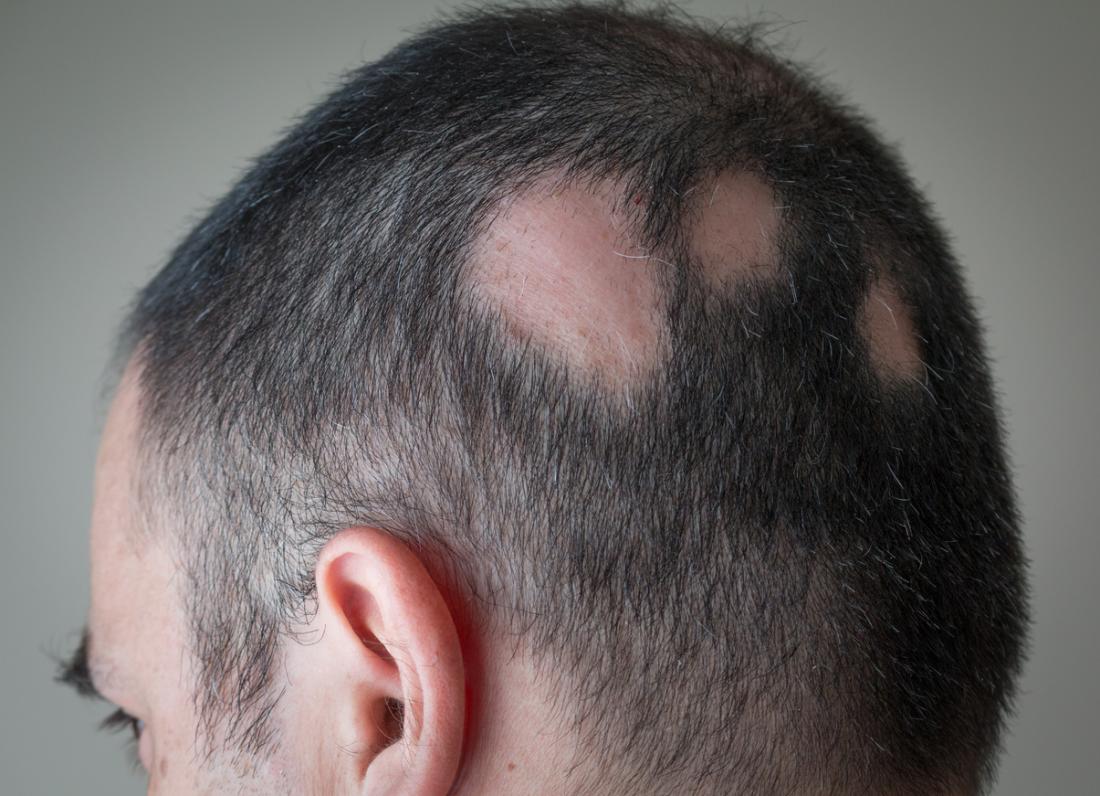
alopecia areata
ConditionWikipedia
22
MENTIONS
6
EPISODES
6
PODCASTS
Search complete. 22 mentions across 6 episodes found for "alopecia areata".
Oct 19, 2026

Jonny HatchHOST
Usually when you're about to walk out the door after an... 30 minutes talking about something else.
Jonny HatchHOST
But suddenly, okay, we're talking about androgenetic alopecia, telogen effluvium, alopecia areata, half a dozen scarring alopecias, traction, trichotillomania, and they can all start with basically the same chief complaint of my hair's coming out.
Jonny HatchHOST
So we're going to build the framework first, recognize the patterns, and then talk what you should actually do with them.
Jonny HatchHOST
And later on, we'll have more in-depth episodes on each of these alopecias.
Jonny HatchHOST
They may be miniaturized or prematurely cycling through the different phases or under an autoimmune attack, but the follicle is still there.
Jonny HatchHOST
But once it's replaced by a scar, that follicle isn't coming back.
Jonny HatchHOST
So for our non-scarring alopecias, we have like androgenic alopecia, alopecia areata, telogen effluvium, early traction, trichotillomania.
Jonny HatchHOST
And then on scarring, you have things like lichen planopilaris or LPP, frontal fibrosing alopecia or FFA, CCCA, DLE, folliculitis decalvans, dissecting cellulites to the scalp.

Karla MandimaHOST
However, the retrospective single-population dermoscopy-only resident-only design warrants prospective multi-center validation such as practice in experienced dermatologists before routine clinical adoption.
Karla MandimaHOST
Our next study is published in Pediatric Dermatology titled Depictions of Alopecia in Children's Animated Films, a cross-studio analysis by Carly Needle Lawrence, Derek Imaz, Archie J. Spindler, Adol.
Karla MandimaHOST
Children with alopecia often experience significant psychosocial challenges, and portrayals of hair loss in animated films may influence their perceptions of themselves and others.
Karla MandimaHOST
In this study, researchers reviewed 139 full-length films from Disney, Pixar, DreamWorks, and Studio Ghibli.
Karla MandimaHOST
Overall, simple low-cost changes including using blue drapes, positioning the surgical lamp behind the surgeon, and increasing working distance when clinically feasible may help reduce reflected light exposure during Mohs surgery.
Karla MandimaHOST
These strategies could improve surgeon comfort and occupational eye health without compromising surgical visualization.
Karla MandimaHOST
Now we have a study in the Journal of Cosmetic Dermatology titled Treatment Efficacy for Androgenetic Alopecia, Combination Therapy of Clinical Low-Level Laser Therapy and Proprietary Hair Growth Serum, a pilot study by Garrett Nee, Megan Stolzgaver, Gabriel Cahill, et al.
Karla MandimaHOST
Androgenetic alopecia is a non-scarring pattern hair loss impacting up to 50% of men and women by age 50.

Ted RosenHOST
So I thought that was very, very good.
Ted RosenHOST
In the August issue of JAMA Dermatology, there was a study actually detailing two parallel phase three studies looking at upadacitinib for alopecia areata.
Ted RosenHOST
That is not yet approved.
Ted RosenHOST
There are other, three other JAK inhibitors approved for alopecia areata, but this is looking at this drug, which I think we're more familiar with its use in eczema, but it was pretty darn good at 24 weeks at the lower dose, 15 milligrams a day.
Ted RosenHOST
About a third of the patients achieved a SALT score under or equal to 10, means 90% regrowth.
Ted RosenHOST
And at the higher dose, 30 milligrams per day, about a half achieved a SALT score of 10 or less.
Ted RosenHOST
And that's all compared to 1% of placebo.
Ted RosenHOST
So it looks like this drug, which we're familiar with from using it for eczema, might be quite good for alopecia areata.

Theo PinsonHOST
First team all hats.
Theo PinsonHOST
First team all Alopecia.
Theo PinsonHOST
First team all Baja.
Theo PinsonHOST
Charlie Villanueva.

Elissa CorriganHOST
And then she was like, yeah, well, when I'm a bit stressed, it can make it worse.
Elissa CorriganHOST
But this has been like, And that is called alopecia areata.
Elissa CorriganHOST
That's exactly that.
Elissa CorriganHOST
Yeah, it was.

Graham LitchmanHOST
So I think it's worth it.
Graham LitchmanHOST
One's about a phase three program for JAK inhibitor and severe alopecia areata.
Graham LitchmanHOST
And the other is a randomized trial asking a deceptively simple question, which is, can you just let a surgical wound get wet?
Diego Ruiz de SilvaHOST
Yeah, two ends of the evidence spectrum here.
Diego Ruiz de SilvaHOST
Both good medicine, both worth our time in different ways.
Diego Ruiz de SilvaHOST
The first
Graham LitchmanHOST
is a paper by Mostagimi et al., hepatocidinib for severe alopecia areata in adults and adolescents.
Graham LitchmanHOST
This is the UPAA1 and the UPAA2 trials.