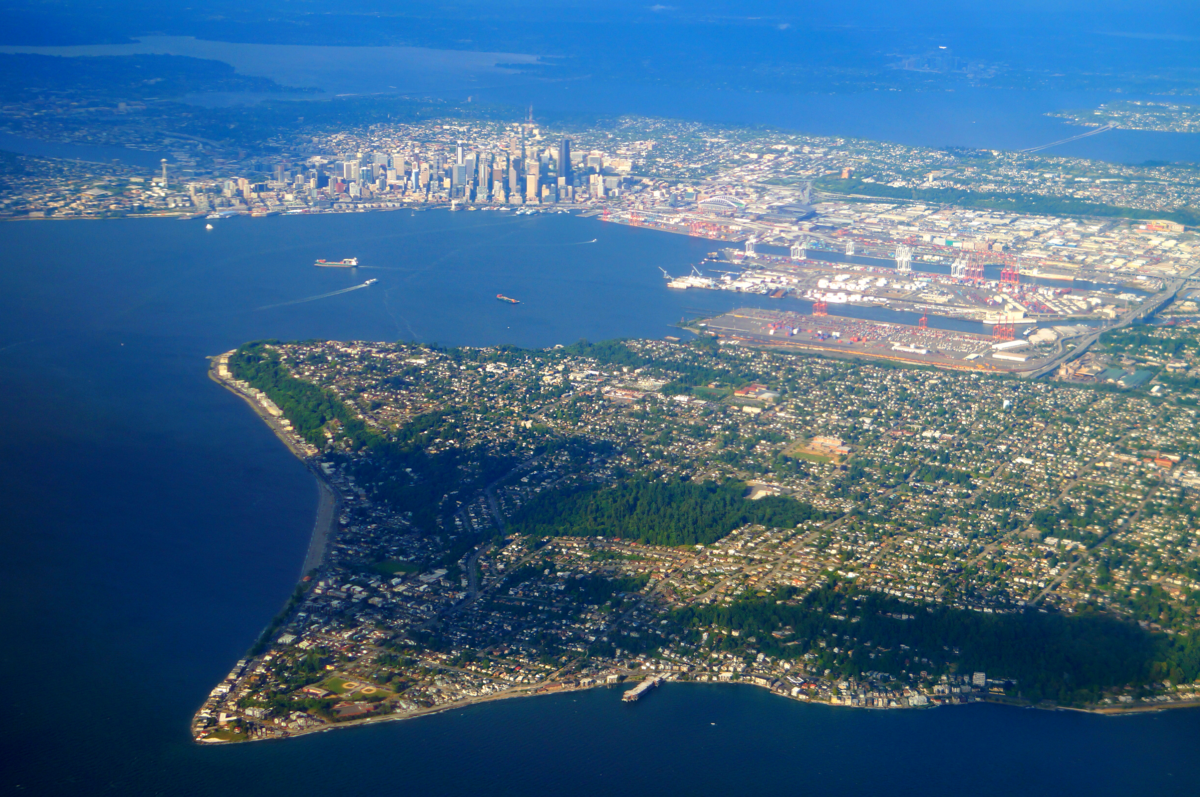
Alki Point
Neighborhood in Seattle, WashingtonWikipedia
22
MENTIONS
7
EPISODES
7
PODCASTS
Search complete. 22 mentions across 7 episodes found for "Alki Point".
Nov 24, 2026

speaker_5GUEST
They dubbed
speaker_8GUEST
the place New York Alki, which means New York by and by.
speaker_8GUEST
And this was a kind of joke, but it was also serious.
speaker_8GUEST
They

Pamela NagamiNARRATOR
End of chapter 18 Chapter 19 Early
Pamela NagamiNARRATOR
Adventures in Seattle Two young men one morning in October 1851 were cutting logs on a long point of land now called Alki Point.
Pamela NagamiNARRATOR
It is just across Elliott Bay from Seattle and a part of West Seattle.
Pamela NagamiNARRATOR
It had not even a name then, and these two youths, Lee Terry and David Denny, were entirely alone.
Pamela NagamiNARRATOR
The families of the two boys had just come across the plains to the Columbia River.
Pamela NagamiNARRATOR
Most of the fertile lands in the Willamette and the Tualatin Valley had been taken up, and the two boys, with Denny's brother, had come up from Vancouver over the Cowlitz Trail to search for lands.
Pamela NagamiNARRATOR
Fertile farming land on Puget Sound was hardly to be found, and knowing of the California trade in lumber, the older Denny had decided to settle on Alki Point and go to logging.
Pamela NagamiNARRATOR
he had gone back to the columbia to get his family and the terrys who were relatives the two boys were alone trying to build a log cabin one was nineteen the other twenty-one suddenly out of the gray mist which hung over the water that morning came the black end of an indian canoe a moment later the prauw grated on the beach an indian sprang ashore They were dark, swarthy men, and there was little that was friendly in their manner.

Pamela NagamiNARRATOR
gradually the village grew the shipping was never extensive for the mud-flats were too broad and ships could not go as close to shore as they could at seattle and tacoma so olympia though the state capital is not a very large city when washington became a separate territory however in eighteen fifty three olympia was the largest town in it and very central so it became the capital before the steam railroads came pioneers used very primitive railroads when it saved expense in hauling at first the railroads were simply wooden beams fastened together and set as firmly as possible over which large heavy cars with great heavy wooden wheels could be drawn by oxen the wood of the rails splintered badly having no protection and where tin plate or any other metal was convenient the tops of the rails were covered with the metal another plan where tin could not be had was to cover the rails with cowhide walla walla once had such a railroad walla walla near the old fort and the old whitman mission was on the oregon trail a few farmers settled near by raising fruits and vegetables and owning droves of cattle with large herds of horses which they traded with passing immigrants gradually other farmers came stores with supplies for the settlers and the immigrants until a little town was built up at that point but all the supplies for walla walla had to come up the river from portland and the little town was six miles back therefore the settlers built a six-mile railroad so that their plows their barrels of sugar and flour sacks of coffee with nails and jingles and all the many other things needed might reach them more easily than by hauling them by teams the walla walla railroad was covered with rawhide one winter when it was bitterly cold the wolves came down from the higher mountains and prowled around the farms and villages eating young calves and anything they could find So hungry were these wolves that they even ate the cowhide off the railroad tracks, and the settlers told, in after years, how the wolves ate up the railroad.
Pamela NagamiNARRATOR
End of chapter 18 Chapter 19 Early Adventures in Seattle Two young men one morning in October 1851 were cutting logs on a long point of land now called Alki Point.
Pamela NagamiNARRATOR
It is just across Elliott Bay from Seattle and a part of West Seattle.
Pamela NagamiNARRATOR
It had not even a name then, and these two youths, Lee Terry and David Denny, were entirely alone.
Pamela NagamiNARRATOR
The families of the two boys had just come across the plains to the Columbia River.
Pamela NagamiNARRATOR
Most of the fertile lands in the Willamette and the Tualatin Valley had been taken up, and the two boys, with Denny's brother, had come up from Vancouver over the Cowlitz Trail to search for lands.
Pamela NagamiNARRATOR
Fertile farming land on Puget Sound was hardly to be found, and knowing of the California trade in lumber, the older Denny had decided to settle on Alki Point and go to logging.
Pamela NagamiNARRATOR
he had gone back to the columbia to get his family and the terrys who were relatives the two boys were alone trying to build a log cabin one was nineteen the other twenty-one suddenly out of the gray mist which hung over the water that morning came the black end of an indian canoe a moment later the prow grated on the beach an indian sprang ashore They were dark, swarthy men, and there was little that was friendly in their manner.

BillyAUDIENCE
New York City.
BillyAUDIENCE
They used to have at Alki, the original location of Seattle itself, a mini Statue of Liberty there.
Todd StarnesHOST
Is that right? I did not know that.
Todd StarnesHOST
Is it still there? I'd be shocked if it

David GiblinGUEST
And I'll just give you an idea, an example.
David GiblinGUEST
For those of us who live in the Seattle area, we were familiar with a place called Alki Point.
David GiblinGUEST
which is in West Seattle, and it's a lovely place to go when the weather's nice.
David GiblinGUEST
And we know that in the late 1800s, there were oak trees there, there was camas there, there was wild onions there, because we have specimens in the collections that were collected by folks at that time.

TriciaGNARRATOR
End of chapter 18 Chapter 19 Early
TriciaGNARRATOR
Adventures in Seattle Two young men one morning in October 1851 were cutting logs on a long point of land now called Alki Point.
TriciaGNARRATOR
It is just across Elliott Bay from Seattle and a part of West Seattle.
TriciaGNARRATOR
It had not even a name then, and these two youths, Lee Terry and David Denny, were entirely alone.
TriciaGNARRATOR
The families of the two boys had just come across the plains to the Columbia River.
TriciaGNARRATOR
Most of the fertile lands in the Willamette and the Tualatin Valley had been taken up, and the two boys, with Denny's brother, had come up from Vancouver over the Cowlitz Trail to search for lands.
TriciaGNARRATOR
Fertile farming land on Puget Sound was hardly to be found, and knowing of the California trade in lumber, the older Denny had decided to settle on Alki Point and go to logging.
TriciaGNARRATOR
he had gone back to the columbia to get his family and the terrys who were relatives the two boys were alone trying to build a log cabin one was nineteen the other twenty-one suddenly out of the gray mist which hung over the water that morning came the black end of an indian canoe a moment later the prow grated on the beach an indian sprang ashore They were dark, swarthy men, and there was little that was friendly in their manner.

MaryAUDIENCE
Hi, I was just interested.
MaryAUDIENCE
I used to run an enrichment here at Alki and I was just wondering what your perspective is on the enrichment program since, you know, I'm a dual career household and it's really hard to get coverage from 110 or 225.
MaryAUDIENCE
So what's kind of your vision long term for enrichment, at least at the elementary level, if you have any thoughts? Thanks, Mary.
Ben ShuldinerGUEST
I mean, I think enrichment is wonderful and we should try to do as much as we can to add enrichment.