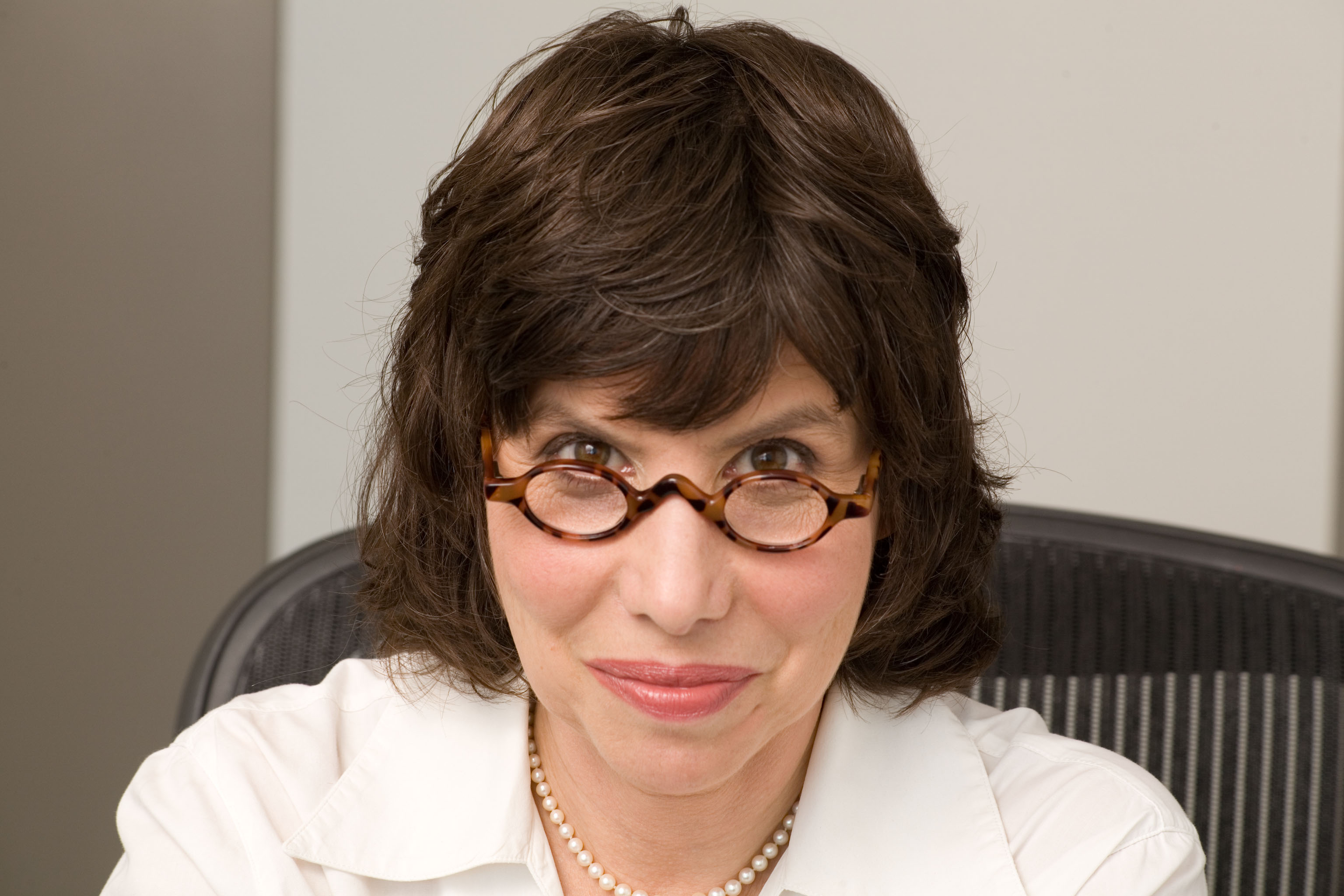
Alison Gopnik
American professor and psychologistWikipedia
18
MENTIONS
14
EPISODES
14
PODCASTS
Search complete. 18 mentions across 14 episodes found for "Alison Gopnik".
Nov 6, 2026

Michael GarfieldHOST
And if you want to talk about the kind of deliberative process that Battleday and Gershman are saying needs to happen, the ability to move up and down and tinker with the level of abstraction that allows people to get at the formulation of a question.
Michael GarfieldHOST
And then there's another paper in this special issue that Eunice Yu and Alison Gopnik worked on.
Michael GarfieldHOST
about empowerment and causal learning in children, and this balance between extrinsic reward and intrinsic reward.
Michael GarfieldHOST
And so this is where I think that you can start making an evolutionary argument for utility, and I wanna see how this lands with you, which is, it is the curiosity driving children, not just to optimize for controllability, but to balance that with variability, so that they're able to exist in an environment that is unstable in important ways.

speaker_1NARRATOR
Empirical research reveals such evidence responsiveness already in children and even infants.
speaker_1NARRATOR
According to The Scientist in the Crip, 1999, by the developmental psychologist Alison Gopnik and colleagues, young children and even babies learn about the world by forming mini-theories in different domains and testing them, much like scientists do.
speaker_1NARRATOR
According to the research of the developmentalists Paul Harris and Melissa Koenig, children are also evidentially discriminating in how they learn from other people.
speaker_0NARRATOR
Among other things, children are more likely to believe sources that have been accurate in the past than sources that have been inaccurate.

Michael FeigelsonGUEST
This experience, the deeper you go, it's a way of rediscovering the beautiful things in the world.
Michael FeigelsonGUEST
So Alison Gopnik, she talks about grandmothers, but she has this way of talking about where she says there's kind of two forms of consciousness.
Michael FeigelsonGUEST
One is spotlight consciousness.
Michael FeigelsonGUEST
So it's what adults have.

speaker_1NARRATOR
Empirical research reveals such evidence responsiveness already in children and even infants.
speaker_1NARRATOR
According to The Scientist in the Crib, 1999, by the developmental psychologist Alison Gopnik and colleagues, young children and even babies learn about the world by forming mini-theories in different domains and testing them, much like scientists do.
speaker_1NARRATOR
According to the research of the developmentalists Paul Harris and Melissa Koenig, Children are also evidentially discriminating in how they learn from other people.
speaker_1NARRATOR
Among other things, children are more likely to believe sources that have been accurate in the past than sources that have been inaccurate.

Henry FarrellGUEST
This takes a ton of work, so they suggest that any kind of transition that we see is going to be much slower and more halting than people suggest.
Henry FarrellGUEST
And then I think there is the more fundamental question of, is intelligence in this sense, intelligence as a commodity, is this a useful way to actually think about how intelligence actually works? And here, and this is probably plugging my own and my co-authors' work, Alison Gopnik, Cosmo Schliezy, James Evans, and I have a piece that we wrote last year about this.
Henry FarrellGUEST
We think about this as being much less like a kind of... general-purpose intelligence, and much more as a social and cultural technology, which suggests that there are going to be some things that it is going to be extremely good at doing.
Henry FarrellGUEST
Very often, I'm sort of piecing together existing knowledge in useful ways, and you can see in many ways how some of the famous math proofs that are being developed actually can be reasonably, I think, explained in this context.

Michael KovnatHOST
But what if we put the argument aside for a moment and asked a different question? What do spiritual practices actually do for us, scientifically speaking? Psychologist David DeSteno directs the Social Emotions Group at Northeastern University.
Michael KovnatHOST
In his 2021 book, How God Works, The Science Behind the Benefits of Religion, he examines what rituals and religious traditions can teach us about connection, well-being, and caring for one another without requiring everyone to share the same beliefs.
Michael KovnatHOST
Then, Columbia clinical psychologist Lisa Miller explores our capacity for spiritual experience in her 2021 book, The Awakened Brain, the new science of spirituality and our quest for an inspired life.
Michael KovnatHOST
How religion works, right after these ads.
Michael KovnatHOST
Do you actually have a proper password manager set up right now? I'm guessing you don't.
David DeStenoSOUNDBITE_SPEAKER
If we don't do that, if we're not open to what spiritual traditions can teach us, we'll not only slow the progress of the science of well-being, but also limit our own Idea number two.
David DeStenoSOUNDBITE_SPEAKER
Caring equals loving.
David DeStenoSOUNDBITE_SPEAKER
I once heard the psychologist Alison Gopnik say that while sometimes we care for our children because we love them, it's also true that we love them because we care for them.

Lianne Tomfohr-MadsenHOST
Sometimes it's about tending to the relationship that's right next to you.
Leslie RoosHOST
And Dylan's gardener, not sculptor comment quoted from psychologist Alison Gopnik always sticks with me too.
Leslie RoosHOST
As a parent, you're not responsible for controlling every outcome.
Leslie RoosHOST
You don't know what your kids are made up of exactly what they're going to be bringing to the table.

Nick StandleaHOST
Yeah.
Nick StandleaHOST
Now, in 1998, Alison Gopnik published a title, published a paper with very provocative title.
Nick StandleaHOST
And what was it called? And what is she what was she actually talking about with this provocative paper?
Tania LombrozoGUEST
Yeah.
Tania LombrozoGUEST
So for context, for those who might not know, Alison Gopnik is a phenomenal developmental cognitive scientist who's written many, many great books for a general audience in addition to publishing a lot of scientific work.
Tania LombrozoGUEST
And her provocative paper was called Explanation as Orgasm.
Tania LombrozoGUEST
And she was doing a couple of things in that paper.

Sheina Lew-LevyGUEST
Um, and so, um, i- if children are just acquiring knowledge from adults, and that knowledge is out of date because there's been a change, then actually the knowledge they're acquiring is not very adaptive.
Sheina Lew-LevyGUEST
Instead, it seems like, and there's some really excellent literature by Alison Gopnik and some other folks on this, that kids are really good at exploring their environments.
Sheina Lew-LevyGUEST
And in fact, there's, um, in these kind of virtual worlds, kids explore much more broadly, where as adults are much more, um, much more focused on finding the solution.
Sheina Lew-LevyGUEST
We have some, um, data that we're just in the final stages of preparing, myself and my colleague Sarah Pope Caldwell, which really picks up on something we said in, uh, in the paper with Dorsa, but we couldn't substantiate, and now we actually are able to, is that pe- is that, um, exploration is really bolstered by peer interaction.

Ezra KleinHOST
... you said there.
Ezra KleinHOST
It reminded me of Alison Gopnik, the child psychologist-
Sherry TurkleGUEST
Yes
Ezra KleinHOST
...
4 more episodes mention Alison Gopnik.
Create an account to see the whole feed, search across every transcript, and follow the entities you care about.