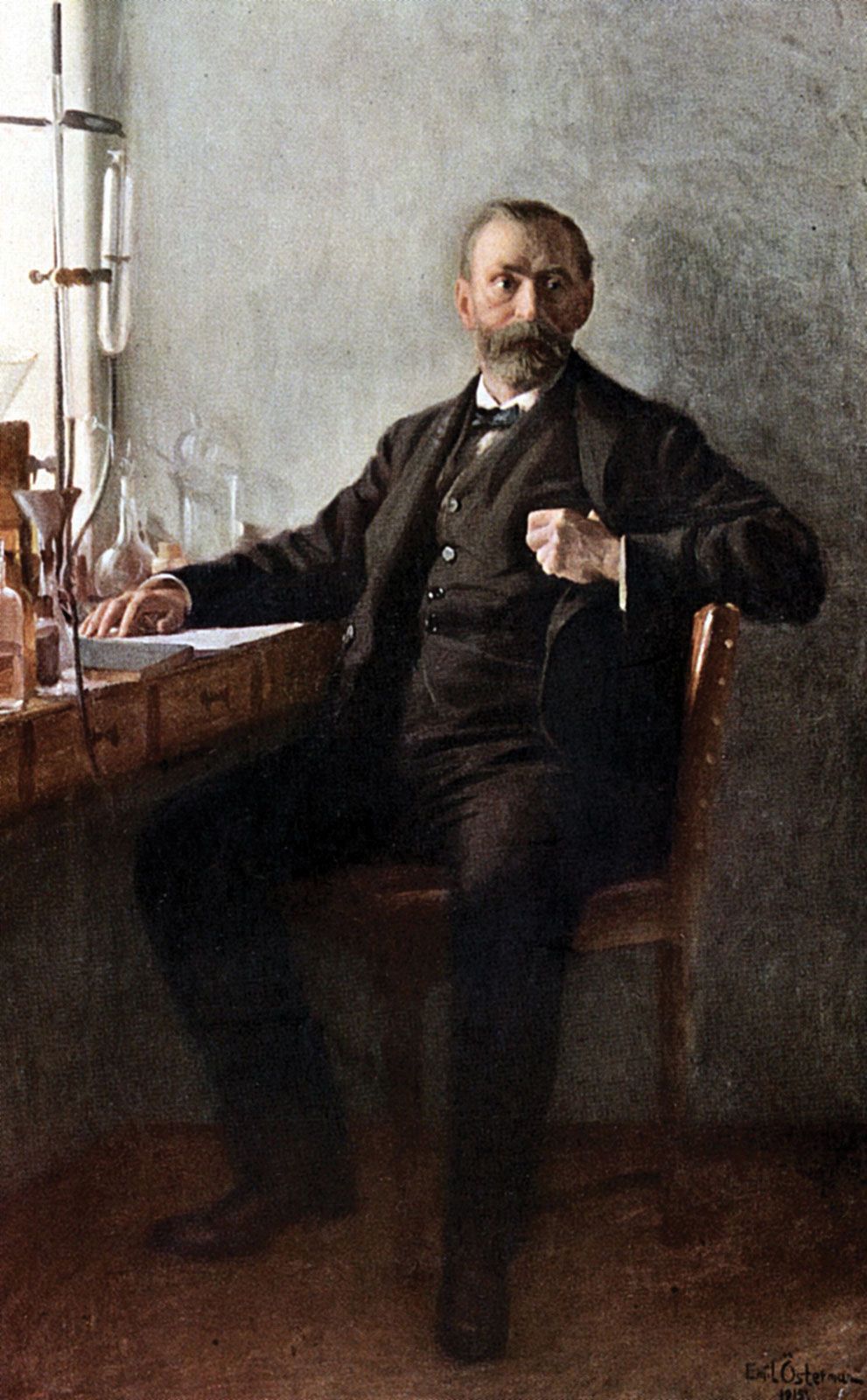
Alfred Nobel
Swedish chemist and inventorWikipedia
58
MENTIONS
31
EPISODES
30
PODCASTS
Search complete. 58 mentions across 31 episodes found for "Alfred Nobel".
Sep 12, 2026

Vincent RacanielloHOST
Same endpoint, but different mechanism of, uh, sGC activation.
Vincent RacanielloHOST
And the real irony here is Alfred Nobel, who invented dynamite using nitroglycerin, and whose fortune funded the Nobel Prize, was himself prescribed nitroglycerin for his heart condition late in life, and reportedly found the idea darkly amusing.
Vincent RacanielloHOST
He wrote in a letter-
Michael SchmidtHOST
Yes

Sariel MalitzkyHOST
I'm gonna c- conclude with a s- a story you might have heard.
Sariel MalitzkyHOST
Uh, doing some research online, it seems now that it's not so clear that it's true, but I've heard this in around 10 speeches, so it has to be true, right? [laughs] Um, we know the story of how Alfred Nobel started the Nobel Peace Prize.
Sariel MalitzkyHOST
We know the story? No? Okay.
Sariel MalitzkyHOST
So who's Alfred Nobel? Very, very, very wealthy individual.
Sariel MalitzkyHOST
In 1895, he signs his last will and testament in, in some Swedish-Norwegian club in Paris, giving out what would be worth today two hundred and sixty-five million dollars to a series of prizes known as the Nobel Peace Prize, which Jews have won a remarkable percentage of, but that's, that's a sidebar.
Sariel MalitzkyHOST
Why did he decide to create the Nobel Peace Prize? Because in 1888, his brother Ludvig died in France from a heart attack, and poor reporting in France reported that his brother had passed away, and they wrote an obituary in the newspaper for the brother, Alfred Nobel, not for, not for the one who actually died.
Sariel MalitzkyHOST
And what'd they write in that obituary? They called him the Merchant of Death.
Sariel MalitzkyHOST
Yes.

TomHOST
Um, less outside walking fun times.
TomHOST
Uh, but yeah, it was lovely, and it was over at, um, Alfred Nobel's factory, which had to be built outside of Stockholm, because he's the guy who invented dynamite.
CorissaHOST
Oh.
CorissaHOST
[laughs] That makes sense.

Paige WesleyHOST
Dynamite.
Todd SchlosserHOST
Alfred Nobel would never, Paige.
Paige WesleyHOST
Never.
Paige WesleyHOST
Never ever.

David BassousHOST
If only we know what God is writing about us right now, we'd do things in a much better way.
David BassousHOST
If we know they're going to write an autobiography about us, this is the famous story of Alfred Nobel.
David BassousHOST
It says...
David BassousHOST
It says one of his factories blew up.
David BassousHOST
He used to manufacture dynamite.
David BassousHOST
He was on a train somewhere and he reads the morning papers.
David BassousHOST
He sees obituary column, Alfred Nobel.
David BassousHOST
He says, hey, what's going on over here? Then he reads what they write about him.

BradHOST
And then finally, Swedish scientist prize.
BradHOST
Alfred Nobel.
BradHOST
Is correct.
BradHOST
And I could have said explosion.

Toby StokesNARRATOR
So how do we do this? How do we make a difference in this world? And how can our lives be of ultimate lasting value?
Nicky GumbelHOST
Alfred Nobel is best known for the Nobel Peace Prize.
Nicky GumbelHOST
Less well known is the fact that Alfred Nobel also invented dynamite.
Nicky GumbelHOST
As well as a chemist, engineer and innovator, he was a weapons manufacturer.
Nicky GumbelHOST
In 1888, Alfred's brother, Ludwig, died.
Nicky GumbelHOST
A French newspaper erroneously published Alfred's obituary.
Nicky GumbelHOST
It condemned him for his invention of dynamite, stating, The merchant of death is dead.
Nicky GumbelHOST
Dr. Alfred Nobel, who became rich by finding ways to kill more people faster than ever before, died yesterday.
David BassousHOST
So the Rabbi says, Shlomo Melech says, chapter 7, it is better to go to the house of mourning than to the house of feasting.
David BassousHOST
Why? Hopefully, person something will sink in some sort of moral reckoning will sink into the person he goes to the house of mourning so this is you know life is limited let me see what I could do my life I don't waste my life says by Nobel Nobel Prizes what was his name Richard Nobel? Alfred Nobel So he's on a train once and he's reading his own obituary in the newspaper.
David BassousHOST
One of his factories, he would make explosives, dynamite.
David BassousHOST
He had factories of dynamite.

Chad RobertsHOST
Inner strength.
Chad RobertsHOST
A man named Alfred Nobel was born in Sweden in 1833.
Chad RobertsHOST
He died in 1896 of a stroke.
Chad RobertsHOST
But before Alfred died in 1896, in 1888, he had the shock of his life.
Chad RobertsHOST
He read his own obituary.
Chad RobertsHOST
Could you imagine opening up a paper and there is your obituary? Could you imagine that shock? Would you not pinch yourself multiple times? Maybe slap yourself a little bit? Wow.
Chad RobertsHOST
Alfred Nobel, his family were engineers.
Chad RobertsHOST
And they tried to figure out how to bust through mountains and things like this.

Jay StrotherHOST
And then I always think to myself, how did this person's life uniquely glorify God? And again, knowing the end from the beginning, how am I living my life in such a way, right? That when God has called me home, I leave a legacy of things that really matter.
Brian BallHOST
Well, that was the Alfred Nobel example from your sermon.
Brian BallHOST
If you got to see, I have another friend whose wife, when he turned 60, had everybody come and give a eulogy.
Jay StrotherHOST
Okay.
21 more episodes mention Alfred Nobel.
Create an account to see the whole feed, search across every transcript, and follow the entities you care about.