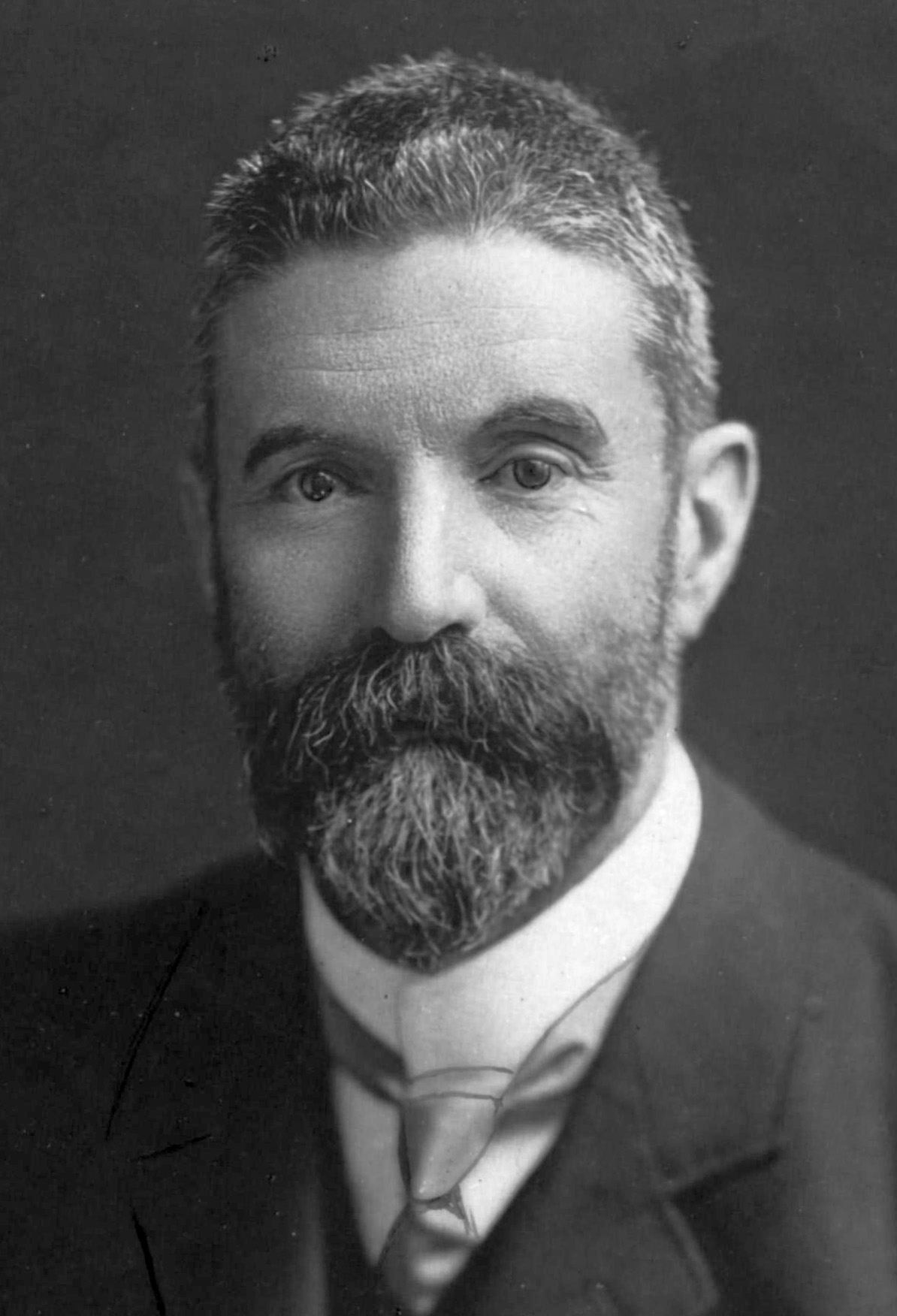
Alfred Deakin
Former Prime Minister of AustraliaWikipedia
15
MENTIONS
6
EPISODES
6
PODCASTS
Search complete. 15 mentions across 6 episodes found for "Alfred Deakin".
Oct 7, 2026

Greg SheridanGUEST
We intentionally left the Old World hatreds behind us.
Greg SheridanGUEST
You know, Alfred Deakin was against us having knighthoods and things because he just didn't want any of that Old World stuff.
Greg SheridanGUEST
We were a new egalitarian society, and the outbreak of anti-Semitism, which is the most shameful thing I've ever known about modern Australia, it's driven by the left and the Islamists, but it's now finding fertile ground on the right, on conspiracy theories generally.
Greg SheridanGUEST
Not on the mainstream right.

Ben RaueHOST
Instead, the next three years were very unstable, with governments changing a number of times, and the Protectionists fell into third place in 1906.
Ben RaueHOST
Prior to that 1906 election, Protectionist leader Alfred Deakin made another attempt to introduce preferential voting, specifically CPV, in a pitch to Labor leader Chris Watson as an attempt to isolate George Reid's Free Traders.
Ben RaueHOST
"Have you thought of the exhaustive ballot, compulsory voting for every candidate? The lowest dropped out and his votes divided until someone gets a majority.
Ben RaueHOST
With this, our candidate and yours could not do each other anything like so much harm, and one or others of us would win in several Reidite constituencies.

LiamHOST
End quote.
LiamHOST
So that was taken from a report in The Age on 6 April 1909 about a speech given by Alfred Deakin in Melbourne.
LiamHOST
Melbourne was at that time the centre of Australian capital and the conservative movement.
LiamHOST
It was also the capital of our young nation, but that was less important to the people who were in that particular crowd, who were 100 gentlemen who represented the business interests of Melbourne.
LiamHOST
do Look, I was kind of being semi-ironic about the outright daddy stuff, but I will just say, of all the Australian Prime Ministers, not many have screeds written about their sex appeal, and he's one of the only
Jesse BlackHOST
ones.
LiamHOST
No, people do not get horny about Australian Prime Ministers, but they did make an exception for Alfred Deakin.
LiamHOST
I guess people got horny for Harold Holt, because he famously did a lot of fucking.

Mark CullyGUEST
Nobody was supposed to pass it.
Mark CullyGUEST
It w- it was supposed to be a pol- Dea- Alfred Deakin, who was the Attorney General, said it was a kind of, it was a polite way of refusing people.
Mark CullyGUEST
I'm not sure how he thought it was polite, but, um, but you were not supposed to pass the test.
Mark CullyGUEST
In the first decade, 59 people passed the test, and after 1909, uh, between 1909 and 1958 when it was eventually abolished, nobody passed the test.

Philip ClarkHOST
Yes, John Howard was criticised by many people for uttering the famous phrase, we will decide who comes to this country and the circumstances in which they come.
Philip ClarkHOST
But it was hardly a new statement, was it? It really echoed the words of Alfred Deakin, who in November 1901 said, announcing that there'd be no coloured or Chinese or indeed anybody other than what he described, people inside the charmed circle, by which he meant people from Britain, didn't he?
Mark CullyGUEST
That's right.
Mark CullyGUEST
That was the beginning of the white Australia policy as we know it.
5 MINS LATER
Mark CullyGUEST
And the one that was the catch-all clause allowed an immigration official to administer a test in any European language, which required the person to... write out a passage of about 50 words and it was up to the immigration official to specify which language.
Mark CullyGUEST
It's a very famous case where in the 1930s where a communist activist was attempting to come into Australia and he was administered the test in Scottish Gaelic so that he would fail it.
Mark CullyGUEST
And you mentioned Alfred Deakin before, Phil.
Mark CullyGUEST
When this bill was being debated through Parliament, Deakin was the Attorney General, and he said, this test is not designed to be passed.

Joshua BlackGUEST
Substantial example in Australia, I think, was John Button, former industry minister in the Hawke and Keating Labor governments, who published a series of really interesting and progressively more self-reflective, introspective, critical memoirs and autobiographies.
Joshua BlackGUEST
And the last really big publication that he produced was a quarterly essay in 2002 about really the past and future of the Labor Party it won a major literary award in Victoria, the Deakin Prize for essay writing, I think it was.
Joshua BlackGUEST
And the judges said that what gave this essay its strength was its willingness to speak from the perspective of the insider, but one who has nothing to prove and nothing to lose.
Joshua BlackGUEST
And it's that particular combination, I think, that is so rare and so treasured in a good political autobiography.
Joshua BlackGUEST
And I think that too creates something of an alienating effect among readers and among the wider media ecology that these books filter through.
Andrew LeighHOST
Let's just run through a bit of the chronology of Australian political autobiographies.
Andrew LeighHOST
Of those who were around at the time of Federation, am I right in thinking that you rate Alfred Deakin as the best of the writers there?
Joshua BlackGUEST
There's something to be said for Deakin.