Alexey Pajitnov
Russian computer engineer and video game designerWikipedia
33
MENTIONS
7
EPISODES
7
PODCASTS
Search complete. 33 mentions across 7 episodes found for "Alexey Pajitnov".
Oct 16, 2026

speaker_2NARRATOR
6.
speaker_2NARRATOR
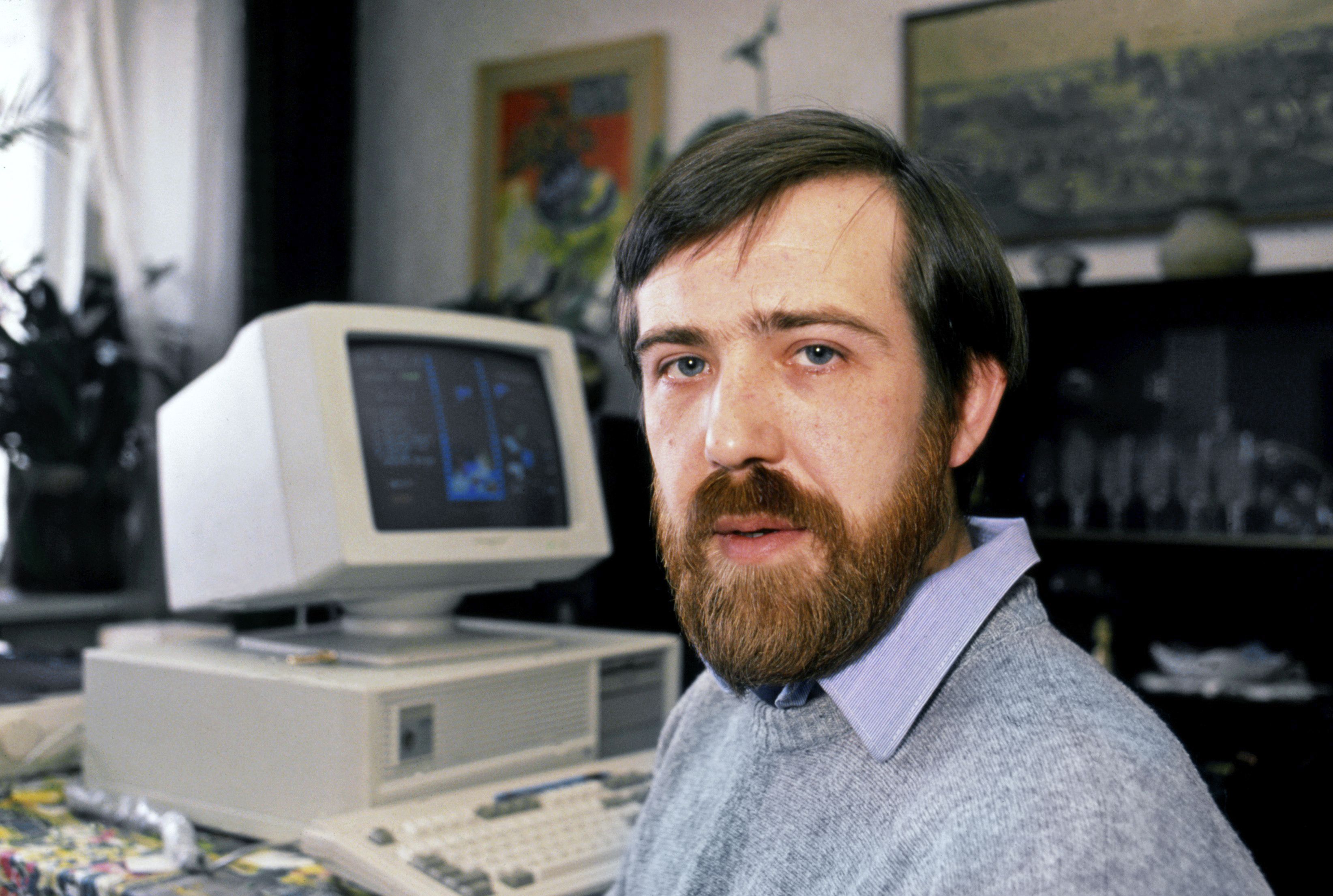
In Moscow in 1984, a programmer named Alexey Pajitnov watched tiny blocks fall slowly down a computer screen.
speaker_2NARRATOR
The Strong National Museum of Play says he adapted an old Pentomino puzzle for the computer, challenging players to arrange seven different shapes into complete rows.
speaker_2NARRATOR
The Tetris Company adds that the first version ran on a Soviet computer in Moscow.

Jennifer Miller HamelSOUNDBITE_SPEAKER
While it appeared in musical form around 1898, and would of course become the type A music for the 1989 Game Boy version of Tetris, thanks to Hirokazu Tanaka.
Jennifer Miller HamelSOUNDBITE_SPEAKER
But Tetris creator Alexey Pajitnov often gets credit for the association, as the melody also appeared in early Mac and Apple II GS ports of the game.
Jennifer Miller HamelSOUNDBITE_SPEAKER
All right.
Jennifer Miller HamelSOUNDBITE_SPEAKER
Later, my friends.

Julien MaillandGUEST
Um, but then, you know, I was reading, and, and my previous book was about, uh, a legal history of the video game industry, and as part of it, I kind of like looked at how the law influenced, uh, the history of the industry.
Julien MaillandGUEST
And I was thinking about Tetris because I kept reading these stories about the great inventor, uh, Alexey Pajitnov, and how he designed Tetris in the Soviet Union in the, uh, mid-'80s.
Julien MaillandGUEST
And then the story goes, in 1991, Pajitnov moves to America, and he regains the rights that he always had to the game.
Julien MaillandGUEST
And to me as a lawyer, that story just never made sense because [laughs] he was in the Soviet Union, and there was no private property then.
18 MINS LATER
Julien MaillandGUEST
He hid it in the Cayman and in the Bahamas, um, and, uh, fled and disappeared.
Julien MaillandGUEST
So that's the first battle.
Julien MaillandGUEST
So out of that battle, the current owner is the Tetris company, TTC, which is Alexey Pajitnov and, and Hank Rogers.
Julien MaillandGUEST
Second battle, a little before that, when Tetris reached Hungary, it got found by a guy, uh, named Robert Stein, who was a Hungarian British importer, exporter- Uh, he was buying basically Eastern European software and was selling it to the West.

Julien MaillandGUEST
Um, but then, you know, I was reading, and, and my previous book was about, uh, a legal history of the video game industry, and as part of it, I kind of like looked at how the law influenced, uh, the history of the industry.
Julien MaillandGUEST
And I was thinking about Tetris because I kept reading these stories about the great inventor, uh, Alexey Pajitnov, and how he designed Tetris in the Soviet Union in the, uh, mid-'80s.
Julien MaillandGUEST
And then the story goes, in 1991, Pajitnov moves to America, and he regains the rights that he always had to the game.
Julien MaillandGUEST
And to me as a lawyer, that story just never made sense, because he was in the Soviet Union, and there was no private property then.
Julien MaillandGUEST
There was no copyright.
Julien MaillandGUEST
Um, so there's the story of this contrast.
Julien MaillandGUEST
There's a second contrast, I think, in the story that is fascinating, which is the contrast between the official corporate story of a very nice narrative of this innocent Russian guy who designs this game and is, you know, very innocent and he owns it the whole time, um, and then a much, much darker side to the story.
Julien MaillandGUEST
Uh, the fact, for example, that despite what the Tetris company, which currently owns the right, has claimed, Alex Pajitnov did not actually design these pieces.

Julien MaillandGUEST
And as part of it, I kind of like looked at how the law influenced the history of the industry.
Julien MaillandGUEST
And I was thinking about Tetris because I kept reading these stories about the great inventor, Alexei Pajitnov, and how he designed Tetris in the Soviet Union in the mid-'80s.
Julien MaillandGUEST
And then the story goes, in 1991, Pajitnov moves to America, and he regains the rights that he always had to the gig.
Julien MaillandGUEST
And to me as a lawyer, that story just never made sense because he was in the Soviet Union and there was no private property and there was no copyright.
Julien MaillandGUEST
And so therefore, he would never have had the rights to the game to begin with.
6 MINS LATER
Julien MaillandGUEST
If you flip two of them and make seven.
Julien MaillandGUEST
But these were actually revealed in the math and puzzle literature in the 50s by a guy named Solomon Golan, who was a professor at Caltech.
Julien MaillandGUEST
And so this idea that Pajitnov actually designed these pieces, which he has claimed in court that he did, is actually a big lie.

LeeHOST
So, uh, the game.
LeeHOST
Um, Alexey Pajitnov worked at the Dorodnitsyn, uh, Computing Centre, which was part of the Soviet Academy of Sciences in Moscow.
LeeHOST
Uh, he wrote Tetris on a machine called the Electronica 60, and it couldn't do graphics at all.
LeeHOST
So the blocks were made out of text characters, uh, basically, uh, brackets.

Carla CockrumHOST
Uh-huh
John SpencerHOST
... with tennis, 'cause creator Alexey Pajitnov's, uh, that was his favorite sport.
Carla CockrumHOST
Okay.
Carla CockrumHOST
Tetris.