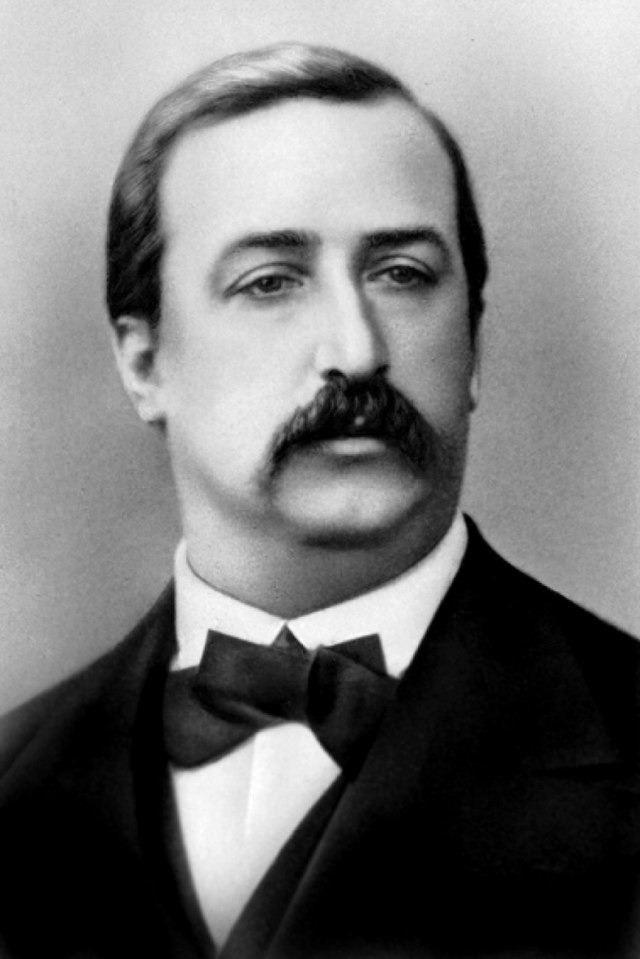
Alexander Borodin
Russian composer and chemistWikipedia
15
MENTIONS
9
EPISODES
8
PODCASTS
Search complete. 15 mentions across 9 episodes found for "Alexander Borodin".
Sep 15, 2026

Deboki ChakravartiHOST
Essentially, we combine two simpler carbonyl compounds into a bigger molecule.
Deboki ChakravartiHOST
This reaction was discovered independently by the French chemist Charles Adolph Wurtz and the Russian chemist and composer Alexander Borodin in the late 1800s.
Deboki ChakravartiHOST
The ald- part of the name comes from the fact that the reaction involved two aldehydes before we figured out ketones could be involved too, and the -ol part comes from the alcohol because the product is a beta hydroxy carbonyl compound.
Deboki ChakravartiHOST
As always, we wanna understand the mechanisms at work, not just memorize reactions.

Emilia Diaz DelgadoGUEST
So it was my grandmother who introduced me to opera.
Emilia Diaz DelgadoGUEST
So she watched Borodin's Prince Igor with me.
Emilia Diaz DelgadoGUEST
And I liked it so much, I asked her to make a costume.
Emilia Diaz DelgadoGUEST
I think it was one of the ladies in Imbil.

Jim O'HaraCORRESPONDENT
Thank you.
Denise Finnegan-HillHOST
Alexander Borodin was one of the Russian Five, a mighty handful of composers seeking to make a name for Russian music by implementing national sounds and folklore into their pieces.
Denise Finnegan-HillHOST
Borodin's opera Prince Igor was one of these works, being based on an early Russian epic.
Denise Finnegan-HillHOST
Although the opera is seldom performed, the Polovitzian dances from Act II have become a classic of the orchestral repertoire.
Denise Finnegan-HillHOST
This work and more coming up this hour.
22 MINS LATER
Denise Finnegan-HillHOST
Thank you.
Denise Finnegan-HillHOST
¶¶ ¶¶ ¦ ¦ ¶¶ Thank you.
Denise Finnegan-HillHOST
¶¶ ¶¶ Pallavician Dances from Prince Igor by Alexander Borodin.

Miklós PohlGUEST
Berlioz, the composer.
Miklós PohlGUEST
Borodin, he was a doctor.
Miklós PohlGUEST
And probably one of the most famous people in my world was Theodore Billrott, who was the first person to perform gastrectomy safely.
Miklós PohlGUEST
and he was a friend of Brahms, and he played in a string quartet with Brahms.

Jeffrey Scott ParsonsHOST
It's taking...
Jeffrey Scott ParsonsHOST
Is it Borodin? Don't get mad at me, people.
Jeffrey Scott ParsonsHOST
But, like, a, a classical composer, taking those themes and music, adding lyrics to it, adding this interesting story, uh, that has to do with the Middle East, which is probably why we don't see this show done very much, because it was Richard Kiley back in the day.
Jeffrey Scott ParsonsHOST
You know, like, we can- you're not gonna do that.

Bill HansonHOST
Cecil had a number one hit across Europe in 1998. with Prince Igor, a duet with an American rapper, Warren G, and the concept album, The Rhapsody Overture, which combined American rappers with European opera singers.
Bill HansonHOST
She sang an aria from Alexander Borodin's opera, Prince Igor, during the chorus while Warren G rapped.
Bill HansonHOST
When the song was recorded, She had just half an hour to learn the Russian lyrics.
Bill HansonHOST
She got help from a Russian taxi driver in New York City, whose name, coincidentally, was Igor.
Denise Finnegan-HillHOST
The Russian Easter Festival Overture was written by Nikolai Rimsky-Korsakov between 1887 and 1888.
Denise Finnegan-HillHOST
The work was dedicated to the late Modest Mussorgsky and Alexander Borodin.
Denise Finnegan-HillHOST
The score is prefaced by two biblical quotations and a third quote written by the composer.
Denise Finnegan-HillHOST
Rimsky-Korsakov says that the work encompasses both the Russian Orthodox Easter celebration and what the composer describes as the legendary heathen side of the holiday.
17 MINS LATER
Katie HarleySOUNDBITE_SPEAKER
I'm Katie Harley, and I'm from Davenport, and WVIK is my NPR station.
Denise Finnegan-HillHOST
Next up, music of Nikolai Rimsky-Korsakov, his Russian Easter Festival Overture.
Denise Finnegan-HillHOST
This was dedicated to the late Modus Mazursky and Alexander Borodin and encompasses both the Russian Orthodox Easter celebration and what the composer describes as the legendary heathen side of the holiday.
Denise Finnegan-HillHOST
Here is a recording of the Boston Pops Orchestra under the direction of Arthur Fiedler.

Richard CarpenterGUEST
and I loved classical.
Richard CarpenterGUEST
So we had Tchaikovsky, Rachmaninoff, Borodin, all like that.
Richard CarpenterGUEST
And Karen didn't care much for that.
Richard CarpenterGUEST
Other than that, she listened to whatever was the current single on the radio that we pestered our parents for, or Les Paul and Barry Ford, or any of them.

Martha WellerNARRATOR
During Liszt's years in Weimar, much music was brought to his notice, music by new composers and from different countries.
Martha WellerNARRATOR
Music by Russian composers was then hardly known outside Russia until Berlioz produced some works by Glinka and Liszt played compositions by Borodin and Balakirev.
Martha WellerNARRATOR
Glinka, eighteen oh three to eighteen fifty-seven, was the earliest Russian composer of this time whose work did not imitate the Italian opera prevalent at the Russian court.
Martha WellerNARRATOR
His aim was to produce music that was really Russian.
Martha WellerNARRATOR
Among his friends were several younger men who carried on his aims.
Martha WellerNARRATOR
The earliest of them is Balakirev.
Martha WellerNARRATOR
Balakirev, eighteen thirty-seven to nineteen ten, was a cultivated musician who exercised a great influence on his contemporaries, Borodin, Mussorgsky, and Rimsky-Korsakov.
Martha WellerNARRATOR
Living in St. Petersburg, he was the center of a group of musicians who each, in his own way, wished to produce national music and who succeeded so well that their works had an originality and power which has made many of them known and liked all over Europe.