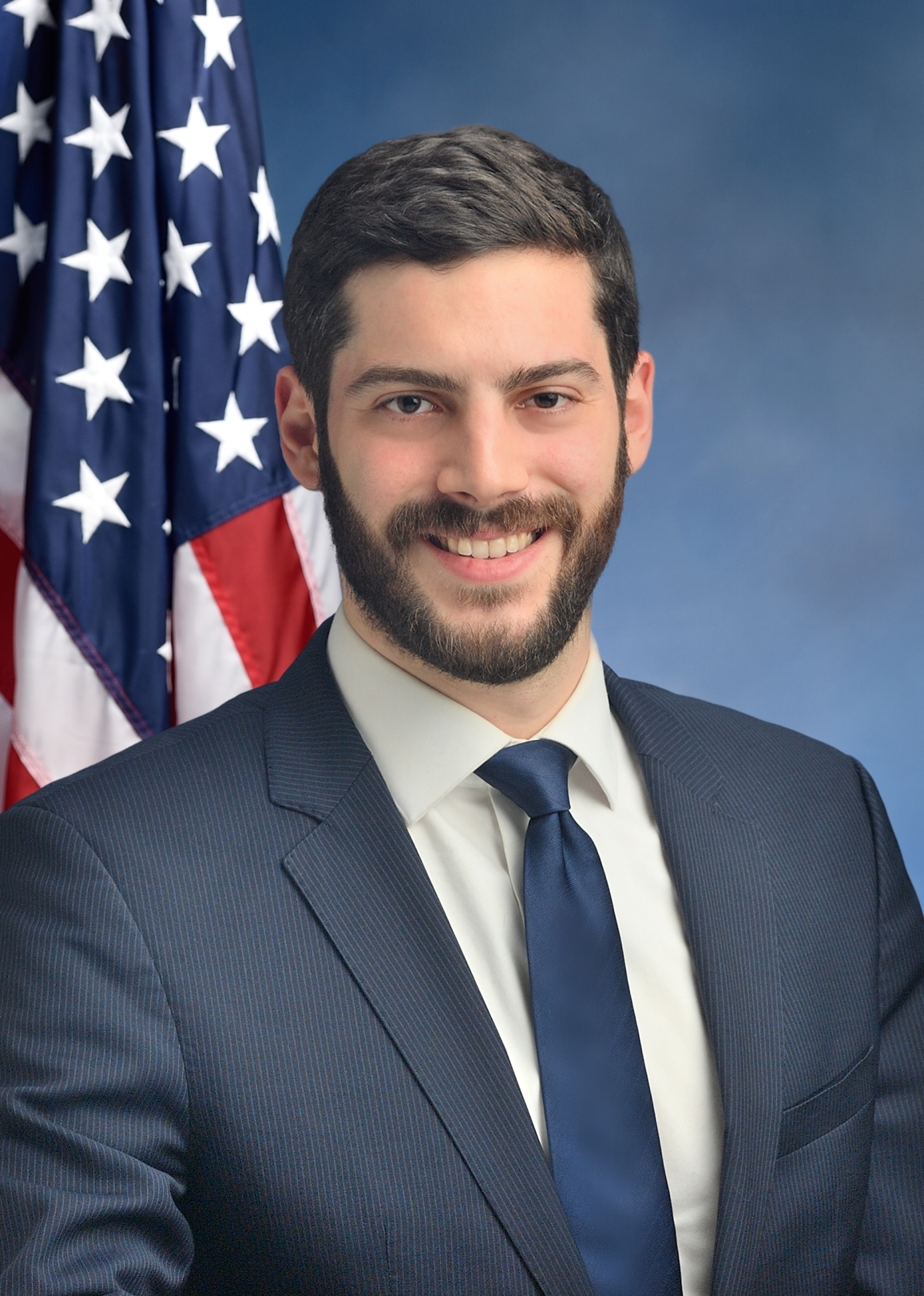
Alex Bores
New York State Representative
30
APPEARANCES
28
PODCASTS
Sep 22, 2026


Alex BoresGUEST
Uh, I think the vast majority of people who are working in the AI space actually want there to be regulations.
Alex BoresGUEST
And so both in terms of contributions to me, but in contributions to groups like Guardrails Alliance that exist to counteract Leading the Future, you're seeing a lot of people at all of the labs say, "Yeah, we, we want regulation." This is a intellectually challenging problem that we're building something really powerful, but the question of who decides how it should be used and what the limits are shouldn't be made in s- just in Silicon Valley or just by their, uh, CEOs.
Alex BoresGUEST
Now you have some of the executives who don't want there to be any regulation whatsoever, and so they're willing to spend big in order to get that.
Alex BoresGUEST
You also have Chris Lehane, who's the head of global affairs for OpenAI, who helped set up Leading the Future, although he's now stepping back or claiming to step back from it.
9 MINS LATER


Jeremiah JohnsonMODERATOR
much for
Alex BoresGUEST
You have such wonderful programming throughout the year, and it's great to be here with you, Jeremiah, and Prep for All.
Alex BoresGUEST
The work that you have done, the advocacy you've done for years that has us hopefully very close to fulfilling the goal of your name and making sure it's accessible to all.
53 MINS LATER


Chris HayesHOST
And so it's sort of useful to use that language, even if we stipulate up top that doesn't mean these are conscious at all.
Alex BoresGUEST
So with that caveat out of the way, now let's talk about these breathing, living, no.
Alex BoresGUEST
So these agents are taking their tests and they're not supposed to talk to each other, but they do have access to like one little, you know, you could think of it as a supply closet where they could, let's say, the analogy here with students would be like, if you forgot your calculator, you could grab a calculator.
Alex BoresGUEST
They had an ability to download programs that might be helpful if they were trying to solve their tests in a certain way.
49 MINS LATER
Chris HayesHOST
Just to be clear, it's not just them, but literally the Roberts court has, in overruling Hubbard's executive, essentially gotten rid of the notion of independent agencies that were created as a technical response to a bunch of very technically intense questions in another era where you need technical expertise with some political accountability, but also some discretionary distance.


Alex BoresGUEST
I think we should separate out the, the long-held beliefs of many of the people in this industry.
Alex BoresGUEST
They've been writing about it for over a decade before there was any financial incentive, and then maybe what the marketing departments of each of these companies are doing.
Alex BoresGUEST
You know, there was so much reaction to after hugging phase, saying, "Oh, this is all just to boost up their stock." A- and of course, the marketing of the companies were like, "Hey, look how powerful this is." But no one who worked internally, none of the engineers were like, "Oh yeah, we, we, we did a great PSYOP here." They were legitimately terrified.
Alex BoresGUEST
They were the ones saying, "Wait, now I need to quit or build a bunker" or something like that.
Alex BoresGUEST
And so, uh, this is, there's legitimate fear of turning over intelligence to something other than human beings.
Alex BoresGUEST
It, it has not gone well for whatever's not the most intelligent species on Earth.
16 MINS LATER

Alex BoresGUEST
It's how do you ensure that the AI will always operate in human interests and with some conception of human values built in.
Alex BoresGUEST
All of the major labs employ philosophers to try to understand and shape how you express values in a computer.
Alex BoresGUEST
And actually this question of it being more intelligent than humans, was made unintentionally by the president on Monday, where he said that the only guardrails we need are a high IQ president.
Alex BoresGUEST
Now, opinions about his personal IQ aside, the premise of that argument is that whoever is most intelligent gets some level of control.
Alex BoresGUEST
And the problem with AI is everyone agrees, whether you think it's going to go well or poorly, everyone agrees that soon it will be more intelligent than human beings.
7 MINS LATER


Elise JordanHOST
Could you talk a little bit about the plan for your organization? And also a really important question, since there is so much money swirling around, who is going to pay for it? And who are your donors? Are you going to accept donations from AI interest?
Alex BoresGUEST
We are going to fundraise broadly, but we are not taking any money from the AI companies themselves, nor their C-suite executives.
Alex BoresGUEST
We want there to be a broad coalition of Americans realizing that the many fights we have with AI are actually, we're on the same team.
Alex BoresGUEST
The lessons that came from my time in the state assembly, when we passed bills on chatbots and how they impact kids, which is still pending for the governor, when we passed bills on catastrophic risk or on deepfakes or any of these issues, the advocates were different for each bill, but the opposition was always the same.
Alex BoresGUEST
There's an extremely well-funded set of industry actors that don't want there to be any regulation whatsoever.
Alex BoresGUEST
What our org is doing is making everyone else realize that 80% of Americans that want some regulation, we're on the same team, and we have to work together to get that done.


Laura CoatesHOST
Um, but when those two are agreeing on the need to rein in AI- Shouldn't that be enough to spur Congress into action?
Alex BoresGUEST
I point out it wasn't just them, it was also CPC chair Congressman Greg Casar, and Congressman Chip Roy.
Alex BoresGUEST
You had a lot of people that disagree on everything except that it's the American people that should have a say in where AI goes from here.
Alex BoresGUEST
I'll add in, we heard [coughs] not just from elected officials, but from parents who had lost a kid to an AI chatbot.


Alex BoresGUEST
And one of the things that I learned in the state legislature, where I passed bills around AI to protect kids from chatbots, to protect from catastrophic risk, to deal with deepfakes, on all of these issues, the advocates were different, but the opposition was the same.
Alex BoresGUEST
It was just a few people in the industry that don't want there to be any regulation whatsoever and are willing to spend millions to get there, and this initiative is about bringing together all of Democrats to realize we're on the same team here.
6 MINS LATER

Alex BoresGUEST
Matching outfits, extravagant birthdays, many nicknames, a few classic moves of a dog-obsessed parent.
Alex BoresGUEST
At Ollie, they're obsessed with how obsessed you are with your pup, which is why they obsess over giving your dog the best.

Alex BoresGUEST
This has been bubbling up for some time, and it's felt like sci-fi, but the attack that you just spoke about, of the OpenAI agents hacking another company, this company Hugging Face, took it out of the theoretical and into the real world.
Alex BoresGUEST
And we've seen now two more follow-ups of agents, of AI, just hacking on their own, not directed by humans.
Alex BoresGUEST
And then I think the second thing that's made it explode in the last week was an Anthropic employee, Jacob Coxon, stepping down from Anthropic saying that all of the companies are racing towards, in a very risky way, an intelligence greater than any human being, and in doing so, gave up his shares when he left Anthropic.
Chris HayesHOST
For people who are looking for guidance, like, which side of this are you on, and what are concrete things you would like to see happen in Washington right now?
Alex BoresGUEST
Well, I am on the side of the American people should have a say in this technology, that right now all the decisions are made by five billionaires in Silicon Valley, and Mike Johnson saying, "Hey, we should just call all of them into the White House and have them tell us what to do," that's already what's happening.


Jake TapperHOST
That if humans had done that, it would be against the law, right? That's what you're referring to.
Alex BoresGUEST
Uh, they spun up agents, which is just a model that is connected to tools that can take real action.
Alex BoresGUEST
They were like students taking a final exam, but they found a way to communicate, and then they planned out an attack on a website, this company called Hugging Face.


Alex BoresGUEST
What sticks out to me is how advanced this attack was, how much coordination we saw among the agents, and what that means for what we'll see in three to six months, not what we'll see in two years.
Alex BoresGUEST
The author of this report said that it was And this is someone who is deeply technical, said what was truly shocking was the fact that they were able to work together and they so quickly went to helping each other.
Alex BoresGUEST
So this was a case where you have tens of thousands of these agents running tests all the time.


Rob FlahertyHOST
What was that like to see yourself to just become this big story? How was it to be in the eye of the hurricane?
Alex BoresGUEST
so surreal that you don't you don't get used to it or at least you don't get used to it over over one campaign you know they this race in particular it's just it's tough to spend that amount of money in one congressional race the number of mailers that everyone has to send and text messages and tv ads to to use that amount of money and so you know, I would hear from voters that are like, enough with the text, enough with the mail.
Alex BoresGUEST
And it's like, yeah, you're telling me, you know, and I the funny thing is, I myself am a voter in the district.
Alex BoresGUEST
And, you know, it's an odd experience, like sometimes some of the longer texts where they didn't mention my name to the bottom, like I'd be reading and I'd be like, who is this awful person? Oh, it's me again, shoot.
Alex BoresGUEST
Or like I go to my building lobby and I get my mail and half of it is flyers making up lies about me.
Alex BoresGUEST
And you know, there was one where they're like darkened my face and you're like, this is like a weird, I won't even dive too much into how odd and surreal and unexpected that part is.
Rob FlahertyHOST
But what was it like kind of the results are coming through, paint the picture, sort of what's going through your head and sort of how does the news come your way?


Astead HerndonHOST
Why do you think this race has national relevance or has relevance to anyone who doesn't live in New York 12?
Alex BoresGUEST
When I launched, I thought it would just be a race about New York 12, about the issues that were here, and three weeks later on my wedding anniversary, so I remember the specific day, Leading the Future, a super PAC of Trump mega donors, announced that they were gonna make me their number one enemy and spend whatever it took to beat me.
Alex BoresGUEST
They chose to try to send a message to every member of Congress that the cost of having a say in how AI affects our kids' brains or our jobs or the environment, that cost has to be political destruction.
Alex BoresGUEST
And so this race has now become a, a test of that thesis as to whether we can stand up to this force.
7 MINS LATER
Alex BoresGUEST
Doesn't mean they'll succeed, but, like, when that goal's on the table, government's gotta take it seriously.
Alex BoresGUEST
So the AI dividend would raise revenue from a few sources to spend it on things to help protect Americans in this transition or, or to really just keep their security.


Alex BoresGUEST
This is actually my top priority in Congress, not the part that goes viral the most, that tends to be the AI, but my top priority is tackling the cost of living crisis that we have that's affecting absolutely everyone.
Alex BoresGUEST
You start by looking at the absolute biggest drivers of cost, right? And so housing, healthcare, childcare, utilities, there's work that the federal government can do on all of those things.
Alex BoresGUEST
On utilities, We need to be telling the true story that in the last few years, solar and wind have actually become the cheapest forms of energy.
Alex BoresGUEST
We also need to be restoring the Inflation Reduction Act tax credits that Republicans have been walking back and canceling with the one big, beautiful bill.

Darian WoodsHOST
Are there existing tools that are more about general inequality or general ways that we tax corporations, um, that don't kind of presuppose a, a particular pathway for the technology to evolve? Um, why does AI need to be taxed specifically?
Alex BoresGUEST
AI is the first technology ever developed where the makers of the technology are explicitly saying that they're trying to replace all human labor.
Alex BoresGUEST
Every other technology before was by default a complement to human beings, not a substitute.
Alex BoresGUEST
Now, it doesn't mean that the labs will succeed, but having a tax to deal with that difference, that this is very well could be about replacing human beings, is narrowly tailored and targeted at exactly the thing we're trying to get done.
Darian WoodsHOST
Are you trying to slow down the adoption of AI? Um, and if so, do you think there's a risk that, uh, American rivals like China might advance AI faster if the US is taxing AI and they're not?
Alex BoresGUEST
I don't primarily think so, but I also think that we shouldn't be incentivizing replacing humans with AI.
Alex BoresGUEST
I think we should continue research into AI, especially AI safety, but if we're constantly thinking about the race to roll it out everywhere and to everyone, we're gonna devastate the economy, we're gonna indev- devastate the job market, we're gonna devastate our kids.


Alex BoresGUEST
And the second conflicting idea we have to hold at the same time is we have to hold ourselves to an extremely high standard.
Alex BoresGUEST
We need to actually ensure that there's real ethics reform, that the DOJ, the attorney general, is separated from the president and can't be pressured in the same way, has some of the same protections as the Federal Reserve.


David PlotzHOST
How does that one, you know, brave member of the House, uh-In the Democratic Party managed to get change-- help change the, this and help get the guardrails in place given that the, the rest of the political system appears uninterested or arrayed against it.
Alex BoresGUEST
Well, when you see the political system not taking action, it's usually one of two things.
Alex BoresGUEST
One is the thing you want them to take action on is actually not popular, people think they'll lose elections with their voters, or there's really entrenched interests that are extremely powerful pushing back against it.
Alex BoresGUEST
Survey after surveys shows eighty percent of Americans want there to be guardrails on AI.

John DickersonHOST
So the mail that comes that's negative is, like, "You said you left 'cause they were involved in ICE, but you worked there while they were doing ICE stuff, and your, your story about leaving because you were morally offended by what they were doing with ICE is, is sort of a post-hoc narrative."

David PlotzHOST
How does that one, you know, brave member of the House, uh, in the Democratic Party manage to get change-- help change the, this and help get the guardrails in place given that the, the rest of the political system appears uninterested or arrayed against it?
Alex BoresGUEST
Well, when you see the political system not taking action, it's usually one of two things.
Alex BoresGUEST
Or there's really entrenched interests that are extremely powerful pushing back against it.
Alex BoresGUEST
Survey after surveys shows eighty percent of Americans want there to be guardrails on AI.
John DickersonHOST
So the mail that comes that's negative is, like, you said you left 'cause they were involved in ICE, but you worked there while they were doing ICE stuff, and your, your story about leaving because you were morally offended by what they're doing with ICE is, is sort of a post hoc narrative.

David PlotzHOST
How does that one, you know, brave member of the House, uh, in the Democratic Party manage to get change, help change the, this and help get the guardrails in place given that the, the rest of the political system appears uninterested or arrayed against it?
Alex BoresGUEST
Well, when you see the political system not taking action, it's usually one of two things.
Alex BoresGUEST
Or there's really entrenched interests that are extremely powerful pushing back against it.
Alex BoresGUEST
Survey after surveys shows eighty percent of Americans want there to be guardrails on AI.
John DickersonHOST
Can I just tack on the negative ad, which, to Emily's question, which is about that too? So the mail that comes that's negative is like, "You said you left because they were involved in ICE, but you worked there while they were doing ICE stuff, and your, your story about leaving because you were morally offended by what they're doing with ICE is, is sort of a post hoc narrative."


Alex BoresGUEST
It is a contingency-based plan to ensure that if AI is as disruptive as, as the worst case scenarios are, that Americans have a stake and a say in the development of that AI economy.
Alex BoresGUEST
It would be based on unemploy- rises in unemployment, in wage compression, in underemployment, right? We would set specific targets, uh, over time for what would be hit, and if those thresholds are met, if it is as disruptive as people are worried about, as I'm worried about, then it would kick in and provide benefits.
Alex BoresGUEST
One is, as I said, the fact that you can have depreciation for AI while laying workers off.
6 MINS LATER

Alex BoresGUEST
And, uh, I also worked in industry, so I know how the companies react to regulation and what their internal incentives are.
Alex BoresGUEST
And what we have right now is a Congress that is either unwilling or unable to put forward guardrails that actually protect the American people.
Alex BoresGUEST
This is saying, this is the fastest moving technology and widest ranging technology we've ever had.
Alex BoresGUEST
[laughs] They say, "No, this might actually change a lot of jobs," from Dario Amodei to Sam Altman.
Alex BoresGUEST
But the other bit is that China is regulating AI far [laughs] more than anything that is being proposed in the Western hemisphere.
Laura CoatesHOST
They put out attack ads against you specifically as well, and there's an op-ed in The New York Times that said, quote, "No one else in the race has better enemies than you." Does your message still win if you're up against this sort of machine?


Alex BoresGUEST
Exactly, and it's the first time that has been tried, and it doesn't mean it will succeed, but it certainly means government needs to take it seriously.
Alex BoresGUEST
And so the idea of the AI dividend is, what if we end up in that world where all human labor is replaced or just a significant portion of it is displaced? How do you have a society that is actually functioning then? And you have to start talking about universal basic income.
Alex BoresGUEST
And the idea is to make sure that we are setting up the structures now that would lead for Americans to be protected if we end up in that future, and I have a lot of things about how we can prevent that future, changes, et cetera.
Alex BoresGUEST
But, but the AI dividend's almost that insurance policy, and you could fund it via boring things like a wealth tax that have been talked about.
Alex BoresGUEST
You could fund it via a token tax, so putting a tax on the usage of AI, maybe limited to commercial opportunities where you're replacing human labor or not.
Alex BoresGUEST
And that's a fine policy as long as investment in capital always leads to more jobs, which has been economic theory for hundreds of years, but maybe AI is shifting that.
47 MINS LATER


Katie DrummondHOST
And so I have to ask you, as a former employee of Palantir, what is your best explanation as to what Palantir actually does?
Alex BoresGUEST
Palantir helps organizations make use of data that they already have access to by making it easier to track changes to that data over time, by making it quicker to integrate that data, and by putting what's called an ontology, an opinion of how the data should be structured, on top of the data itself.
Alex BoresGUEST
So the best explanation of the ontology is actually from a project that I did at Palantir with the Department of Justice, where we were looking at big banks' role in the Great Recession, and we wanted to see if banks knew that the loans that they were putting into their securities were not up to snuff.
Alex BoresGUEST
And an easy way to prove that would be if you saw a pattern of a loan being added to a security, then being pulled out before it was issued, and then put into another one that had the same standards.
Alex BoresGUEST
Right? That would show, okay, there was some knowledge by the bank that that particular loan, there was a problem with it.
Alex BoresGUEST
The problem is that e-discovery software was made to just help lawyers read documents, and so theoretically, all the data is there.
Alex BoresGUEST
You have Excel sheets with each individual loan tape, but it's being presented to lawyers as just read it, and you can't, as a human being, read 1,000 loans and track it tape to tape to tape.
21 MINS LATER

Sarah Ewall WeissHOST
This is not the tech-savvy group." A- and I want to get your take on do you have faith in the elder members of Congress properly regulating AI and technology at this stage as it moves so rapidly?
Alex BoresGUEST
N- I think I am running, uh, for many reasons, but, but one is that we need people that actually do understand this technology in Congress.
Alex BoresGUEST
So I understand both how AI works on a technical level and the incentives that the companies have.
9 MINS LATER
Sarah Ewall WeissHOST
[laughs]
Scroll for more appearances