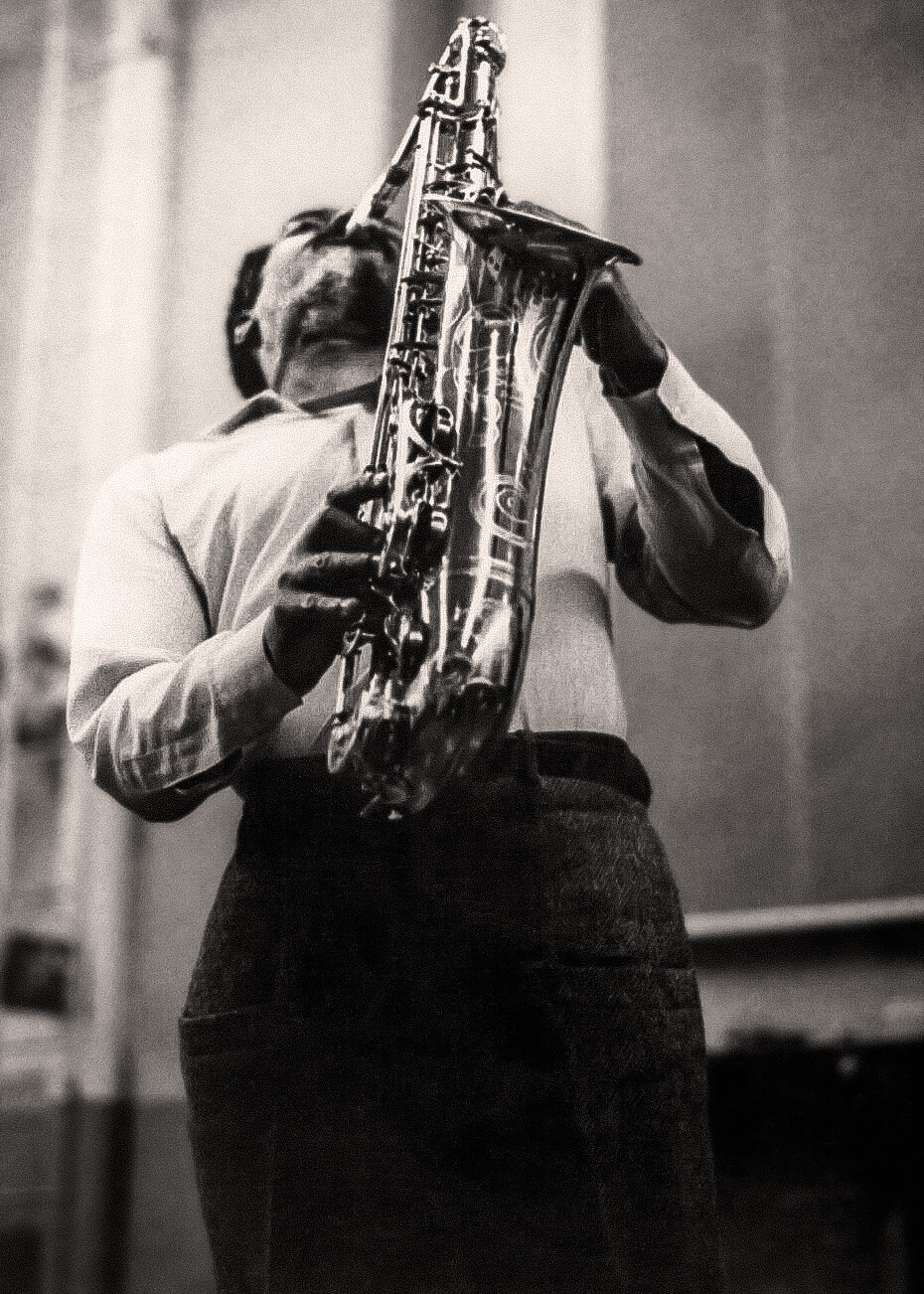
Albert Ayler
American saxophonist and composerWikipedia
7
MENTIONS
5
EPISODES
5
PODCASTS
Search complete. 7 mentions across 5 episodes found for "Albert Ayler".
Oct 6, 2026

Will ChernoffHOST
Oh.
Bill ClarkGUEST
So then, so then they said, "And, and the Jazzoids." So then for about a decade, I had a band on and off that would have iterations of everything from sort of almost punk Albert Ayler to, um, to Miles Davis-like tri- tribute stuff, um, called The Jazzoids.
Bill ClarkGUEST
Anyways, so I was living at this ware- warehouse space, and Hugh came down to hang out with me and all of our friends, and we were like, "We need to get a place." And we found a place in the East End, and we were all having a dinner and party at the warehouse because we had signed a lease on this place in the East End.
Bill ClarkGUEST
And, uh, we had that place starting in January, and that's where Veggie was born.

Toby RogersGUEST
Um, as Bill Dixon called it, he said it was j- as into and of itself with no outside influences anymore, and that's when you'd get into the, right after Ornette Coleman, Coltrane followed that path.
Toby RogersGUEST
Uh, and then you have, um, well, obviously there's Sun Ra, and then you get into Cecil Taylor and, uh, and Albert Ayler and F- Pharoah Sanders, and you're on your way.
Toby RogersGUEST
And this music, um, which didn't sell a lot, and very much like Bob, when Bob Dylan went electric, John Coltrane went from, like, the golden boy of jazz in 1964, January 1965, till I think it was September of 1966 when Ascension was released.
Toby RogersGUEST
And like Bob Dylan at, at, at the, uh, Newport Folk Festival in '65 when he went electric, he was roundly trashed by jazz critics, um, saying he lost his way.
Toby RogersGUEST
Uh, you had West, Ornette Coleman started in, in California.
Toby RogersGUEST
Sonny Rollins' Way Out West went out, uh, was the first jazz album, uh, that was a trio without a piano, just bass, d- uh, jazz, um, sorry, bass, saxophone, drums.
Toby RogersGUEST
And that was, uh, highly influential to the group we're talking about, John Coltrane, um, Ornette Coleman, Albert Ayler.
Toby RogersGUEST
Uh, that Way Out West, uh, there's a song, I think it's called Come Gone, and another one, Way Out West itself.

Mark Henry PhillipsHOST
And I should say, most of what I saw him do at Tonic was a long way from a Tom Waits record.
Mark Henry PhillipsHOST
It was closer to the free jazz of Albert Ayler.
Mark Henry PhillipsHOST
It was abrasive, challenging.
Mark Henry PhillipsHOST
It was the kind of music that I knew was cool to like, even though I didn't quite get it yet.

Jerry StahlGUEST
You know, I like all, all kind of jazz, you know? And, uh, I'm, I'm, I'm sure I'm blanking on something, but, you know, lot, lot of hardcore...
Jerry StahlGUEST
You know, I love Albert Ayler.
Jerry StahlGUEST
You know, a lot of the more wild, outside jazz cats.
Jerry StahlGUEST
And, uh-

Kevin WhiteheadCORRESPONDENT
On One Down, One Up from 1965, he volleys high and low phrases back and forth in dialogue with himself, sounding less like a singer than an impassioned preacher.
Kevin WhiteheadCORRESPONDENT
[jazz music] In John Coltrane's ecstatic final two years, he took LSD and took inspiration from his younger colleague Albert Ayler's heavier tone and vibrato.
Kevin WhiteheadCORRESPONDENT
He formed a new quartet with his wife Alice Coltrane on piano.
Kevin WhiteheadCORRESPONDENT
Live and on record, he surrounded them with extra players of uneven quality.
Kevin WhiteheadCORRESPONDENT
[jazz music] Since John Coltrane's death at 40, folks have speculated where his music might have gone next.
Kevin WhiteheadCORRESPONDENT
He had discussed various possibilities with his wife, and the wildly orchestrated records Alice Coltrane made a few years later may offer some clues.
Kevin WhiteheadCORRESPONDENT
For me, it's enough to marvel at how steadily and quickly Coltrane advanced, constantly refining his saxophone style and technique alongside his composing and bandleading and spiritual life and advocacy for younger colleagues.
Kevin WhiteheadCORRESPONDENT
Amazing to me that he made all the varied records under his own name in just 10 years.