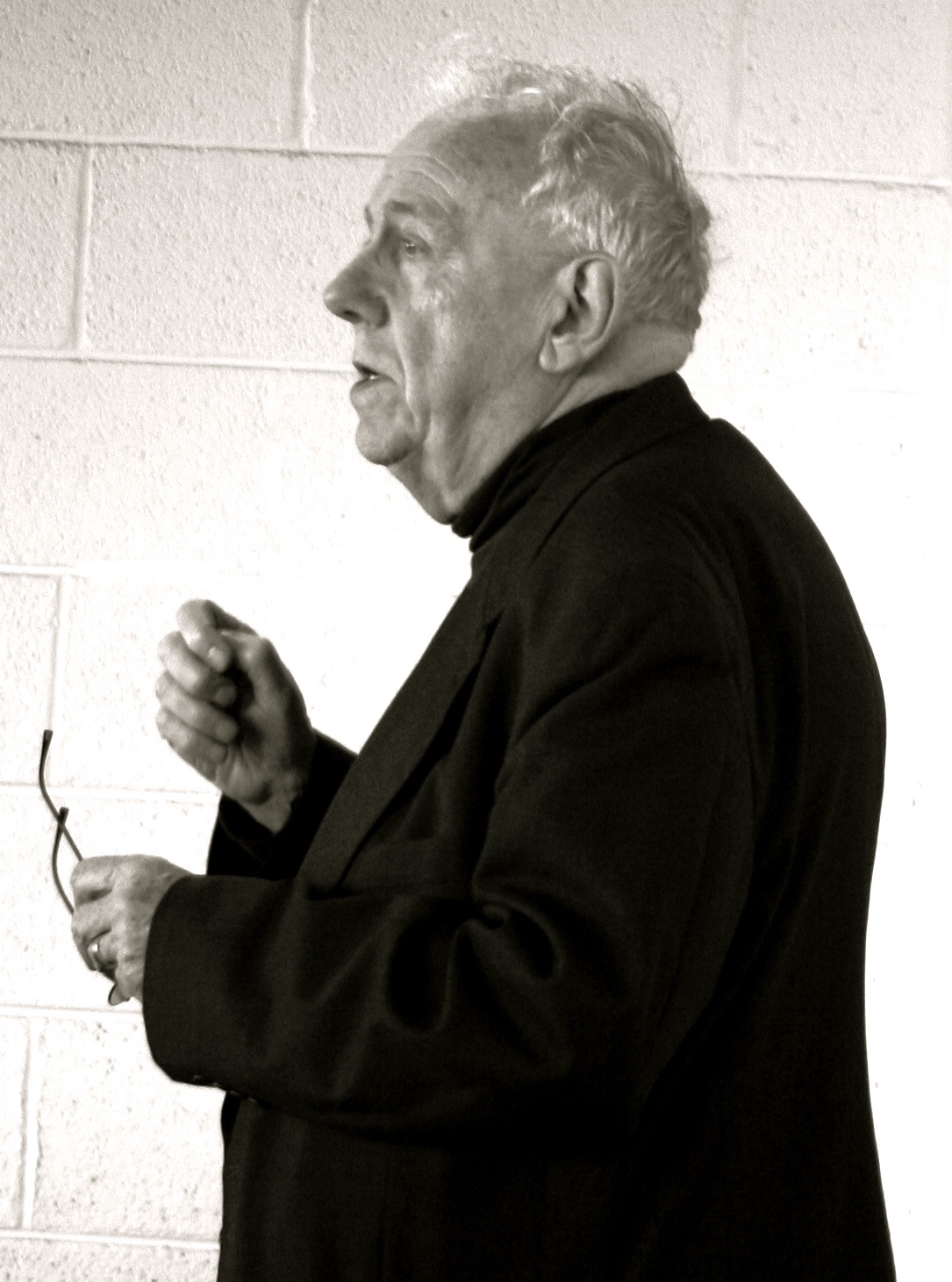
Alasdair MacIntyre
Scottish-American philosopherWikipedia
41
MENTIONS
30
EPISODES
26
PODCASTS
Search complete. 41 mentions across 30 episodes found for "Alasdair MacIntyre".
Oct 25, 2026

James AllenGUEST
Stories shape us.
James AllenGUEST
The philosopher and ethicist Alasdair MacIntyre, in his book After Virtue, he was making this argument of how do we ground our morality? How do we ground our ethics and our virtues? And he had this wonderful quote.
James AllenGUEST
He says this, I can only answer the question, what ought I do if I first answer the question of what story or stories am I a part? Stories shape us.
James AllenGUEST
If we're going to answer what should we do, we first must answer the question of what story am I a part of or playing out? And as Paul is asking this question or answering this question, should Christians eat food sacrificed to idols? He takes a step back and he begins to reframe his answer by answering, what story, Corinthian church, are you a part of? What story are you playing out? See, the thing about the Corinthians is they weren't short of stories.

Pete QuiñonesHOST
In all fairness, it should be said that even probing critics of contemporary liberalism ascribe it to an exce- excessively long genealogy.
Pete QuiñonesHOST
Christopher Lasch, John P. Diggins, and the ethical philosopher, Alasdair MacIntyre, have all written critically on the liberal heritage which they believe has descended more or less intact from early cen- earlier centuries.
C.Jay EngelGUEST
Yeah.
C.Jay EngelGUEST
I think-

Pete QuiñonesHOST
In all fairness, it should be said that even probing critics of contemporary liberalism ascribe it to an exce- excessively long genealogy.
Pete QuiñonesHOST
Christopher Lasch, John P. Diggins, and the ethical philosopher, Alasdair MacIntyre, have all written critically on the liberal heritage, which they believe has descended more or less intact from early cen- earlier centuries.
C.Jay EngelGUEST
Yeah.
C.Jay EngelGUEST
I think-

Mahlatse MeshuaGUEST
What makes a human life purposeful in the first place? Mm-hmm.
Mahlatse MeshuaGUEST
It was Alasdair MacIntyre who said, "I can only answer the question what am I to do if I can answer the prior question of what story or stories do I find myself a part?" Mm-hmm.
Mahlatse MeshuaGUEST
In other words, before I understand what to do with my life- I need to understand the story in which my life is taking place.
Mahlatse MeshuaGUEST
What kind of world is this in the first place? Where did I come from? What is a human being? Right, we see so many people trying to improve this human being, make it faster, efficient, make it e- easier for it to live without defining what it is for.
Matthew Raphael JohnsonGUEST
So he had to go that far to make a point.
Matthew Raphael JohnsonGUEST
Um, Alasdair MacIntyre was, the center of his research too was, was that.
Matthew Raphael JohnsonGUEST
It's not a unified society.
Matthew Raphael JohnsonGUEST
It's barely a society at all.
Thomas777GUEST
... it's a similar kind of thing.
Matthew Raphael JohnsonGUEST
I have a, a short book out on Alasdair MacIntyre.
Thomas777GUEST
Yeah.
Thomas777GUEST
I, I've, I've got, uh, I, I've got some of his stuff on my bookshelf.
Thomas777GUEST
Yeah, this was like 20 years ago, but...
Thomas777GUEST
And it was interesting because, you know, it's not...
Thomas777GUEST
I, I think, uh, MacIntyre, I, I think he's dead.
Thomas777GUEST
I think he's long dead.

Sean McDowellHOST
I think somebody gets it here." And then what, what happened in this meeting is historic, uh, in Rochester, in the historic Lyon Mansion, uh, a home full of old books and hand-carved woodwork, over 100 women of all ages assembled to chart a new path forward for the fair sex in the 21st century.
Sean McDowellHOST
And just a couple quick things about it is that one of the roots is that they're, they're kind of following the tradition of the wildly influential philosopher, Alasdair MacIntyre, who said that, "True human freedom mas- manifests itself in mutual dependence of persons." So in other words, freedom being independent and autonomous, do whatever I want or feel.
Sean McDowellHOST
Real freedom is actually found with interdependence in community.
Sean McDowellHOST
Love that.

John GillamHOST
In this conversation, Marie and I think out loud about why she, as someone raised between two civilizations, chose to defend the West and Britain specifically.
John GillamHOST
We talk about Alasdair MacIntyre's question of what story do I find myself apart and what happens to people when they are told that the story they are a part of is one of shame.
John GillamHOST
The French Revolution as a spiritual catastrophe with a two-century tale.
John GillamHOST
How victimhood became a form of cultural capital in the modern West.
7 MINS LATER
John GillamHOST
But one very original insight within your book was that besides ceasing encouraging people to see themselves as victims is actually we all need to see those people who have arrived on whoever's shores that pretty much all of them to a man or a woman are actually descended from a fallen empire themselves that they are they were themselves uh or are themselves the descendants of former imperialists uh perhaps it took a different expression but It is true that they also have skeletons in their ancestors' closets.
John GillamHOST
And, you know, if the Sins of the Fathers game is to be played, well, it can be played everywhere if we're in a period of radical egalitarianism after all.
John GillamHOST
Marie, you also cite quite early in your book, Alasdair MacIntyre, a very famous English-speaking philosopher or philosopher of the English-speaking world.
John GillamHOST
And much of his work was focused on the dissolution of stories, the moral substructure that has held the West together and that has accreted over time and all of those things.

Jason T. EberlGUEST
But increased longevity, which we all benefit from today, right, the human lifespan has increased historically, it allows us more time to pursue truth, deepen and develop new friendships, cultivate virtue, eliminate vice, further the common good, right, all the things we're supposed to be doing with our lives.
Jason T. EberlGUEST
But, and I've, you know, mentioned this point before, there's a concern that we could be negatively impacting our shared sense of vulnerability and finitude that again, there are, there are goods that we derive from living our lives conscious of the fact that we will die, right? Alasdair MacIntyre, a well-known philosopher who recently passed away, in this great book, Dependent Rational Animals, argues for what he calls the virtues of acknowledged dependence, right? We have to be mindful of the fact that we all came into the world helpless.
Jason T. EberlGUEST
If we didn't have parents or others who were caring for us from day one, we would have died.
Jason T. EberlGUEST
And most of us will probably experience, either within the context of our lives or as we age, forms of dependence again, and we have to be prepared for that.

Douglas MurrayGUEST
And, and the same thing is true when people are like, "Oh my God, it's the en- the, the last election." So that's one tendency that I hate, is the, the last election crisis point.
Douglas MurrayGUEST
The other thing that I hate is, again, emotivism, which is a, a term that's used by Alasdair MacIntyre, uh, not coined by him but used by him, uh, which is basically the, the attribution of motive to people in lieu of attempting to explain w- their logic.
Douglas MurrayGUEST
So what you will do is you'll say, "The real reason that they're doing X, the real reason they say this is because they hate you and they want you to die," right? "The real reason they're doing this is because they despise you.
Douglas MurrayGUEST
They despise you and they despi- And so I have a right to despise them, because they despise you." It's not just a legit disagreement about foreign policy or about tax policy, it's, "They hate you and they want you to die.
20 more episodes mention Alasdair MacIntyre.
Create an account to see the whole feed, search across every transcript, and follow the entities you care about.