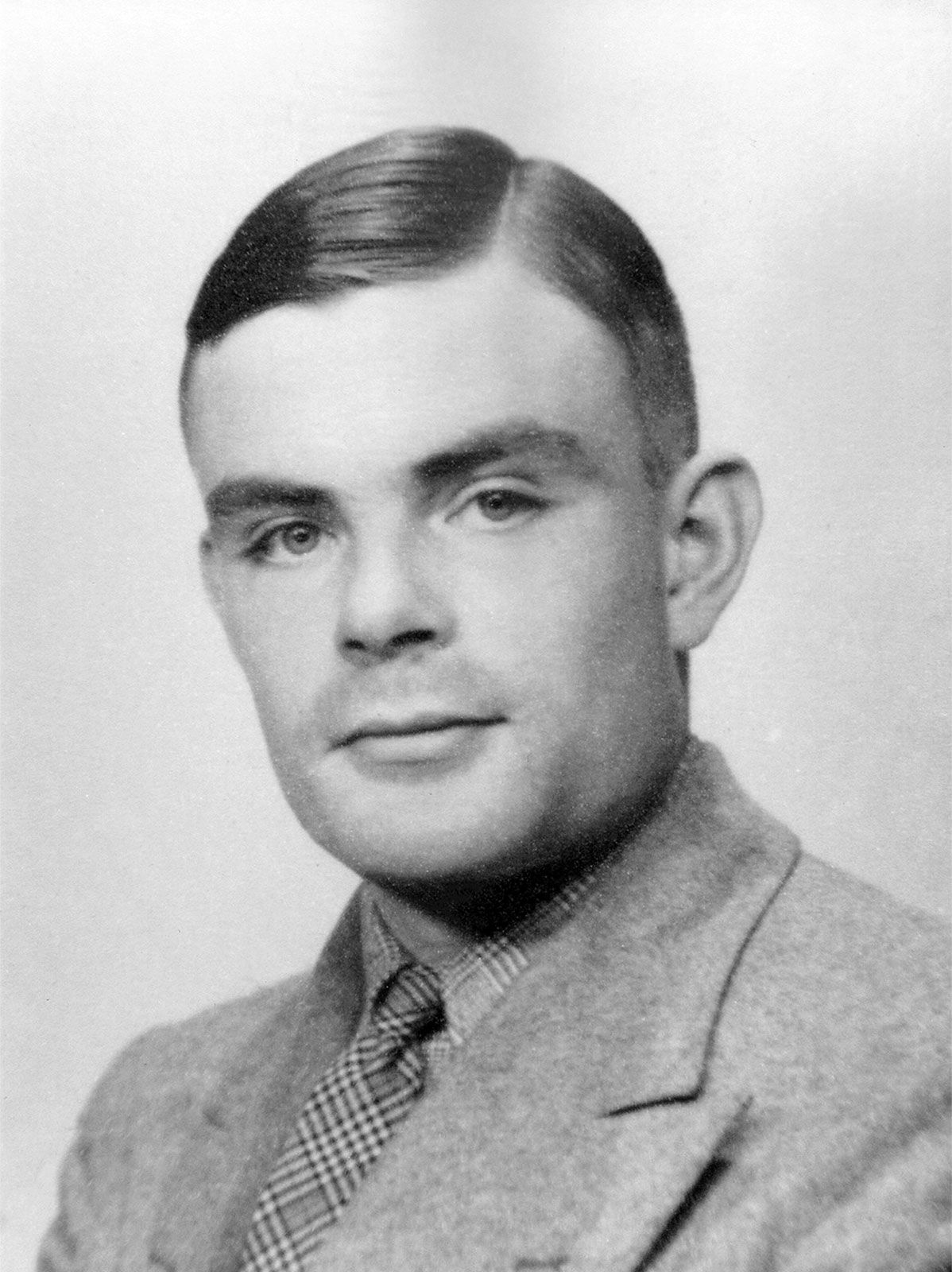
Alan Turing
Mathematician and logicianWikipedia
461
MENTIONS
223
EPISODES
208
PODCASTS
Search complete. 461 mentions across 223 episodes found for "Alan Turing".
Oct 27, 2026

MarkPANELIST
younger
ScottHOST
Oh, he's the younger Alan Turing, is he?
MarkPANELIST
Yeah.
MarkPANELIST
Oh, right,

Thomas Felix CreightonHOST
In March it announced its intention to remove historical figures from its banknotes.
Thomas Felix CreightonHOST
Jane Austen, Winston Churchill and Alan Turing are set to be replaced with moles, badgers and hedgehogs.
Thomas Felix CreightonHOST
According to the marketing agency commissioned to oversee the changes, the likes of Churchill are divisive, elitist, contentious and not representative of the UK's cultural and natural diversity.
Thomas Felix CreightonHOST
They're also said to be relics of a backward-looking vision of the UK that carries too great a risk of division and controversy.

KatieHOST
Well, they're fantastic.
KatieHOST
I mean, you go from Beowulf, Magna Carta, Alan Turing's Computer Code, Sex Pistols, artwork, Brexit ballot paper.
KatieHOST
So it's a real blend of all sorts, which just kept it rocking along.
KatieHOST
There are so many things.

KatieHOST
Well, they're fantastic.
KatieHOST
I mean, you go from Beowulf, Magna Carta, Alan Turing's Computer Code, Sex Pistols, artwork, Brexit ballot paper.
KatieHOST
So it's a real blend of all sorts, which just kept it rocking along.
KatieHOST
There are so many things.

speaker_0NARRATOR
248.
speaker_0NARRATOR
Alan Turing is now deservedly on the United Kingdom's £50 banknote delighted to hear the Bank of England announce that mathematician, war hero and computer science pioneer Alan Turing will be pictured on a new £50 banknote.
speaker_0NARRATOR
249.
speaker_0NARRATOR
The end of the war the prophet who emerges with the most honour from this war is Block, 250.

Prakhar GuptaHOST
The first time I saw a GPD machine, the Turing test.
Prakhar GuptaHOST
Alan Turing's legacy was put to bed that day.
Prakhar GuptaHOST
Right? Now, we didn't define what proper progress in math and physics is.
Prakhar GuptaHOST
And we'll find very quickly.

Kevin RooseGUEST
I mean, people have been talking and writing about AGI or some precursor that wasn't called AGI but meant the same thing since literally antiquity, especially since the 1950s when the term artificial intelligence was born.
Kevin RooseGUEST
People were talking about, Alan Turing was writing about the thinking machine that could do anything the human brain could.
Kevin RooseGUEST
So this concept has been around for a long time, but there was no technology anywhere on the market or in research labs that could actually do what people wanted it to do.
Kevin RooseGUEST
That could take in information, learn to learn about that information and then use that to make predictions and act in the world.

HilaryHOST
That's a lot of money.
HilaryHOST
But £50 notes in the UK feature Alan Turing.
HilaryHOST
You may not have heard of him, but he is called the father of computing for the role he played in the design of the Enigma machine in World War II.
HilaryHOST
That's the one that managed to crack the codes.
HilaryHOST
So let's not worry about that one.
HilaryHOST
It's the 5, 10, 20 and 50 pound notes that most people get by on.
HilaryHOST
Anyway, the story today is that the Bank of England are doing away with Winston Churchill, Jane Austen, Alan Turing and J.M.W. Turner, as he's known.
HilaryHOST
Instead, there will be a bumblebee, a hedgehog, a barn owl and a puffin.

Lynne McTaggartGUEST
But I didn't talk about one thing that was most amazing of all.
Lynne McTaggartGUEST
Alan Turing is the mathematician, well known and now very well known after the Benedict Cumberbatch film about him, for breaking the Enigma code, the Nazi code during World War II that enabled the Allies to win the war.
Lynne McTaggartGUEST
He also is well known for something called Turing's patterns.
Lynne McTaggartGUEST
He was fascinated by repeating patterns in nature, like how come a zebra has stripes that repeat? And those are called, in science, they're called harmonics too, repeating patterns.

Konstantinos KaragiannisGUEST
And we'll talk about that with Bitcoin.
Konstantinos KaragiannisGUEST
But we have a great example of this with Alan Turing, right? When he cracked Enigma, he didn't send a message to the Germans.
Konstantinos KaragiannisGUEST
Ha ha, we know how to read your messages.
Konstantinos KaragiannisGUEST
He did not do that.
213 more episodes mention Alan Turing.
Create an account to see the whole feed, search across every transcript, and follow the entities you care about.