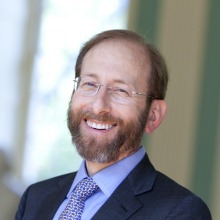
Alan Garber
President of Harvard UniversityWikipedia
8
MENTIONS
7
EPISODES
7
PODCASTS
Search complete. 8 mentions across 7 episodes found for "Alan Garber".
Oct 1, 2026

Randall KennedyGUEST
Harvard University has definitely had an antisemitism problem in its history, no two ways about that, including fairly recently, including fairly recently.
Randall KennedyGUEST
It's also the case that if one takes a look at Harvard University over, let's say, the past 30 years, if one asks, you know, so who is the current president of Harvard University? Alan Garber, wonderful person, Jewish.
Randall KennedyGUEST
Who was the president before him? The president before him was, you know, Claudine Gay.
Randall KennedyGUEST
Who was the president before her? Larry Bacow, wonderful educator, Jewish.

Jacob WeisbergGUEST
Their own constituencies have said, "This would be terrible and a betrayal of our fundamental mission, and a betrayal of academic freedom and academic integrity." I think it makes it very hard for them to make a deal.
Jacob WeisbergGUEST
But I also think the president of Harvard has, uh, Alan Garber's kind of, like, found his nerve, you know, and I don't think he's gonna make a deal.
Jacob WeisbergGUEST
Certainly not gonna make a deal if Democrats take back Congress in November.
Jacob WeisbergGUEST
Um, so Trump came after Yale more recently.

Klara JelinkovaGUEST
And so if you happen to have come of age and come to computer science in the late 80s and early 90s, you're actually going to remember.
Klara JelinkovaGUEST
what was going on, right? And that was the time when there was a lot of discussion about, was there any future in computer science and teaching computer science? People were dropping out by the boatloads, right? But the main question there was, Should computer science, and I will say more broadly, teach durable skills, or should it teach just kind of these temporary skills? And this is a place where I actually completely agree with what Alan Garber said a few years ago, which was, You know, the temporary skills are going to erode very, very quickly.
Klara JelinkovaGUEST
But what we are teaching our students, which is kind of these capabilities that they learn in the classroom are largely in like working on problem sets together, being part of a community, right? Which is, you know, critical reasoning, curiosity, empathy, deep listening are going to be durable.
Klara JelinkovaGUEST
And so one of the things that was really interesting yesterday at dinner, Stephen mentioned that the most successful teams, there was a Google research on this, were those where the teams had psychological safety to collaborate.

Norman FinkelsteinGUEST
Let me reread it." I reread it.
Norman FinkelsteinGUEST
They said at the encampment, somebody had a picture of Alan Garber, the president of Harvard, as a devil.
Norman FinkelsteinGUEST
As a devil.
Norman FinkelsteinGUEST
Somebody had a poster in the encampment.

David DemingGUEST
I'm responsible for undergraduate education at Harvard.
David DemingGUEST
So, you know, there's the president of Harvard, President Alan Garber, who's responsible for all the different faculties, the business school, the law school, the medical school, the graduate school of arts and sciences, and I'm responsible for the undergraduate part of the university.
Derek ThompsonHOST
And how does that work with y- your job as an economist? Because actually we're g- gonna talk in a few minutes about a paper that you just published last week.
David DemingGUEST
Yeah.
David DemingGUEST
Our printing press was no longer the only printing press.
David DemingGUEST
And knowledge proliferated, and, you know, the world became more complex.
David DemingGUEST
And so the great, um, presidents of Harvard and other universities, so in our case it was President Eliot, President Lowell, recognized this, and said, "Actually, we're gonna open up the curriculum.
David DemingGUEST
We're gonna create more electives.

Craig CarrollHOST
Authorities now, it's gotta be demonstrated, and it's gotta be able to hold up under exposure.
Craig CarrollHOST
And we've captured that idea, I think, most directly when we discussed Alan Garber's response to the White House campaign against Harvard.
Craig CarrollHOST
Uh, I think I called his approach studiously bland.
Craig CarrollHOST
You know, in chaotic environments, blandness, I think, is a form of discipline-

Noah PollakGUEST
I understand you don't like the idea that this was joined with grant cutoffs.
Noah PollakGUEST
The other thing I have to say about the grant cutoffs, by the way, Alan Garber, president of Harvard, did something that I thought was incredibly cynical when he received one of these letters where he wrote this response and said, we're curing Alzheimer's and we're curing this disease and we're curing that disease in our medical school.
Noah PollakGUEST
And you're going to risk all that.
Noah PollakGUEST
He said, you're going to get people killed for threatening these grants.