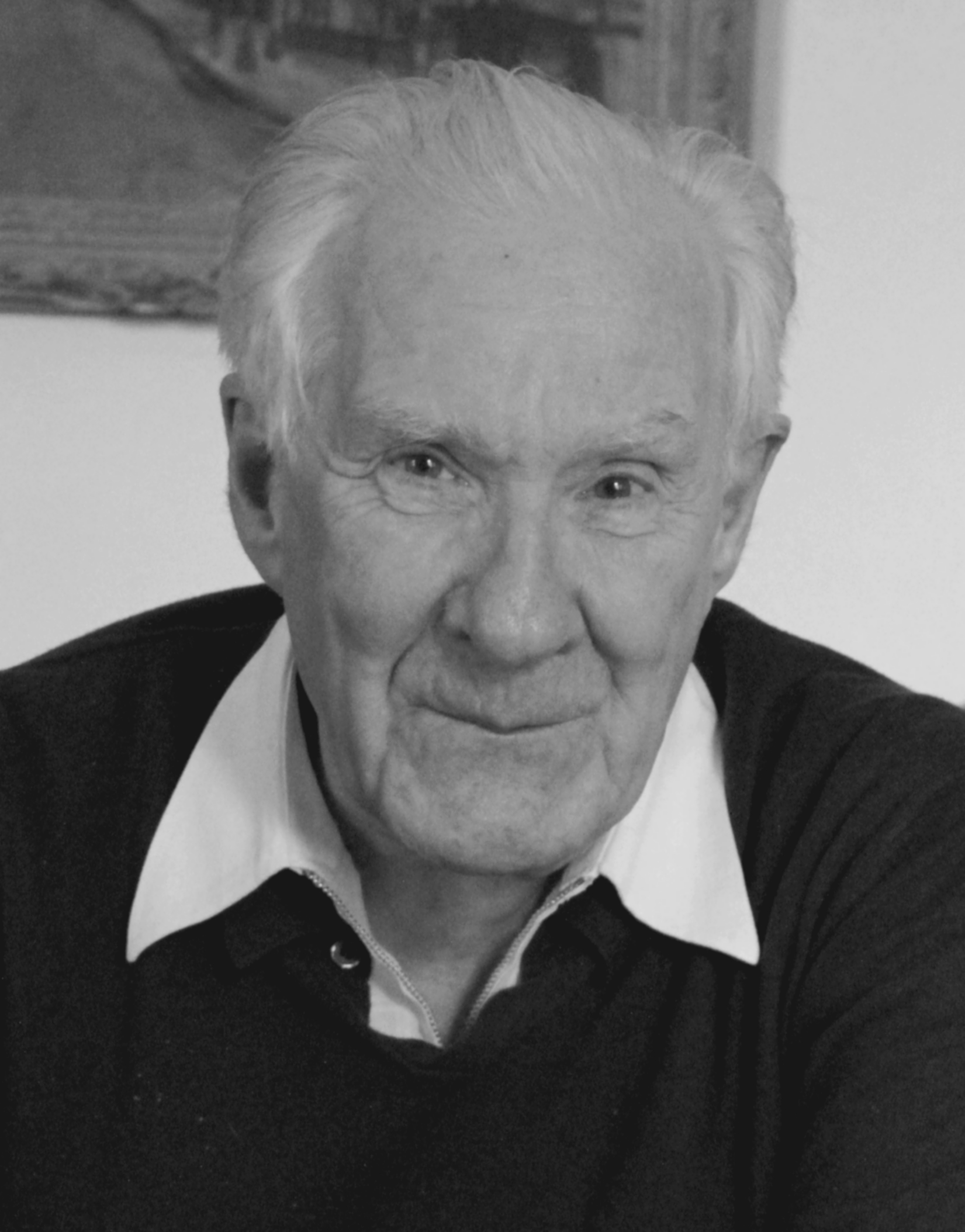
Alain Badiou
French philosopherWikipedia
14
MENTIONS
5
EPISODES
5
PODCASTS
Search complete. 14 mentions across 5 episodes found for "Alain Badiou".
Sep 14, 2026

Daniel TuttHOST
And I wanna add a couple points about your biography, just by way of introduction, that you are the author of a very important work.
Daniel TuttHOST
And I say this in a selfish way, because it was very important for me, entitled, Post-Foundation Political Thought, Political Difference in Nancy, Laforte, Badiou, and Laclau with Edinburgh University Press, came out in 2007.
Daniel TuttHOST
You also co-edited The Laclau Critical Reader with Simon Critchley, amongst many other articles and other books.
Daniel TuttHOST
And we'll learn a little bit more about what drove you to your research, your interest in Laclau and so on in a moment.
Daniel TuttHOST
But when I was writing my dissertation, I remember this book achieved something that I didn't think was achievable, which was to finally give sense to the post-structuralist moment and to provide a kind of higher level perspective.
Daniel TuttHOST
grounding of the of what these seminal thinkers seminal philosophers were actually what they shared in common you know and what they shared in common was this notion of a post-foundation political ontology now that's a little bit complex because uh that is largely owed but not exclusively owed to the thought of martin heidegger and say, for example, you include Badiou, and I know Badiou well enough, and I've read being in an event to know that he would not ever call himself a left-wing Heidegger scholar, but many of these other thinkers would, like Nancy.
Daniel TuttHOST
And Laclau, maybe it's a little more complex, in fact, when we talk about Heidegger's influence.
Daniel TuttHOST
So Professor Marchart, if we could begin with a sense first, since we're talking about your more recent work on Laclau, let us begin with why Ernesto Laclau's work stands out to you as so essential, so seminal for thinking contemporary politics.

PrestonHOST
I'm like, I'm going to tweak my brain so that my art is more satisfying to me.
ChrisHOST
Yeah, so it's a form of what Badiou would call an anti-philosophy, in a good way.
ChrisHOST
It's like he puts Lacan as an anti-philosopher, not because he's not a thinker, It's just because it's a philosophy that has an other end than philosophy itself.
ChrisHOST
Which I think of as

Joe MajorGUEST
unrelated to pre-existing methods that have been the basis of composition for the past 300 years.
Joe MajorGUEST
This is why Badiou is so obsessed with Schoenberg's
OliverHOST
twelfth time.
OliverHOST
This is why he names it an event in music.
OliverHOST
Because it completely restructures the field of music composition and how music can be represented.
OliverHOST
It's also fascinating that notes then get represented by numbers as well and that gives you all sorts of because if I'm now kind of like having to like cast my mind back to looking at Cage but then there's all these like weird questions of the relationship between composition and mathematics when you have numeric like number representations of notes and things like that yeah and obviously yeah that's like
ValHOST
alive and kicking in the Badiou world thanks to the work of François Nicolas and the seminar on mathematics music and philosophy at IACAN that is still going.
ValHOST
But one of the things, because in my PhD thesis, I actually, and I think I told you at the time, worked on this sort of musical event in Schoenberg and took it through Xenakis on the one hand and Pierre Boulez on the other hand.

speaker_0HOST
This is a bit of a packed section.
speaker_0HOST
Badiou, Batekinar, which is Dutch for signifier, right?
speaker_1HOST
That's right, signifier.
speaker_0HOST
Then Bion, Bordieu, and Bricolage.
speaker_1HOST
Phew.
speaker_0HOST
Let's maybe start with Badiou and his concept of the event.
speaker_1HOST
Okay, good you.
speaker_1HOST
He sees an event as something that fundamentally punches a hole in our existing understanding of the world.