Akwesasne
26
MENTIONS
13
EPISODES
11
PODCASTS
Search complete. 26 mentions across 13 episodes found for "Akwesasne".
Nov 4, 2026

Greg KoabelHOST
Though, despite the ambitious scope of Thunderwater's project, the restrictions of geography and social networks meant that active participation in the Council of Tribes was mostly limited to the cross-border Haudenosaunee communities of the Great Lakes region.
Greg KoabelHOST
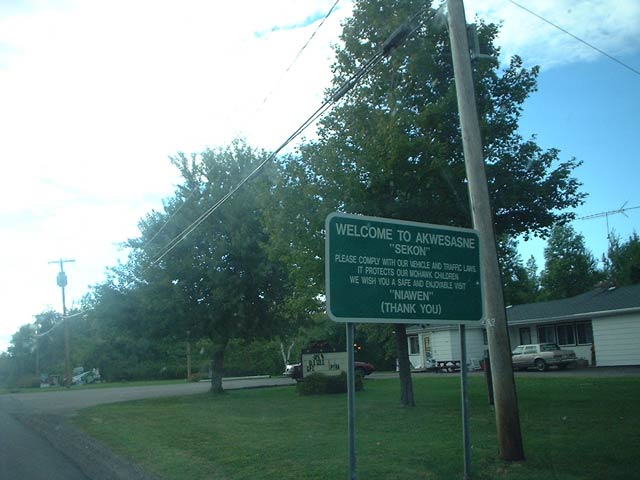
The first large-scale meeting took place in November 1914 at Akwesasne, a Mohawk reserve that straddled the U.S.-Canada border on the St. Lawrence River.
Greg KoabelHOST
Thunderwater's message of exerting strength through unity resonated with the delegates, who had traveled from Kahnawaga in the east and the Six Nations Reserve on the Grand River in Ontario to the west.
Greg KoabelHOST
It also caught the attention of the Indian Department.
7 MINS LATER
Greg KoabelHOST
They were equal partners to the Crown, not subjects, at the mercy of whatever whims emanated from Ottawa.
Greg KoabelHOST
While the principle of equal alliance had always been a part of Haudenosaunee political rhetoric, in 1918, there were signs that language was translating into tangible political action.
Greg KoabelHOST
In the early summer of 1918, delegates from both sides of the border once again assembled at Akwesasne, Peter Delisle of Kahnawaga among them.
Greg KoabelHOST
The assembled group resolved to discard the system of elected chiefs imposed by the Indian Act and restore the traditional hereditary system of selecting councils.

Zoe SchlangerGUEST
The roots are constantly foraging for nutrients, and if they hit a dead end or see no more nutrients in that area, they'll redirect, and so you end up with this living map of tissue in a way.
Emmanuel Vaughan-LeeHOST
I interviewed a Akwesasne seed keeper named Rowan White a couple years back and we spoke about memory and she spoke about it in the context of the memories that seeds hold from all the hands that have held those seeds generationally, the songs that have been sung, the ceremonies that have been offered to those seeds as they were planted or the harvesting of the crops that came from those seeds, which speaks to a different kind of memory.
Emmanuel Vaughan-LeeHOST
and a different kind of level of traditional ecological knowledge than is often talked about in mainstream circles.
Emmanuel Vaughan-LeeHOST
What's your feeling around this?

RachelHOST
to.
RachelHOST
The Akwesasne, are they part of the Mohawk? Okay.
DavidHOST
Okay.
RachelHOST
Very good on

Emily RussellCORRESPONDENT
When he's not on his farm in Lisbon, Jendebean has been crisscrossing the district over the last few months.
Emily RussellCORRESPONDENT
He's held events in Boonville, Johnsburg, Akwesasne, and Glens Falls.
Emily RussellCORRESPONDENT
That's where Catherine Atherton met Jendebean.
Emily RussellCORRESPONDENT
She leads the North Country Light Brigade, which holds regular rallies in the Glens Falls area for Democratic candidates like Jen DeBean.

Kent BlansettGUEST
So, so Richard's, uh, Oak's story is pretty near and dear to my heart.
Kent BlansettGUEST
This is his biographer and, you know, not much was known about him until I started digging into writing the biography, but, uh, grows up in upstate New York, Akwesasne Reservation.
Kent BlansettGUEST
And the Akwesasne Reservation straddles the border between Canada and the United States.
Kent BlansettGUEST
His father was an iron worker, but was also a World War II vet.
Kent BlansettGUEST
He was one of the Mohawk code talkers for the D-Day invasion.
Kent BlansettGUEST
His dad was on the boat and his cousins were behind the lines feeding information to make that operation a success for the United States.
Kent BlansettGUEST
In addition to that, he wanted to know his dad a lot more.
Kent BlansettGUEST
And he lived kind of partly in Akwesasne and then partly in Brooklyn, New York.

Blake GendebienGUEST
And then we go over to Messina, where we have the Eisenhower Locks and the St. Lawrence Seaway.
Blake GendebienGUEST
And we have the Akwesasne Mohawk tribe as we continue going east.
Blake GendebienGUEST
Then we have Lake Champlain and the Champlain Valley.
Blake GendebienGUEST
And you go south from there to Fort Ticonderoga.
Katherine WheelerHOST
And I'm Catherine Wheeler.
Katherine WheelerHOST
Akwesasne Mohawk students recently won a big legal victory regarding their ability to get financial aid at colleges and universities in the U.S.
Ross GarrowSOUNDBITE_SPEAKER
It's a great win for our students who still believe that we have inherent rights to cross the border freely.
Ross GarrowSOUNDBITE_SPEAKER
And if they wish to attend school in Canada or the U.S., they should be able to do that.
Katherine WheelerHOST
Mohawk students recently won a big legal victory regarding their ability to get financial aid at colleges and universities in the U.S. A judge cited an 18th century treaty to strike down a Biden administration rule that restricted many Indigenous students born in Canada from applying for financial aid.
Katherine WheelerHOST
As David Summerstein reports, Mohawk chiefs say the ruling should also extend to other aspects of daily life, including crossing the border.
David SummersteinCORRESPONDENT
The U.S.-Canada border runs right through Akwesasne Mohawk territory.
David SummersteinCORRESPONDENT
So thousands of Mohawk children have been born in Canada but live in the U.S. or vice versa.

Heather WrightCORRESPONDENT
Heather Wright, CTV News, Vaughan, Ontario.
Mitsumi TakahashiHOST
Four residents of Akwesasne have pleaded guilty to taking part in a conspiracy to smuggle firearms into Canada.
Mitsumi TakahashiHOST
Over 51 firearms are believed to have been smuggled in from New Hampshire through Vermont into Canada by way of the Akwesasne Mohawk territory.
Mitsumi TakahashiHOST
Ten of the guns were recovered at various Canadian crime scenes.
Mitsumi TakahashiHOST
The arrests come as part of what was originally a kidnapping investigation.

José BarreiroGUEST
We realized, and this is what we see here with basic call to consciousness.
José BarreiroGUEST
And I think there's also from the Akwesasne notes, 1977 issue outlining what happened at that seminal international conference when for the first time indigenous peoples were represented.
José BarreiroGUEST
by ourselves, by community, by community into the United Nations and the work that's come out since then, which has been amazing, but it's early work that came out from which we formed and from which we saw the, because these men were representing, but these men were sent out by the elder women and they were told hunt for peace hunt for peace in the world tell people that it's possible to have not only the absence of war like john mohawk said but the actual striving for peace that's the real peace so we we're so happy to come out of that and then as i got into doing this book again i realized that again and again how much activity there's going on from malina shawnee how much And as I looked at the faces, the great majority of this work being done by the women leaders and being led by the women's thinking that was very cohesive and had deep roots.
José BarreiroGUEST
And so, so happy to have been able to have their collaboration of a number of our great activists, each with their own movement behind them, come out and give us their words and contribute to the book and give it real life.
Katsi CookPANELIST
could talk for three hours
José BarreiroGUEST
about each of them right from here, right from memory.
José BarreiroGUEST
So Mohawk Wolf Clan, she comes in as a family nurse practitioner who served four consecutive terms as an elected tribal chief for the Akwesasne St. Regis Mohawk tribe, Akwesasne Mohawk people of state New York.
José BarreiroGUEST
Her work is focused on supporting community-oriented organizations, advocating for trauma-informed practices and holistic mind-body-spirit approaches to restoring wellness, reproductive health, and environmental justice for the Akwesasne Mohawk people.
Katherine WheelerHOST
Non-tribal members can't fish in the southern waters of the St. Lawrence River.
Katherine WheelerHOST
as well as where the St. Regis, racket, salmon, and grass rivers merge in Akwesasne during close season for any species that includes catch-and-release fishing.
Katherine WheelerHOST
The tribe says this restriction helps protect vital natural resources in the community.
Katherine WheelerHOST
This is NCPR.
3 more episodes mention Akwesasne.
Create an account to see the whole feed, search across every transcript, and follow the entities you care about.