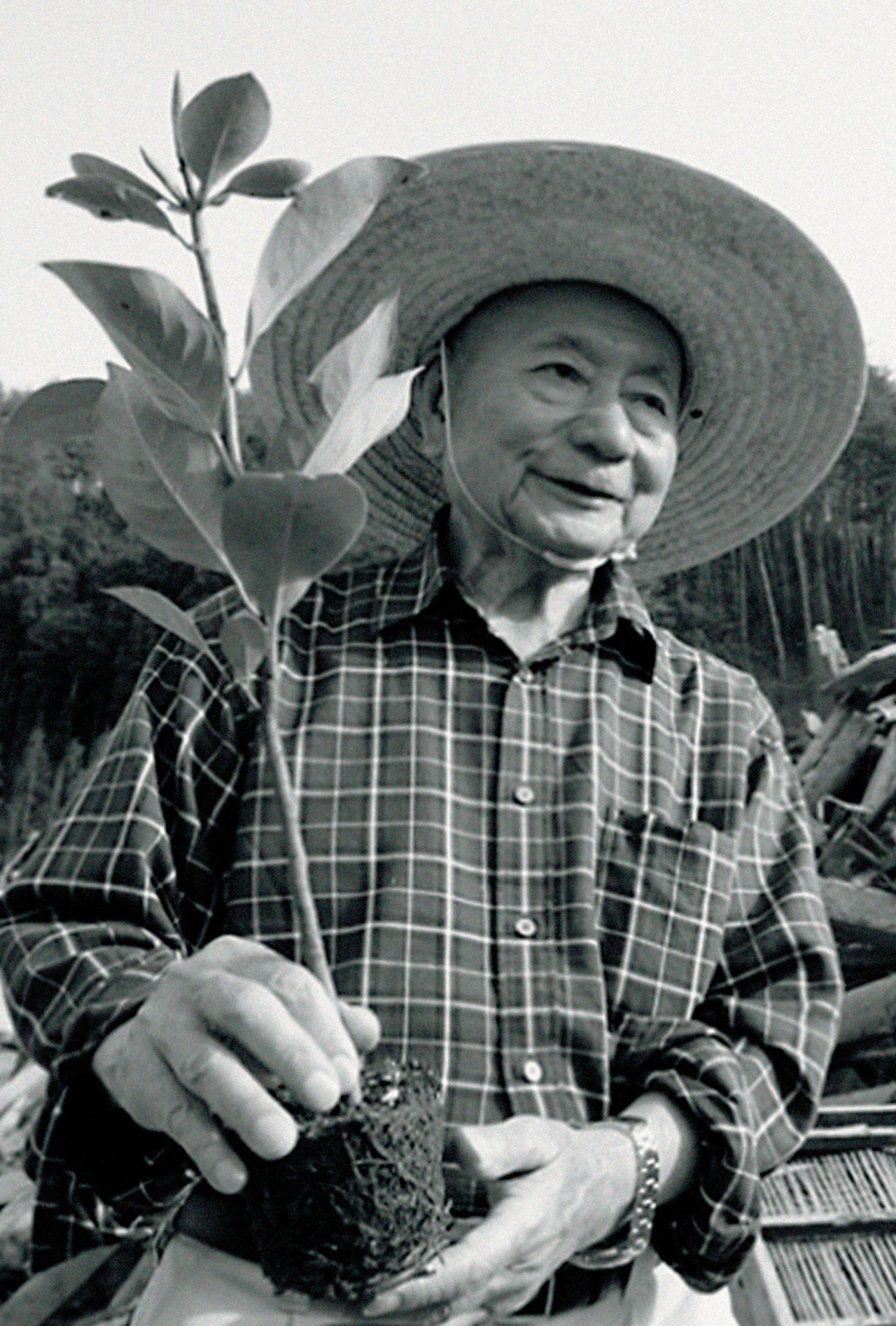
Akira Miyawaki
Japanese botanistWikipedia
14
MENTIONS
4
EPISODES
4
PODCASTS
Search complete. 14 mentions across 4 episodes found for "Akira Miyawaki".
Nov 5, 2026

Basil CamuGUEST
Yeah, that's the other application.
Basil CamuGUEST
So I think a lot of your listeners know about the Miyawaki method, which is a really cool method.
Basil CamuGUEST
Love it.
Basil CamuGUEST
This is a different take on the method, which is less focused on soil preparation.
Basil CamuGUEST
Miyawaki puts a lot of focus there, and it's less rigorous on maintenance.
Basil CamuGUEST
And the reason is because...
Basil CamuGUEST
The amount of money and effort required to fully meet the Miyawaki method is really high.
Basil CamuGUEST
It's just not practical for most scenarios, working with a city or an ecological restoration project.

Jo AbbottSOUNDBITE_SPEAKER
So all of the species are natives here, and specific to the literal rainforest type and then ideally and hopefully you can feel it as you walk in we're going to walk into the rainforest gully and you can see we've got ferns that we've started to plant and then these are cabbage tree ferns so you can kind of feel as you go in hopefully this will start to as it starts to develop it will also capture a lot more moisture
Michaela McGuirk-ScolaroCORRESPONDENT
The project uses a Japanese planting technique known as the Miyawaki method, where different species are planted closely together to encourage faster growth.
speaker_3SOUNDBITE_SPEAKER
We've learnt the Miyawaki method for planting, so you plant plants closer and then they grow four times quicker than it would normally take a century, but about 25 years to grow.
Michaela McGuirk-ScolaroCORRESPONDENT
The microforest is expected to reach about seven metres high within two to three years.
Michaela McGuirk-ScolaroCORRESPONDENT
And so

Kevin MartinGUEST
What we're actually looking at doing to see if we can use those trees for root stocks and then graft what we would call our cultivars in the trade onto some of those root stocks so we can then speed up the production of these trees, so we can then build this stopgap of about 20 to 30 years until we can then build in these more resilient species into trade.
Robyn WilliamsHOST
As we've talked about, in Australia, we're very much enamored of the Miyawaki Forest where young people have been involved with planting their own trees and obviously learning what positive things you can do in these climate-worrying situations.
Robyn WilliamsHOST
Are you doing Miyawaki as well?
Kevin MartinGUEST
We're not doing Miyawaki here at Kew, no, but there is three Miyawaki forests within London.
Kevin MartinGUEST
They've been planted in the same process as you guys and using volunteers and young children.
Kevin MartinGUEST
So it is something that's growing, and we do have those three forests in the UK that have been planted.
Kevin MartinGUEST
We won't ever be able to adapt.
Kevin MartinGUEST
Really, when we look at climate change now, it's about adaptation.
1 more episode mentions Akira Miyawaki.
Create an account to see the whole feed, search across every transcript, and follow the entities you care about.