afferent nerve fiber
8
MENTIONS
5
EPISODES
5
PODCASTS
Search complete. 8 mentions across 5 episodes found for "afferent nerve fiber".
Sep 26, 2026

Dan BienHOST
Meredith, I want to ask you, I know a lot of the earlier research that Dustin and yourself did was following ACL injury.
Dan BienHOST
And I know when the ACL is disrupted, right, we get kind of that lack of, is it afferent, afferent? Are you an afferent or afferent person? Afferent.
Dan BienHOST
Afferent, okay.
Dan BienHOST
We'll go with afferent then.
Dan BienHOST
Without that input, we see some changes at a higher level in the central nervous system.

Cindy JohnsonGUEST
One fascinating feature of the vagus nerve is that approximately 80% of its fibers are afferent.
Cindy JohnsonGUEST
That's A-F-F-E-R-E-N-T.
Cindy JohnsonGUEST
That means much of the information carried by the vagus nerve is traveling from the body toward the brain rather than simply carrying commands from the brain downward.
Cindy JohnsonGUEST
The body is constantly communicating with the brain.

Brian HasselfeldGUEST
Two different types of investments.
Brian HasselfeldGUEST
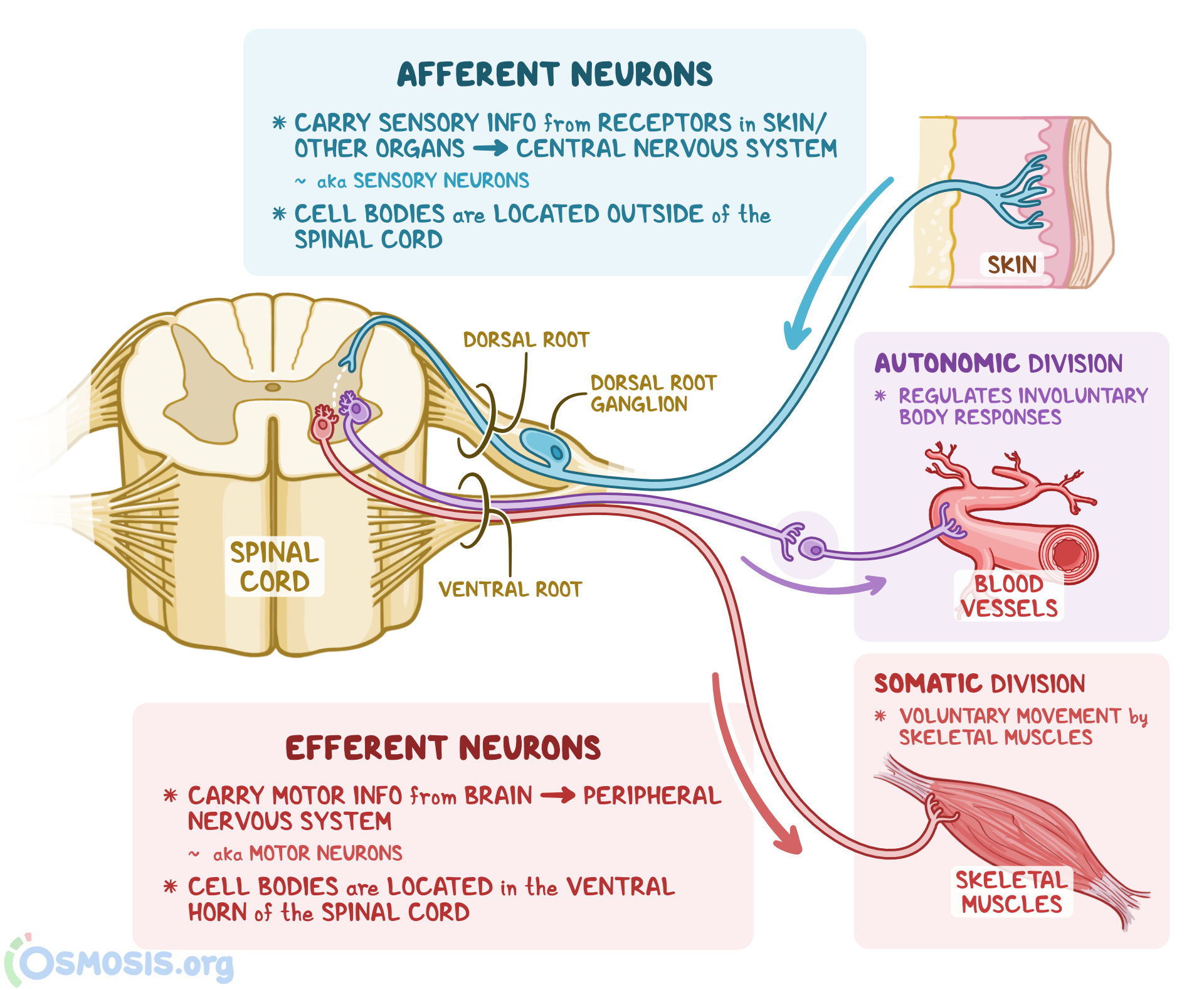
What is, I like to our neurology colleagues, I like the afferent-efferent, so in the neurology system, right? Afferent nerves bringing signals into the brain and efferent nerves moving things out and doing something.
Brian HasselfeldGUEST
How do we invest in that afferent? What are the ways that we want to actually bring in the data, both in the hospital and connected to our patients in a consumer-oriented model? And then what's the effector arm? And in the middle, sits that signal noise intelligence layer so that we don't further burn out the human clinical teams and actually help better identify those that need direct care and direct human intervention.
Joshua LiuHOST
You know, what's interesting as you describe that is I can imagine if we kept the number of, let's say, data sources or the amount of data coming in static and we improve the intelligence layer, we could probably have more signal versus the noise.

KirstieHOST
Like how does our brain perceive that? Right.
KirstieHOST
Afferent fiber, the afferent signals versus the efferent, which is like, you know, we know afferent can be more dominant in the gut system as a percentage, like 80% versus like how much does the brain, but then we have the whole neuroplasticity piece.
speaker_2UNKNOWN
Right.
speaker_2UNKNOWN
And then having

Hank GreenHOST
Once the central nervous system makes a decision about data, it sends a signal back through to the peripheral nervous system saying, do this thing, which the peripheral nervous system then does.
Hank GreenHOST
Both of these systems contain two different types of neurons, afferent and efferent.
Hank GreenHOST
Afferent and efferent are biological terms, and they're horribly confusing, and I apologize on behalf of the entire institution of biology for them.
Hank GreenHOST
Afferent systems carry things to a central point, and efferent systems carry things away from a central point.
Hank GreenHOST
So afferent neurons carry information to the brain and spinal cord for analysis.
Hank GreenHOST
In the peripheral nervous system, afferent neurons are called sensory neurons, and they're activated by external stimuli, like the complex and glorious flavor of pizza.
Hank GreenHOST
And then they convert those data into a signal for the central nervous system to process.
Hank GreenHOST
The central nervous system has afferent neurons, too, and there they bring information into special parts of the brain, like the part of the brain that goes salty.