Advanced glycation end-product
23
MENTIONS
7
EPISODES
6
PODCASTS
Search complete. 23 mentions across 7 episodes found for "Advanced glycation end-product".
Oct 5, 2026

Pradip JamnadasHOST
This is just an intro to all this, right? But the last thing I want to tell you is about aging products.
Pradip JamnadasHOST
AGES, Advanced Glycation End Products.
Pradip JamnadasHOST
Why is that? Advanced Glycation End Products.
Pradip JamnadasHOST
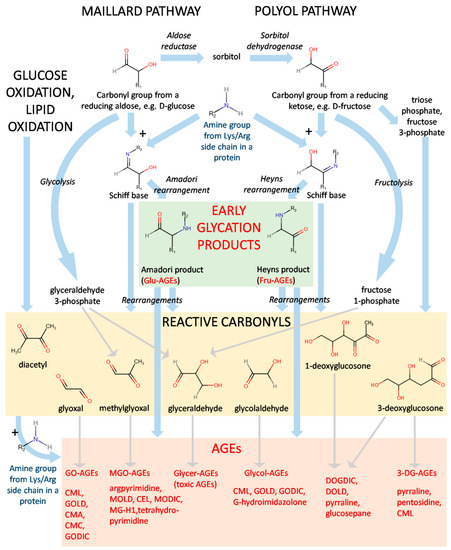
In summary, it's a combination of a sugar moiety to the nitrogen moiety of a protein molecule.

Jeannette LoramHOST
Now, that's not only due to inflammation, though, with the diabetic population.
Jeannette LoramHOST
Um, have you heard of AGEs, A-G-E-S? It's an acronym.
Jeannette LoramHOST
It stands for advanced glycation end products.
Katy BowmanHOST
Oh, I ha-- I, okay, I know what-

CharlesHOST
and more liable to chronic diseases.
CharlesHOST
So AGEs contribute to inflammation and in the brain they may contribute to dementia.
SineadHOST
And I think no one will be surprised to hear that AGEs are very, like, what am I trying to say? They're more common in animal foods.
SineadHOST
Like, they're more common to be produced in the body after eating meat.
SineadHOST
Yeah,
CharlesHOST
yeah.
CharlesHOST
So the modern Western diet is very high in AGEs.
CharlesHOST
Our ancestors ate much less meat than we do.

Ian ClarkGUEST
You know, the Maillard effect.
Ian ClarkGUEST
So I think paying attention to that, doing a bit of your own research on it, finding out what AGEs are, A-G-E-S, the advanced glycation end products, and just educating yourself on this stuff.
Ian ClarkGUEST
You know, don't take my word for it.
Ian ClarkGUEST
It's always important that you get tapped into research yourself, all of you, just like we do.

Georgia EdeGUEST
All these important molecules and cellular components become caramelized and into these clusters called advanced glycation end products.
Georgia EdeGUEST
And these are also affectionately known as AGEs, becau-- and aptly so, because they are, uh, uh, largely responsible for premature aging of the brain and other tissues throughout the body.
Georgia EdeGUEST
So the brain isn't a passive organ that's going to allow these to accumulate and, and interfere with normal cell function.
Georgia EdeGUEST
The brain has an immune system, and when it sees these dysfunctional molecules accumulating, uh, in its synapses, it, it, it, it, uh, creates deliberately, on purpose to, uh, kind of call out the troops, it deliberately creates inflammation and oxidative stress, um, by releasing, uh, kind of little SOS signals, if you will, sort of inflammatory cytokines, uh, what are called inflammatory cytokines, and, uh, reactive oxygen species, oxygen free radicals.
Georgia EdeGUEST
And these, these are very important and normal and healthy parts of the immune system.
Georgia EdeGUEST
We respond to every threat, an injury, infection, what have you, AGEs.
Georgia EdeGUEST
Um, the first step to responding, in responding to any threat is always inflammation and oxidative stress.
Georgia EdeGUEST
But it's supposed to be targeted, controlled, temporary inflammation and oxidative stress.