Advanced Encryption Standard
71
MENTIONS
28
EPISODES
27
PODCASTS
Search complete. 71 mentions across 28 episodes found for "Advanced Encryption Standard".
Sep 10, 2026

Will CollisonGUEST
The threats caused by quantum computers are to be identifying part of cryptography.
Will CollisonGUEST
Algorithms like AES, the symmetric algorithms are not inherently threatened by quantum computers.
Will CollisonGUEST
It's the identity part of that link, which is threatened by quantum computers.
Will CollisonGUEST
That is a complicated message.

Derrick SpruillADVERTISER
Right.
Eddie Montes TravisHOST
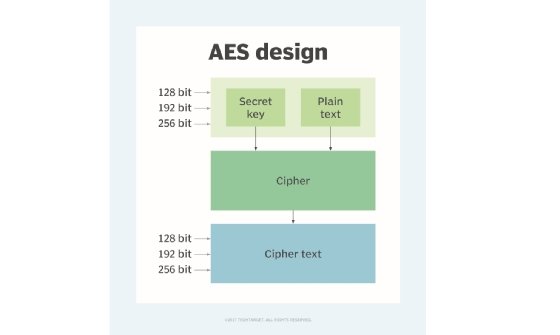
The underlying standard mandated by nearly all rigorous state frameworks for these systems is the Advanced Encryption Standard with a 256-bit key length, universally known as AES-256.
Marylyn Lee TrotterHOST
Okay, let's break down the mechanics of AES-256 for a second because we hear this term thrown around in marketing copy for like every VPN and password manager on the market.
Eddie Montes TravisHOST
Constantly.

Shriram SridharanGUEST
at Rocks? So if you look at any revenue organization, there are multiple functions, right? You have your SDRs, BDRs, and ADRs who are responsible for booking meetings.
Shriram SridharanGUEST
And then you have your AEs who are responsible for doing deal management and closing the deal and then your ams customer success forward deployed you can call them whatever you want those are responsible for ensuring there is no churn and there's expansion rocks revenue agents help you either automate or augment the full life cycle that is going on in the sales side or revenue side of the house how do we do that So we have turnkey revenue agents that can help you across the different lifecycle, which is inbound, outbound, deal management and renewal.
Shriram SridharanGUEST
These agents, as I said, either augment or automate out some of these functions.
Shriram SridharanGUEST
I'll give you an example.
Shriram SridharanGUEST
The whole space is huge, but...
Shriram SridharanGUEST
You know what? This is by far the best high bandwidth signal that we can get for product development because you use your own product every day.
Shriram SridharanGUEST
So we have a channel we call Rocks on Rocks, where all our AEs and BDRs and AMs, they all post issues that they are... that they face in the product.
Shriram SridharanGUEST
And the time to resolve is in the order of minutes, by the way.

James MesserHOST
ADF is automatic document feeder.
James MesserHOST
AES is advanced encryption standard.
James MesserHOST
AMD is advanced microdevices.
James MesserHOST
Me just sort of listing those out and saying what the definition is doesn't help you very much.
James MesserHOST
In fact, I would highly recommend that you do not go through the process of simply flashcarding this and trying to memorize AES, Advanced Encryption Standard, AP, Access Point, because that doesn't tell you anything about what these things do.
James MesserHOST
Most of the time, sometimes you can almost figure it out.
James MesserHOST
Automatic Document Feeder, That sounds like some type of feeder that works with documents in an automatic form.
James MesserHOST
So a lot of the acronyms that you need to know are... are just embedded within the exam objectives.

Michael HowardGUEST
And the breaking aspect is essentially just breaking the RSA or the elliptic curve wrapping that goes on and pops out.
Michael HowardGUEST
out pops the AES key that's used for the bulk encryption, and now you just decrypt everything.
Michael HowardGUEST
And in the case of data at rest, it's the key wrapping keys, right? They can be broken because they usually, for example, RSA, which can be broken with an algorithm called Shor's algorithm, S-H-O-R.
Michael HowardGUEST
Yeah.
5 MINS LATER
Michael HowardGUEST
But the thing is, here's the issue, and this is one thing that we're having to work on for products like Front Door, for example, is you will be able to control the group, not just the bulk cryptography that's used.
Michael HowardGUEST
Okay.
Michael HowardGUEST
AES-256, SHA-384, and so on, which are the baselines, are fine.
Michael HowardGUEST
There's another algorithm there called Grover's, which is an attack against symmetric algorithms.

Michael HowardGUEST
And the breaking aspect is essentially just breaking the RSA or the elliptic curve wrapping that goes on and pops out.
Michael HowardGUEST
out pops the AES key that's used for the bulk encryption, and now he just decrypts everything.
Michael HowardGUEST
And in the case of data at rest, it's the key wrapping keys, right? They can be broken because they usually, for example, RSA, which can be broken with an algorithm called Shor's algorithm, S-H-O-R.
Michael HowardGUEST
Yeah.
5 MINS LATER
Michael HowardGUEST
And this is one thing that we're having to work on for products like Front Door, for example, is you will be able to control the group, not just the bulk cryptography that's used.
Michael HowardGUEST
Okay.
Michael HowardGUEST
AES-256, SHA-384, and so on, which are the baselines, are fine.
Michael HowardGUEST
There's another algorithm there called Grover's, which is an attack against symmetric algorithms.

Michael HowardGUEST
And the break ...
Michael HowardGUEST
The, the, the, the breaking aspect is essentially just breaking the RSA or the elliptic curve wrapping that goes on, and pop out ... pops, out pops the AES key that's used for the bulk encryption, and now you just decrypt everything.
Richard CampbellHOST
Mm.
Michael HowardGUEST
Um, and in the case of data at rest, it's the key wrapping keys, right? They can be, they can be broken because they're usually, for example, RSA, which can be broken with, uh, an algorithm called Shor's algorithm, S-H-O-R.
5 MINS LATER
Carl FranklinHOST
Okay.
Michael HowardGUEST
And that's where-- And the group is where the post-quantum part comes in.
Michael HowardGUEST
For the most part, symmetric stuff, AES 256, SHA-384, and so on, which are the baselines, are fine.
Michael HowardGUEST
There's another algorithm there called Grovers, which is an attack against symmetric algorithms.

Jake WilliamsHOST
Right.
Jake WilliamsHOST
RC4 versus AES.
Jake WilliamsHOST
Maybe another another pod this week or next and talk a little about some of that complication because I know there's still people fighting that as well.
Jake WilliamsHOST
100%.

speaker_3HOST
So applications have access to built-in cryptography APIs.
speaker_3HOST
These are complex mathematical algorithms like AES for encryption files stored on your phone, or RSA and SHA for securely transmitting data over the internet.
speaker_2HOST
And verified boot.
speaker_3HOST
Right.

Steve OrrinGUEST
Thankfully, not too much went wrong, but that was also in a time, we're thinking back in the year 2000, where we didn't have the sheer scale of infrastructure and devices and software that we do today.
Steve OrrinGUEST
There was another transition when the government moved from triple DES to AES.
Steve OrrinGUEST
Again, it was a major shift, didn't have the same kind of hard deadlines, but it We also have less systems and less infrastructure.
Steve OrrinGUEST
We have that monumental shift because it's both the encryption the D and as digital signing and the firmware signing and ends in some cases asymmetric that still using Legacy or smaller key sizes all happening across a much larger scale infrastructure.
18 more episodes mention Advanced Encryption Standard.
Create an account to see the whole feed, search across every transcript, and follow the entities you care about.