Adjusted gross income
17
MENTIONS
7
EPISODES
7
PODCASTS
Search complete. 17 mentions across 7 episodes found for "Adjusted gross income".
Oct 30, 2026

Keshav KolurHOST
Oil and gas deductions are an example of above the line deductions.
Keshav KolurHOST
Above the line deductions can push your AGI down.
Keshav KolurHOST
This line is something that you can move.
Keshav KolurHOST
And so it's a two part problem.
Keshav KolurHOST
Or you could take the itemized deduction where you itemize your mortgage interest, state and local taxes, or SALT for short, and charitable contributions.
Keshav KolurHOST
Below the line deductions are great too, but the goal is always maximize above the line deductions first and then bring in below the line deductions.
Keshav KolurHOST
Because once you set that line, the AGI, where it is, you can only do so much with below the line deductions to offset it.
Keshav KolurHOST
So it's not just about getting tax deductions.

Jared ArnoldGUEST
So making the maximum credit of $1,000 for an individual or $2,000 for a married couple filing jointly.
Jared ArnoldGUEST
For 2026, it's available to single filers with an adjusted gross income AGI below $40,250.
Jared ArnoldGUEST
For head of households, below $60,375.
Jared ArnoldGUEST
And joint filers, below $80,500.

Jack EkholmGUEST
So it's confusing because provisional income is only used in this specific application of determining how much every social security income is taxable.
Jack EkholmGUEST
So it's not a common calculation that, you know, like AGI, for example, that applies to a bunch of other things.
Jack EkholmGUEST
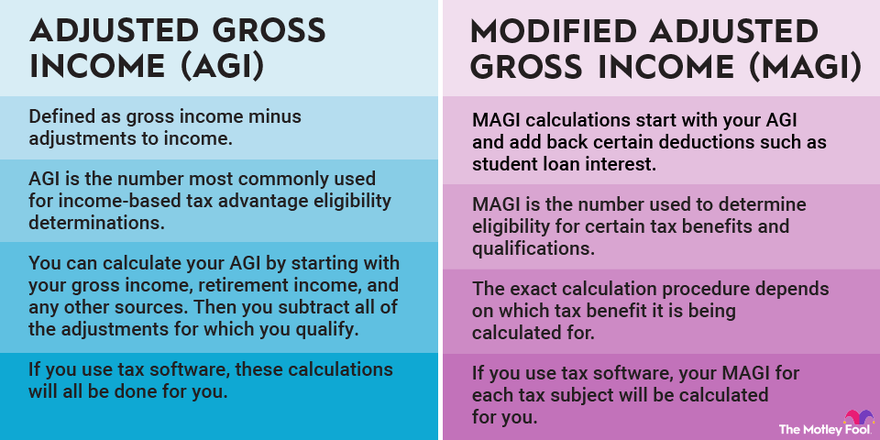
So provisional income, it's your modified adjusted gross income.
Jack EkholmGUEST
plus half of your social security benefits.
Jack EkholmGUEST
That gets you your tentative adjusted gross income.
Jack EkholmGUEST
And then To get this version of modified adjusted gross income used in the calculation, there's a number of add-backs.
Jack EkholmGUEST
So these are things you would have excluded from your gross income or you deducted above the line to get to your AGI that now you add back into that definition of income.
Jack EkholmGUEST
And there's... kind of a long list of items here.

Alex MurguiaHOST
I prefer to have the lowest rate kind of thing.
Alex MurguiaHOST
Okay, so that's income that ultimately gets to your adjusted gross income, your AGI.
Alex MurguiaHOST
Now what What offsets that income? Because below the line is the adjusted gross income.
Alex MurguiaHOST
You know, you start talking about adjusted gross income.
7 MINS LATER
Wade PfauHOST
And then qualified medical expenses.
Wade PfauHOST
And again, when you're doing our tax planning challenge, you'll enter the full values, but then we'll figure out for you.
Wade PfauHOST
So like with qualified medical expenses, only the portion in excess of 7.5% of your AGI can actually be itemized.
Wade PfauHOST
When we're talking about charitable donations, only the portion in excess of a half a percent of your adjusted gross income can be itemized.

Robert BrokampHOST
And by the way, that three-thousand-dollar deduction can be valuable, right? Some deductions lower your tax bill, but not your AGI, such as itemized deductions.
Robert BrokampHOST
But a capital loss does lower your AGI, AGI standing for Adjusted Gross Income, and your AGI can affect various aspects of your finances, such as your ability to take other deductions and credits, whether you can contribute to a Roth IRA, how much you may pay for healthcare through the ACA or Medicare, and maybe your eligibility for college financial aid.
Robert BrokampHOST
So if your AGI is just a bit over a threshold that has a negative impact on your finances, taking a capital loss in excess of capital gains could be a solution.
Robert BrokampHOST
Uh, and as you consider which losses to recognize and how much, keep in mind that short-term gains are taxed at the same rate as ordinary income, and that rate is higher than the tax rate on long-term capital gains.
14 MINS LATER
Robert BrokampHOST
Then, with the cash that you would have donated to the charity, you can just buy back the shares and reset your cost basis to today's higher price.
Robert BrokampHOST
You don't have to wait 30 days.
Robert BrokampHOST
If you itemize your deductions on your tax return, you can also deduct the contribution up to a limit of 30% of your adjusted gross income.
Robert BrokampHOST
Contributions above that limit can be carried forward for five years.

Ed WeirHOST
So if it's just Social Security, then it depends how much you receive.
Ed WeirHOST
So are your Social Security benefits taxed? It really depends on your MAGAI, your Modified Adjusted Gross Income.
Ed WeirHOST
So it's your combined income, your AGI, the Adjusted Gross Income, non-taxable interest, and half of your Social Security check.
Ed WeirHOST
So only half of that Social Security check gets figured into whether you pay taxes on those social security benefits, not whether you pay taxes, but whether you pay taxes also on those social security benefits.
Ed WeirHOST
And there's,

Andrew McNairHOST
So in addition to the fulfillment of giving to charity, a huge benefit of QCDs is that it can lower your tax liability overall.
Andrew McNairHOST
This strategy is ideal for people who are 72 years old or older who are carefully watching their AGI, their Adjusted Gross Income.
Andrew McNairHOST
A QCD is unlike regular withdrawals from an IRA because it doesn't count the amount you donated as part of your gross income.
Andrew McNairHOST
In contrast, those RMDs count as taxable income and actually increase your AGI.