Accretion
4
MENTIONS
2
EPISODES
2
PODCASTS
Search complete. 4 mentions across 2 episodes found for "Accretion".
Sep 1, 2026
P
Unknown podcast
The Strange Reason Why Everything Spins in the Universe
Sep 1 · 2 Mentions
S
15:52speaker_8NARRATOR
Now look beyond individual stars at the structures that surround them when matter falls toward extremely dense objects.
S
15:59speaker_8NARRATOR
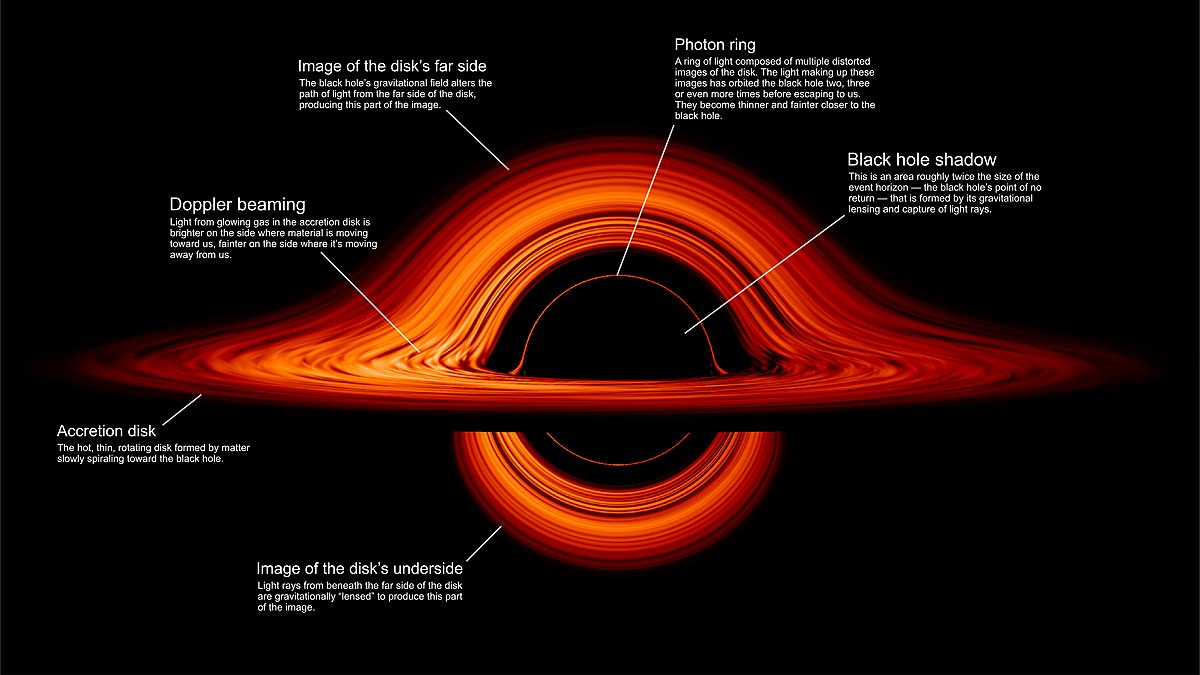
Accretion disks appear wherever infalling material cannot shed its angular momentum quickly enough.
S
16:05speaker_8NARRATOR
Around young stars, these disks are the protoplanetary nurseries where planets are born, but accretion disks also appear in far more extreme and violent environments.
S
16:15speaker_8NARRATOR
When a star in a close binary system overflows its gravitational boundary and begins transferring mass to a companion white dwarf, neutron star or black hole, the infalling material does not plunge straight in.
1 HR 4 MINS LATER
S
80:40speaker_8NARRATOR
Angular momentum, trapped behind an event horizon for billions of years, slowly converted through magnetic processes into the most powerful and far-reaching particle beams in the cosmos.
S
80:51speaker_8NARRATOR
Spin is not merely a property of black holes, it is their power source.
S
80:56speaker_8NARRATOR
Accretion disks around spinning black holes are themselves profoundly shaped by the spin of the central object.
S
81:02speaker_8NARRATOR
In general relativity, the innermost stable circular orbit, the closest distance at which matter can orbit the black hole without spiralling irreversibly inward, past the point of no return, depends critically on the black hole's spin rate and direction.
The Point of No Return _ Black Hole Facts for Sleep
S
50:19speaker_2HOST
Black holes recycle matter and energy across the longest timescales imaginable, patient agents of cosmic change.
S
50:27speaker_2HOST
Accretion disks around black holes can shine for millions of years.
S
50:32speaker_2HOST
When a black hole captures matter, that matter does not fall in immediately.
S
50:38speaker_2HOST
It forms an accretion disk, a swirling, flattened structure that can persist for long periods.
S
51:08speaker_2HOST
Some active galactic nuclei powered by supermassive black holes have been shining for millions or even billions of years.
S
51:18speaker_2HOST
Others flare up episodically, brightening when new material arrives and then fading when the supply runs out.
S
51:26speaker_2HOST
Accretion disks reveal that black holes, though extreme, participate in long-duration processes that shape galaxies over cosmic time.
S
51:37speaker_2HOST
Tidal disruption events occur when stars wander too close to supermassive black holes.