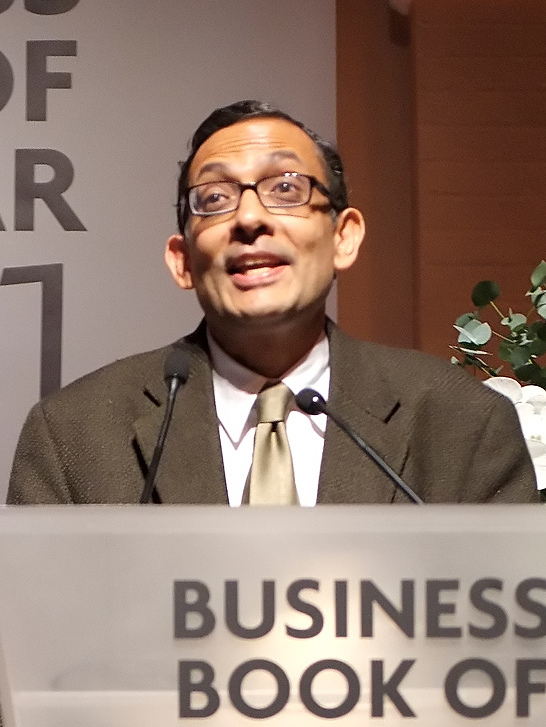
Abhijit Banerjee
Indian-American economistWikipedia
3
MENTIONS
3
EPISODES
3
PODCASTS
Search complete. 3 mentions across 3 episodes found for "Abhijit Banerjee".
Nov 2, 2026

Melchior LengsfeldGUEST
Also heute wird, äh, wissenschaftlich gemessen, was funktioniert, was funktioniert nicht.
Melchior LengsfeldGUEST
Ähm, es wurde vor einigen Jahren auch oder sogar der Nobelpreis in Wirtschaftswissenschaften vergeben an Esther Duflo, an Abhijit Banerjee.
Melchior LengsfeldGUEST
Genau für diese Art von Wirkungsmessung, äh, wo man sagt, wir können im Kleinen und auch im Größeren nachvollziehen und belegen, was funktioniert und was funktioniert nicht oder was ist nicht wirklich kosteneffizient.
Melchior LengsfeldGUEST
Und diese Einsichten aus der Forschung, aus der Wissenschaft zurückzutragen in unsere Programme, das ist für uns ein ganz wichtiges Anliegen.

Tanvir UddinGUEST
So I think two things for me.
Tanvir UddinGUEST
Poor Economics by Esther DeFlo and Abhijit Banerjee is great for understanding how micro experiments can give us a lot of insight.
Tanvir UddinGUEST
But I think what I leave the book with is the global problem seems so overwhelming.
Tanvir UddinGUEST
We've got wars, we've got genocide, we've got environmental disasters.

speaker_0NARRATOR
Research that has been directly applied in real-world spectrum auctions worth billions of dollars.
speaker_0NARRATOR
In 2019, Abhijit Banerjee, Esther Duflo and Michael Kremer won for their experimental approach to alleviating global poverty, using randomized controlled trials to test what actually works in education and healthcare rather than relying on theory alone.
speaker_0NARRATOR
And Alvin Roth and Lloyd Shapley won the prize for their work on market design and matching theory, which led to practical systems for things like efficiently matching kidney donors with patients who need them.
speaker_0NARRATOR
These are economists designing systems that literally allocate resources to people based on the value those people assign to them, in the most efficient way possible, and the results are measurable and replicable.