Aaru
12
MENTIONS
7
EPISODES
7
PODCASTS
Search complete. 12 mentions across 7 episodes found for "Aaru".
Sep 10, 2026

Heather M. ByeNARRATOR
He busied himself with organizing the new world which he found on her back.
Heather M. ByeNARRATOR
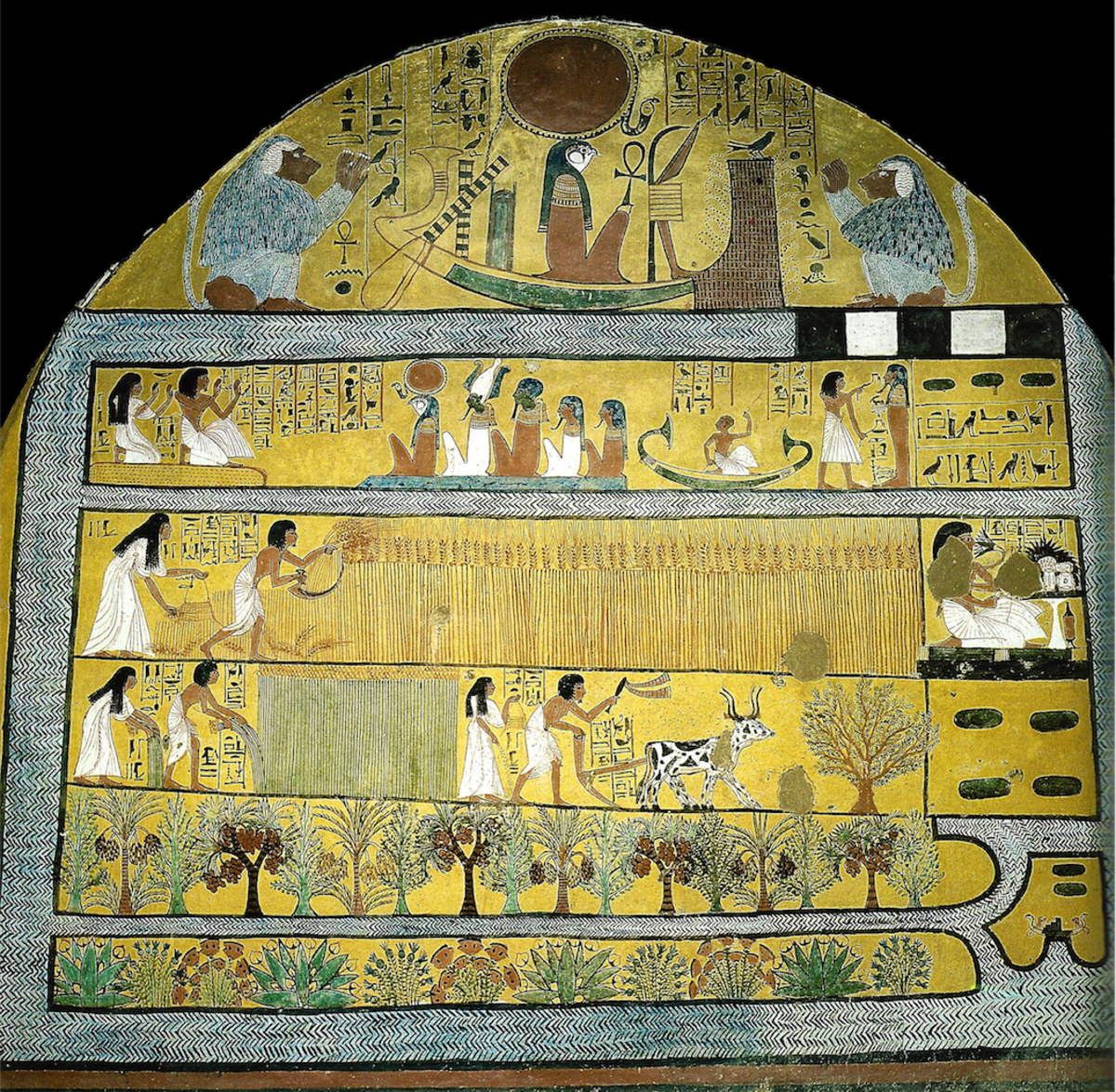
He peopled it with many beings, chose two districts in which to establish his abode, the field of reeds, Sokhit Ialu, and the field of rest, Sokhit Hatpit.
Heather M. ByeNARRATOR
and suspended the stars which were to give light by night.
Heather M. ByeNARRATOR
All this is related with many plays upon words, intended, according to Oriental custom, as explanations of the names which the legend assigned to different regions of heaven.
Heather M. ByeNARRATOR
At sight of a plain whose situation pleased him, he cried, The field rests in the distance, and that was the origin of the field of rest.
Heather M. ByeNARRATOR
He added, There I will gather plants, and from this the field of reeds took its name.
Heather M. ByeNARRATOR
While he gave himself up to this philological pastime, Nuit, suddenly transported to unaccustomed heights, grew frightened and cried for help.
Heather M. ByeNARRATOR
For pity's sake, give me supports to sustain me.

speaker_0NARRATOR
It described a moment when the deceased stood before Osiris and 42 divine judges, and their heart was placed on a scale opposite a single feather.
speaker_0NARRATOR
the feather of mat the goddess of truth and cosmic order if the heart was light meaning the person had lived in accordance with mat had been just had not lied or stolen or cheated the scale balanced and the deceased was admitted to the field of reeds a paradise that looked remarkably like egypt but with better weather and eternal harvests if the heart was heavy weighted down by wrongdoing It was devoured by Ammit, a monster with the head of a crocodile, the forelegs of a lion, and the hindquarters of a hippopotamus, and the person ceased to exist entirely.
speaker_0NARRATOR
No hell, no punishment, just obliteration.
speaker_0NARRATOR
The finality of it was worse than any torture.

speaker_0HOST
The heart is waved against the feather of Mott.
speaker_0HOST
The righteous continue the field of reeds.
speaker_0HOST
The pharaoh becomes Osiris.
speaker_0HOST
Eventually, the theology extends until every soul capable of passing the weighing can access what Sumer said the gods kept for themselves.

Martin VauxHOST
Mm
Eleanor ConlonHOST
... and not die heavy-hearted, as you will never make it to the Field of Reeds and will instead be gobbled up by Ammit, the ever-ravenous crocodile demon.
Martin VauxHOST
Yes.
Eleanor ConlonHOST
Ugh.

DavidHOST
You passed the audit.
DavidHOST
Your character was your ticket to paradise, which they envisioned as an idealized, endlessly fertile version of the Nile Valley called the Field of Reeds.
speaker_1HOST
It demonstrates that they operated within a profoundly moral universe where daily ethical choices had eternal consequences.
speaker_1HOST
But even after a person successfully navigated this audit and entered paradise, the Egyptians believed that the spirit, the ka, still required continuous sustenance and a physical tether to the world of the living.
speaker_1HOST
The Egyptians believed that while the physical body remained sealed in the burial chamber below, the ka could travel freely.
speaker_1HOST
The living family would come to the tomb on festival days and place physical offerings of bread, beer, and roasted fowl on an altar directly in front of this false door.
DavidHOST
The belief was that the spirit of their loved one would step through the solid stone, consume the invisible spiritual essence of the food, and then return through the door to the Field of Reeds.
speaker_1HOST
The physical food would remain on the altar, and the priests or the family would consume it later, but the energetic transaction had occurred across the boundary of death.

ShamHOST
This mythology gave the ancient Egyptians a remarkably optimistic view of what lay beyond mortal life.
ShamHOST
Unlike many cultures that imagined a shadowy, diminished existence after departure from the living world, the Egyptians envisioned a realm called the Field of Reeds, where the justified would live in peace and plenty.
ShamHOST
There they would enjoy all the pleasures they had known in life, farming fertile lands, sailing in boats, and reuniting with loved ones who had gone before.
ShamHOST
The fields were always green, the harvest always abundant, and the sun always shone in a perfect blue sky.