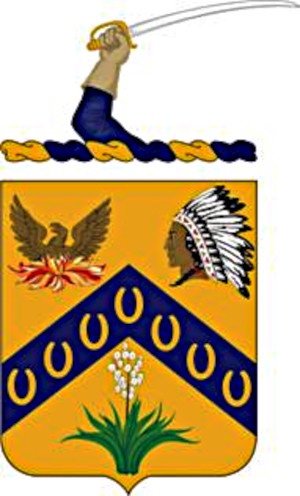
7th Cavalry Regiment
Military unitWikipedia
97
MENTIONS
33
EPISODES
31
PODCASTS
Search complete. 97 mentions across 33 episodes found for "7th Cavalry Regiment".
Sep 12, 2026

SeanHOST
Um, So he is Captain Nathan Ogden.
SeanHOST
He was part of the 7th Cavalry and he sat backstage like near catatonic.
SeanHOST
I'm like drunk.
SeanHOST
I'm dying to see what you thought of this because it's a very different Tom Cruise portrayal, isn't it?
9 MINS LATER
SeanHOST
Zeb takes him to this fancy restaurant.
SeanHOST
They're there.
SeanHOST
There's two Japanese men with Western clothing and his old kind of commander from the 7th Cavalry, Colonel Bagley, who's played by that little shit... uh from the sick day and i did with ryan from the walk the line podcast go back and listen to that one he plays a good villain no way he's calling him yeah he's a great little shit tawny goldwyn absolutely one of the matters that you're like oh yeah he like i know he does similar like roles but he's good at it it's like william atherton playing like a weasley kind of bureaucratic little toss pot it worked i haven't seen a toss pot for years it works like it really really works and So yeah, play East Jens.
SeanHOST
I love it.

Ted LinhartNARRATOR
On his first campaign, while a good surgeon, he showed himself to be by instinct a combat soldier.
Ted LinhartNARRATOR
Pershing's Indian campaigns also included combat in the Dakotas with the Sioux, those Indians who were so advanced in warfare that they had real tactics and who fourteen years before had out-generaled General Custer, exterminating in battle that gallant soldier and the brave men of the five troops of the Seventh Cavalry who died with him to the last man.
Ted LinhartNARRATOR
In eighteen ninety-eight, Captain Pershing fought in the San Juan Hill battle, which wrested the heights around the town and harbor of Santiago, Cuba, from the Spanish troops and forced Cervera's Spanish fleet to put to sea and face destruction by our fleet.
Ted LinhartNARRATOR
The Philippine insurrection, which shortly followed our capture of Manila from the Spaniards, and the many years of constant fighting with the Mohammedan Moros of the southern Philippines furnished Pershing with additional experience against a savage enemy.

speaker_1HOST
And in 1963, you enlist in the U.S. Army.
speaker_1HOST
Two years later, you're a platoon leader with the 7th Cavalry.
speaker_1HOST
and you find yourself in the Ia Drang Valley in Vietnam.
speaker_1HOST
In the middle of the first major battle of the war, your men call you hardcore.

JoshHOST
They stole the territory off the Crow.
JoshHOST
It was their ancestral territory, which is why so many Crow and Rickera scouts worked with the Seventh Cav with Custer.
JoshHOST
Well, Dr. Strangelove, thank you very much for the comment.
JoshHOST
And yeah, the Black Hills have definitely changed hands quite a bit.

David WalesNARRATOR
General Sheridan also wanted to know more about this area.
David WalesNARRATOR
for he had decided that he needed a fort somewhere near there to keep watch over the sioux early in eighteen seventy four he won authority to send a military expedition to look for a suitable location to command it he turned to his young protege at fort lincoln for the troopers of custer's seventh cavalry the black hills expedition of eighteen seventy four turned out to be a summer's lark among forested game-rich slopes drained by rushing creeks full of trout on the northeastern edge of the hills custer found an ideal site for sheridan's military post fort meade would be established there in eighteen seventy eight but of vaster greater consequence in the streams of the hills themselves he found confirmation of the rumors of gold a courier bearing official dispatches took the word out gold in the black hills shouted the newspaper headlines even before the year's end gold seekers had rushed to the black hills and the spring of eighteen seventy five saw the stampede under way in earnest custer city deadwood and other mining camps sprang up in the most promising valleys vainly the army tried to turn back the prospectors vainly too the government tried to buy the black hills from the sioux although some of the agency chiefs gave signs of weakening the turbulent young warriors who spent part of the year with sitting bull would have none of it any chief who signed risked his life at the hands of these men the indians attitude irritated government officials rationalizing that the sioux had broken the treaty by raiding around the edges of the unceded territory they laid plans to end the troublesome roaming of the non-treaty bands and to press the agency chiefs to sell the black hills president grant himself quietly approved a new policy soldiers would no longer bar settlers from the unceded territory west of the reservation boundary and if some go over the boundary into the black hills general sherman understood the president and the interior department would wink at it for the present These so-called settlers, of course, were interested in the Black Hills, not the land to the west.
David WalesNARRATOR
The new policy meant simply that prospectors could now enter the Black Hills without military interference.
David WalesNARRATOR
Shortly afterward, in December 1875, the government moved against the non-treaties.
47 MINS LATER
David WalesNARRATOR
He is armed with a .45 caliber Springfield carbine, a single-shot breech loader, and a .45 Colt revolver, both models, 1873.
David WalesNARRATOR
He was authorized a saber, but usually left it behind on campaign because he rarely got close enough to the enemy to use it.
David WalesNARRATOR
Items in inset illustration, carbine and carbine sling, saber, .45 Colt revolver and cartridge belt, shelter half, knife and sheath, overcoat, picket pin and lariat, sidelines, feed-back canteen haversack tin cup saddle-bags poncho forage sack sidebar custer's principal subordinates were major marcus a reno and captain frederick w while neither officer cared much for the other they were linked first by their mutual dislike of custer and then by the necessity of defending their conduct in the battle of the little bighorn both men considered custer highly overrated as a military leader and laid the blame for the defeat squarely on his shoulders sidebar lieutenant william w cook thirty year old canadian soldier of fortune was the seventh cavalry's adjutant he was a strong custer supporter and one of the ablest and most efficient members of the regiment he scribbled the last message from custer on a page torn from his memorandum book and died beside his chief an hour later on what is now known as custer hill sidebar custer family casualties the custer family lost five of its members in the battle of the little bighorn the three brothers george thomas and boston their nephew harry reed and their brother-in-law james calhoun who was married to their sister margaret tom custer a two-time medal-of-honor winner commanded company c and died beside his older brother boston custer a civilian guide and harry reid who had come along expecting to see the seventh cavalry win another quick victory were killed near by and lieutenant calhoun commanding company l perished with his troops on the hill that now bears his name end of sidebars End of section 2b.
David WalesNARRATOR
Part 2 of Custer's Last Battle of Custer Battlefield by Robert M. Utley.

BarlowVOICE_ACTOR
Well, at least I've seen a prime example of what a soft policy brings about.
BarlowVOICE_ACTOR
The hostiles move up here from the 7th Cavalry area.
BarlowVOICE_ACTOR
Undoubtedly, they rest, repair equipment, and go back to take up the attack again.
GorseVOICE_ACTOR
Some of them do, some of them don't.
13 MINS LATER
Lee QuinceVOICE_ACTOR
We'll find you something to eat.
Lee QuinceVOICE_ACTOR
Was I a...
Lee QuinceVOICE_ACTOR
I'd stay out of the 7th Cavalry territory for a while.
Lee QuinceVOICE_ACTOR
The high soldier is going to be moving that way.

EricHOST
Fatally bayoneted by a U.S. soldier after resisting confinement in a guardhouse at Fort Robinson.
EricHOST
He was among the Sioux leaders who defeated George Armstrong Custer's 7th Cavalry at the Battle of Little Bighorn in Montana.
EricHOST
which was the biggest defeat of any U.S. Calvary, 265 members of that Calvary were killed, including Custer.
EricHOST
And then they, let's see here, I think it was Colonel Nelson Miles pursued Crazy Horse, tracked him down, and then in 1877, Crazy Horse surrendered to him.

Simon WhistlerHOST
refused to sign and adhere to the Treaty of Fort Laramie and lived outside the Great Sioux Reservation.
Simon WhistlerHOST
In 1874, the United States government dispatched the Seventh Cavalry to the Black Hills inside the Dakota Territory.
Simon WhistlerHOST
Their mission was to scout for a suitable location for a new fort, but also to search the area for natural resources.
Simon WhistlerHOST
Specifically, they were to investigate a rumor that there might be gold in the Black Hills.

Matt DillonVOICE_ACTOR
Where was he stationed, Major?
speaker_6VOICE_ACTOR
He was with the 7th Cavalry at Fort Lincoln.
Matt DillonVOICE_ACTOR
Oh, up in the Dakotas.
speaker_6VOICE_ACTOR
Yeah, and for some reason they think he headed south.
Matt DillonVOICE_ACTOR
He won't?
speaker_6VOICE_ACTOR
No.
speaker_6VOICE_ACTOR
It seems that the 7th Cavalry needs every man available.
speaker_6VOICE_ACTOR
They're leaving Fort Lincoln on an expedition against the Sioux in the Northern Cheyenne

JonHOST
Though not technically a fully automatic weapon, its tremendous rate of fire kept enemy soldiers huddled in their trenches during the Siege of Petersburg in 1864, and improved models devastated America's enemies on the Great Plains and in Cuba and the Philippines during the Spanish-American War.
JonHOST
Interestingly, General George Armstrong Custer refused to bring Gatling guns along during the 7th Cavalry Regiment's attack at the Little Bighorn River in 1876, which turned out disastrously for the Americans.
JonHOST
Other nations copied Gatling's designs, and hand-cranked artillery remained a staple of Western militaries until the First World War.
JonHOST
Newer inventions eventually replace the Gatling gun in widespread use, though fully automatic variants continue in service on attack helicopters and the A-10 Thunderbolt fighter bomber, personally my favorite military aircraft of all time, and in action movies like Predator.
23 more episodes mention 7th Cavalry Regiment.
Create an account to see the whole feed, search across every transcript, and follow the entities you care about.