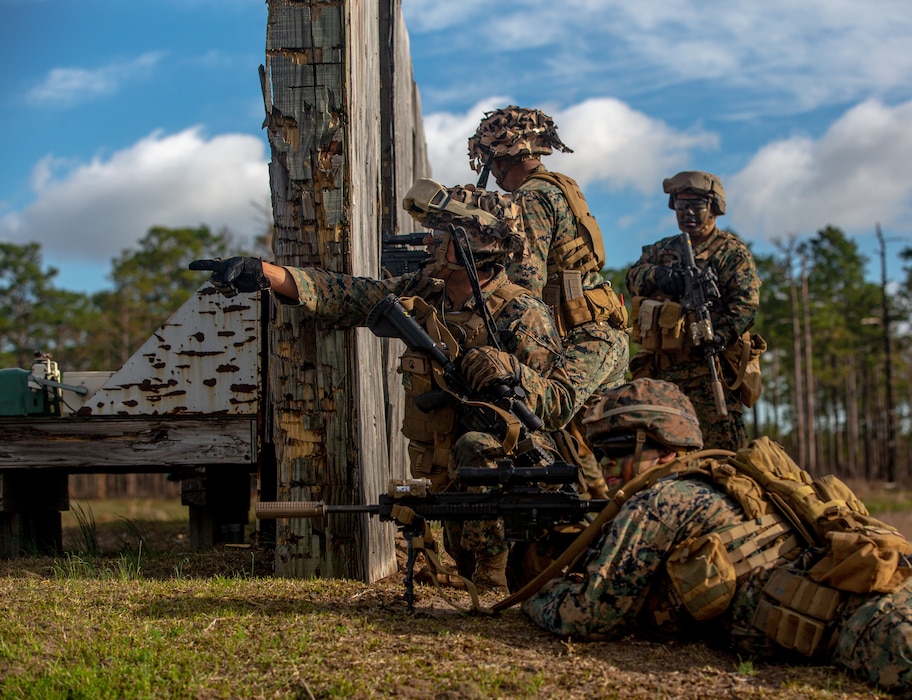
4th Marine Division
Military unitWikipedia
68
MENTIONS
11
EPISODES
9
PODCASTS
Search complete. 68 mentions across 11 episodes found for "4th Marine Division".
Sep 23, 2026

Aaron BennettNARRATOR
the twenty fourth and twenty fifth drove inland to the east towards the key objective of aslito airfield with a danger looming of over-extended lines lieutenant-general holland smith pulled the one hundred sixty fifth infantry out of his reserve the army's twenty seventh infantry division and sent it ashore on d plus two to reinforce the fourth marine division this same day major-general ralph smith came ashore to take command of the additional army units of his twenty seventh division as they landed with the one hundred sixty fifth infantry on its right flank and the twenty fourth marines to its left the twenty fifth marines was poised on the north edge of aslito airfield late on d plus two its patrols found the strip was abandoned but the one hundred sixty fifth assigned to capture it decided to wait until the next day the division had finally approached the o one line except on the left flank where contact with the second division was again broken this time near mount finasusu this same day seventeen june saw a crucial command decision by admiral With the powerful main Japanese fleet now approaching Saipan, he ordered his fast carriers to meet the enemy ships, and that night withdrew his transports and supply ships from their offshore support positions to a safe distance from the Japanese threat.
Aaron BennettNARRATOR
Sidebars Major General Harry Schmidt Major General Harry Schmidt was the leader of the 4th Marine Division in the assaults at Roynamur in the Marshall Islands and then at Saipan in the Marianas.
Aaron BennettNARRATOR
Born in 1886, he entered the Corps as a second lieutenant in 1909.
Aaron BennettNARRATOR
By extraordinary coincidence, his first foreign duty was at Guam in the Marianas Islands, an area he would return to 33 years later under vastly different circumstances.
29 MINS LATER
Bowen YangADVERTISER
Kewpie, the original Japanese mayonnaise.
Aaron BennettNARRATOR
then each platoon leader rationed out a can of the precious liquid amongst his men as was the age-old marine tradition we waited till all our men had their share before we took ours the water was lukewarm rusty and oily as it came out of the cans but it still tasted like nectar while these local events transpired on the front lines a major upheaval was taking place in the rear seeing that the corps line would be bent back some fifteen hundred yards in the zone of the twenty seventh infantry division holland smith had had enough he went to see admirals spruance and turner to obtain permission to relieve ralph smith of command of his division after reviewing the marine general's deeply felt criticism of the twenty seventh infantry division's defective performance the admirals agreed to the requested change and ralph smith was superseded by major-general jarman on twenty fourth june a furor arose with bitter inter-service recriminations and the flames were fanned by lurid press reports holland smith summarized his feelings three days after the relief according to a unit history the twenty seventh infantry division in world war two he stated the twenty seventh division won't fight and ralph smith will not make them fight army generals were furious and in hawaii lieutenant-general robert richardson commander of the u s army in the pacific u s r pack convened an army board of inquiry over the matter the issue reached the highest military levels in washington While the Army's Deputy Chief of Staff, Lt. Gen. Joseph T. McNarney, reviewed the matter, he found some faults with Holland Smith, but then went on to say that Ralph Smith failed to exact the performance expected from a well-trained division, as evidenced by poor leadership on the part of some regimental and battalion commanders, undue hesitancy to bypass snipers with a tendency to alibi because of lack of reserves to mop up, poor march discipline, and lack of reconnaissance.
Aaron BennettNARRATOR
the army's official summary united states army in world war two the war in the pacific campaign in the marianas published fifteen years after the operation attributed some errors to holland smith's handling of a real problem and it also gave full recognition to the difficult terrain and bitter resistance that the army regiments faced the history stated that there is no doubt that the one hundred sixth infantry regiment of the twenty seventh division was late in jumping off in the attack on the morning of twenty three june even though not so late as holland smith charged on the twenty third and again on the twenty fourth the army troops attacking death valley were slow and faltering in their advance according to the testimony of general jarman who took over the division from ralph smith the unit leaders of the one hundred sixth infantry were hesitant and apparently confused although the army troops in death valley sustained fairly heavy casualties the two marine divisions on the flanks suffered greater ones yet the marines made considerable advances while the one hundred sixty fifth infantry registered only small gains the one hundred sixth infantry almost none at all no matter what the extenuating circumstances were and there were several the conclusion seems inescapable that holland smith had good reason to be disappointed with the performance of the twenty seventh infantry division on the two days in question back where the conflict was with the japanese the fourth marine division had overrun most of the cagman peninsula by the night of d plus ten the shore-line cliffs provoke sobering thoughts in a young officer in the twenty fourth marines we were close to the northern shore line of the peninsula and right there the japs had dug a big emplacement they hadn't had time to finish it but we could see that it was situated so as to fire right down the beach line any troops landing on that beach would have received a terrible enfilading fire from this gun position not far from the emplacement were the guns that had been destined to go into it huge five-inch dual-purpose naval guns they were deadly things and i was glad the enemy had never gotten them into action now they lay there on their wooden skids thickly coated with grease wrapped in burlap impotent the unfinished state of the japanese defenses was in fact a critical factor in the final american victory on saipan the blockading success of far-ranging submarines of the u s navy had drastically reduced the supplies of cement and other construction materials destined for elaborate saipan defenses as well as the number of troop ships carrying japanese reinforcements to the island then the quick success of the marshal's campaign had speeded up the marianas thrust by three months this was decisive for one prisoner of war later said that had the american assault come three months later the island would have been impregnable The 4th Marine Division encountered more than cane fields in the Cagman Peninsula.
Aaron BennettNARRATOR
The cliffs near the ocean were studded with caves.

Aaron BennettNARRATOR
Both regiments made marginal gains against very stiff opposition.
Aaron BennettNARRATOR
To the east, the 4th Marine Division had finally captured Hill 382, ending its long exposure in the amphitheater, but combat efficiency had fallen to 50%.
Aaron BennettNARRATOR
It would drop another 5 points by nightfall.
Aaron BennettNARRATOR
On this day, the 24th Marines, supported by flame tanks, advanced a total of 100 yards, pausing to detonate more than a ton of explosives against enemy cave positions in that sector.
19 MINS LATER
Aaron BennettNARRATOR
We welcome a counterattack, said Holland Smith.
Aaron BennettNARRATOR
That's generally when we break their backs.
Aaron BennettNARRATOR
Both Schmidt and the 4th Marine Division Commander, Major General Clifton B. Cates, knew from recent experience at Tinian how capable the Japanese were at assembling large reserves at potential soft points along a fresh beachhead.
Aaron BennettNARRATOR
The assault divisions would plan to land their artillery regiments before dark on D-Day in that contingency.
Aaron BennettNARRATOR
He turned to four very capable men who would carry out the actual operation.
Aaron BennettNARRATOR
three admirals who were experts in amphibious landings fast carrier strikes and shore bombardment and major-general holland m smith who was the commanding general of the marines five amphibious corps and now also would be commanding general expeditionary troops it was he who would command the troops once they got ashore original cautious plans for stepping-stone attacks starting in the eastern marshals were modified and the daring decision was made to knife through the edges and strike directly at kwajalein atoll in the heart of the marshals cluster of thirty-two atolls more than one thousand islands and eight hundred sixty seven reefs kwajalein is the largest atoll in the world sixty miles long and twenty miles wide a semi enclosed series of eighty reefs and islets around a huge lagoon of some eight hundred square miles located six hundred twenty miles northwest of tarwa and two thousand four hundred fifteen miles southwest of pearl harbor its capture would have far-reaching strategic significance in that it would break the outer ring of japanese pacific defense lines within the atoll itself there were two objectives roye and namur a pair of connected islands shaped like weights on a four-mile barbell in the north end and crescent-shaped quadrillean island at the south end the fourth marine division under major-general harry schmidt was to assault roi namur and the army seventh infantry division under major-general charles h corlett would attack kwajalein after these islands were taken there was one more objective in the marshals eniwatak atoll this was targeted for attack some three months later by a task force comprised of the twenty second marine regiment called in the corps the twenty second marines and most of the army's one hundred sixth infantry regiment brig general thomas e watson u s m c would be in command as a preliminary to these priority operations the occupation of another atoll in the eastern marshals was planned this objective was majiro which would serve as an advanced air and naval base and safeguard supply lines to quadrillion two hundred twenty miles to the northwest because it was believed to be very lightly defended only the marine five amphibious corps reconnaissance company and the second battalion one hundred sixth infantry seventh infantry division were assigned to capture to support all of these thrusts there would be a massive assemblage of u s navy ships carriers battleships cruisers destroyers and an astonishingly varied array of transports and landing craft these warships provided a maximum potential for intensive pre-invasion aerial bombing and ship-to-shore bombardment the increased tonnage in high explosives the lengthened duration of the softening up process and the pinpointing of priority enemy targets were all lessons sorely learned from the inadequate preparatory shelling which had contributed to the steep casualties of tarawa for the marshals there were altogether three hundred eighty ships carrying eighty five thousand men with the plans in place and a very tight schedule to meet the d-day deadline the complex task of assembling and transporting the assault troops to the target area was put in motion readying the army seventh division was the easiest part of the logistical plan it was already in hawaii after earlier operations at attu and kiska in the aleutian islands off alaska the twenty second marines however had to come from samoa where it had been on garrison duty for some eighteen months and the fourth marine division was still at camp pendleton in california where it had recently been formed on thirteen january nineteen forty four the division sailed from san diego to commence the longest shore-to-shore amphibious operation in the history of warfare forty three hundred miles life at sea soon settled down into a regular routine all hands soon became acquainted with the rituals of alerts for general quarters in the blackness of pre-dawn mess lines stretching along the passageways inspections and calisthenics on the cluttered decks the loud speaker with its shrill whistle of a boatswain's pipe and its now hear this fresh-water hours and classes and weapons cleaning every day off duty the men took advantage of the opportunity to sleep play cards stand in line for ice cream write letters and of course engage in endless speculation about the division's objective which was originally known only by the intriguing title of burlesque and camouflage on twenty one january the transports carrying the marines anchored in lahaina roads off maui hawaii and visions of shore leave raced through the minds of all the men pula girls surf swimming cooling droughts and a local bar just what was needed after the long nights in the crowded humid troop compartments during the voyage over the ship's loudspeakers sad to say came a not unexpected announcement there will be no liberty after one day filled with conferences and briefings for the senior officers the task force sailed again next stop the marshall islands en route crossing the one hundred eightieth meridian there were the traditional colorful ceremonies in which the old salts initiated the men who had never before crossed the international date line into the domain of the golden dragon on thirty january the ships threaded their way through the eastern atolls of the marshals and the following morning dawn thirty one january they halted before their objectives with the northern component off roi namur and the southern component facing kwajalein island on every transport the men crowded the ships rails to stare at the low-lying islets which they must soon attack the twenty third twenty fourth and twenty fifth marines were assigned to the roi namur operation and the thirty second seventeenth and one hundred eighty fourth infantry regiments of the army's seventh division were to take the quadrillean island objectives meanwhile the small group assigned to majoro second battalion hundred sixth infantry plus the five amphibious corps
speaker_3ADVERTISER
reconnaissance company
Aaron BennettNARRATOR
had split off from the main task force and would make its own landing on thirty one january advanced intelligence estimates of minimal enemy forces proved accurate there were no american casualties and just one japanese officer was captured on the main islet three days later more than thirty u s ships lay at anchor in the mujiro lagoon forward at the main theatre an awesome pre landing saturation bombardment begun on twenty ninth january was in full swing u s navy ships moved in on roinaumur with some at the unprecedented short range of nineteen hundred yards and poured in their point-blank massed fire continuing the repeated aerial strikes which had begun weeks earlier from the carriers waves of planes swept in low for bombing and strafing runs key enemy artillery and blockhouse strong points had earlier been mapped from submarine and aerial reconnaissance and individual attention was given to the destruction of each one the combined total of shells and bombs reached a staggering six thousand tons As a result of the underwater obstacles and beach mines uncovered at Tarawa, for the first time, Navy underwater demolition teams had been formed for future operations.
29 MINS LATER
Aaron BennettNARRATOR
in the final moments of combat however lieutenant-colonel aquila j dais commander of the first battalion was standing to direct the last attack of his men a burst of machine-gun fire riddled his body and he became the most senior officer to die in the battle for his superb leadership under fire he was awarded a posthumous medal of honor across the sand spit on roye it had been a different story this island was nearly bare for it was mostly covered by airfield runways when the twenty third marines hit the beaches on d plus one the fierceness of the pre landing bombardment prevented the japanese defenders from mounting a coordinated defense small groups of marine riflemen joined their regiments attached tanks in a race across to the far side of the island this charging style caused considerable confusion as to who was where reorganized into more coherent units the men made a final orderly drive to finish the job in spite of the rapid progress on roy there were still some major enemy strong points which had to be dealt with an after-action report of the second battalion described one example of this perilous work in matter-of-fact terms there was a blockhouse constructed of reinforced concrete approximately three feet thick it had three gun ports one each facing north east and west another indication of the enemy's mistaken assumption that the americans would attack from the sea rather than the lagoon shore two heavy hits had been made on the blockhouse one apparently by fourteen inch or sixteen inch shells and the other by an aerial bomb nevertheless the position had not been demolished the battalion commander lieutenant colonel edward j dillon then ordered company g to take the blockhouse the company commander first sent forward a seventy five millimeter half track which fired five rounds against the steel door at this point a demolition squad came up and its commander volunteered to knock out the position with explosives while the half track continued to fire infantry platoons moved up on each flank of the installation the demolition squad placed charges at the ports and pushed bangalore torpedoes through a shell hole in the roof cease fire was then ordered and after hand grenades were thrown inside the door half a squad of infantry went in to investigate unfortunately the engineers of the demolition squad had not got the word to cease fire and had placed a shape charge at one of the ports while the infantry was still inside luckily no one was hurt but as the company commander reported a very undignified and hurried exit was made by all concerned inside were three heavy machine guns a quantity of ammunition and the bodies of three japanese many japanese had to be flushed out or blown up in the airfield's drainage ditches and culverts but by eighteen hundred that day d plus one roy had been secured secured seemed a somewhat flexible term when the first service of mass held the next day was interrupted by japanese shots by six february however the ground elements of a marine aircraft wing were ensconced at the airfield preparing for the arrival of their planes in five more days for the entire remainder of the war these planes pounded the by-passed atolls with such power that the japanese on them were eliminated from any further role in the war there was one surprise japanese air raid on roi staged from the mariana islands on twelve february this caused a number of casualties and major damage to material the repair of the airfield and its quick return to action was a tribute to the skills of both the twentieth marines an engineer regiment and the one hundred ninth naval construction battalion this achievement was one more illustration of the vital role played by a dizzying list of units that supported the assault rifle battalions besides the vast armada of naval planes ships and landing craft there were navy chaplains and corpsmen two specialties which are always navy in addition to the marine air artillery and engineer units there were the tanks heavy weapons mortar transport quartermaster signals and headquarters supporting units an amphibious operation to be successful must be a finely tuned highly trained juggernaut that depends on all its parts working smoothly together and this was clearly demonstrated in the marshals The conquest of Roynamur had been a relatively easy operation when compared to some of the other Marine campaigns in the Pacific.
Aaron BennettNARRATOR
At Tarwa, for example, more than 3,300 men had been killed or wounded in 76 hours.
Aaron BennettNARRATOR
The 4th Division's victory came at a cost of 313 Marines and corpsmen killed and 502 wounded.
Aaron BennettNARRATOR
by contrast the defeated japanese garrison numbered an estimated three thousand five hundred sixty three with all but a handful of them now dead two more tasks remained for the fourth division the first was mopping up the rest of the islets in the northern two-thirds of the atoll the twenty fifth marines which had supported the attacks of the twenty third and twenty fourth took off on a series of island hopping trips on board their
Aaron BennettNARRATOR
His executive officer, Major Howard Rice, was in another LVT, which was forced to land far to the west, behind Major Ryan.
Aaron BennettNARRATOR
The senior officer present with 2-2 was Lieutenant Colonel Walter Jordan, one of several observers from the 4th Marine Division and one of only a handful of survivors from Amy's LVT.
Aaron BennettNARRATOR
Jordan did what any Marine would do under the circumstances.
Aaron BennettNARRATOR
He assumed command and tried to rebuild the disjointed pieces of the landing team into a cohesive fighting force.

Aaron BennettNARRATOR
He was regulation old establishment, a regular Marine.
Aaron BennettNARRATOR
The Fourth Marine Division this division was formed as the result of the organization and redesignation of several other units the twenty third marines began as infantry detached from the third division in february
speaker_2ADVERTISER
nineteen forty three
Aaron BennettNARRATOR
the same month that an artillery battalion of the twelfth marines became the genesis of the fourteenth marines and engineer elements of the nineteenth marines formed the nucleus of the twentieth marines in march the twenty fourth marines was organized and then in may it was split in two to supply the men for the twenty fifth marines this wartime shuffling provided the major building blocks for a new division the units were originally separated however with the twenty fourth marines and a variety of reinforcing units engineer artillery medical motor transport special weapons tanks etc at camp pendleton in california the rest of the units were at camp lejeune north carolina this east coast echelon moved to pendleton by train and transit of the panama canal in july and august when all the units were finally together the fourth marine division was formally activated on fourteen august nineteen forty three After intensive training, it shipped out on 13 January 1944 and in 13 short months made four major assault landings, Roi Namur, Saipan, Tinian, and Iwo Jima, suffering more than 17,000 casualties.
Aaron BennettNARRATOR
It was awarded two presidential unit citations and a Navy unit commendation and then deactivated 28 November 1945.
Glenn WashingtonADVERTISER
Every week, the Snap Judgment podcast drops you inside someone's biggest decision.
1 HR 6 MINS LATER
Aaron BennettNARRATOR
Although this type of missile did not harm the Japanese within, it released a cloud of vapor which rolled through the tunnels and escaped around the loose-fitting covers of the foxholes.
Aaron BennettNARRATOR
Once the outline of the web was known, the bunker and all of its satellite positions would be shattered with demolitions.

Aaron BennettNARRATOR
It was already in Hawaii after earlier operations at Attu and Kiska in the Aleutian Islands off Alaska.
Aaron BennettNARRATOR
The 22nd Marines, however, had to come from Samoa, where it had been on garrison duty for some 18 months, and the 4th Marine Division was still at Camp Pendleton in California, where it had recently been formed.
Aaron BennettNARRATOR
On 13 January 1944, the division sailed from San Diego to commence the longest shore-to-shore amphibious operation in the history of warfare, 4,300 miles.
Aaron BennettNARRATOR
Life at sea soon settled down into a regular routine.
13 MINS LATER
Aaron BennettNARRATOR
Less than two years later, after 41 years of active service, during which he was awarded four Distinguished Service Medals for his leadership in four successive successful amphibious operations, he retired in April 1946 as a four-star general.
Aaron BennettNARRATOR
He died in January 1967.
Aaron BennettNARRATOR
Major General Harry Schmidt The leader of the 4th Marine Division at Roi Namur was born in 1886 and entered the Corps as a second lieutenant in 1909.
Aaron BennettNARRATOR
By extraordinary coincidence, his first foreign duty was at Guam in the Marianas Islands, an area he would return to 33 years later under vastly different circumstances.

Aaron BennettNARRATOR
There he became regimental intelligence officer and developed a deep interest in China that would shape the remainder of his days.
Aaron BennettNARRATOR
three years later commanding an outpost of the guardia national in nicaragua he had his first brush with guerrilla warfare that became the second guiding star of his career in his only battle he successfully engaged and dispersed an enemy unit in a daring night attack there followed a tour with the legation guard in peking and a stint as an executive officer of the presidential guard detachment at warm springs georgia in the latter job carlson came to know franklin d roosevelt captain carlson arrived in shanghai for his third china tour in july nineteen thirty seven again like edson he watched the japanese seize control of the city detailed to duty as an observer carlson sought and received permission to accompany the chinese communist party's eighth round army which was fighting against the japanese for the next year he divided his time between the front lines and the temporary chinese capital of hankow during that time he developed his ideas on guerrilla warfare and ethical indoctrination when a senior naval officer censured him for granting newspaper interviews carlson returned to the states and resigned so that he could speak out about the situation in china he believed passionately that the united states should do more to help the chinese in their war with japan during the next two years carlson spoke and wrote on the subject to include two books the chinese army and twin stars of china and made another trip to china with war looming for the united states he sought to rejoin the corps in april nineteen forty one the commandant granted his request made him a major in the reserves and promptly brought him on to active duty ten months later he created the second raider battalion After his departure from the Raiders in 1943, Carlson served as operations officer of the 4th Marine Division.
Aaron BennettNARRATOR
He made the Tarawa Landing as an observer and participated with his division in the assaults on Kwajalein and Saipan.
Aaron BennettNARRATOR
In the latter battle, he received severe wounds in the arm and leg while trying to pull his wounded radio operator out of the line of fire of an enemy machine gun.

Matt HohGUEST
And then, uh, at that point, you know, finally getting to h- where I get there as a Marine, I'm still a reservist in the Marine Corps.
Matt HohGUEST
I'm sitting at my desk, uh, at the Iraq desk a- at State, and I get an email from 4th Marine Division, which is the reserve division for the Marine Corps, and they're saying, "We're looking for the following, uh, billets, the following, uh, personnel for our next cycle deployment." And the first-
Jim WebbHOST
Hmm
Matt HohGUEST
... one was, you know, 1302 combat engineer officer, uh, you know, to command a company in Iraq.

Aaron BennettNARRATOR
Both regiments made marginal gains against very stiff opposition.
Aaron BennettNARRATOR
To the east, the 4th Marine Division had finally captured Hill 382, ending its long exposure in the amphitheater, but combat efficiency had fallen to 50%.
Aaron BennettNARRATOR
It would drop another 5 points by nightfall.
Aaron BennettNARRATOR
On this day, the 24th Marines, supported by flame tanks, advanced a total of 100 yards, pausing to detonate more than a ton of explosives against enemy cave positions in that sector.
22 MINS LATER
Aaron BennettNARRATOR
We welcome a counterattack, said Holland Smith.
Aaron BennettNARRATOR
That's generally when we break their backs.
Aaron BennettNARRATOR
Both Schmidt and the 4th Marine Division Commander Major General Clifton B. Cates knew from recent experience at Tinian how capable the Japanese were at assembling large reserves at potential soft points along a fresh beachhead.
Aaron BennettNARRATOR
The assault divisions would plan to land their artillery regiments before dark on D-Day in that contingency.

Aaron BennettNARRATOR
Major General Harry Schmidt The leader of the 4th Marine Division at Roynamur was born in 1886 and entered the Corps as a second lieutenant in 1909.
Aaron BennettNARRATOR
By extraordinary coincidence, his first foreign duty was at Guam in the Marianas Islands, an area he would return to 33 years later under vastly different circumstances.
Aaron BennettNARRATOR
the philippines mexico cuba and nicaragua where he was awarded a navy cross second only to the medal of honor interspersed with repeated stays in china were the marks of a diverse overseas career at home there were staff schools paymaster duties and a tour as assistant commandant by the end of the war he had been decorated with three distinguished service medals retiring in nineteen forty eight after thirty nine years of service he was advanced to the four-star rank of general he died in nineteen sixty eight a contemporary described him as a buddha a typical old-time marine he had been in china he was regulation old establishment a regular marine the fourth marine division this division was formed as the result of the organization and redesignation of several other units the twenty-third marines began as infantry detached from the third division in february nineteen
Bobby BonesADVERTISER
forty three
Aaron BennettNARRATOR
the same month that an artillery battalion of the twelfth marines became the genesis of the fourteenth marines and engineer elements of the nineteenth marines formed the nucleus of the twentieth marines in march the twenty fourth marines was organized and then in may it was split in two to supply the men for the twenty fifth marines this wartime shuffling provided the major building blocks for a new division the units were originally separated however with the twenty fourth marines and a variety of reinforcing units engineer artillery medical motor transport special weapons tanks etc at camp pendleton in california the rest of the units were at camp lejeune north carolina this east coast echelon moved to pendleton by train and transit of the panama canal in july and august when all the units were finally together the fourth marine division was formally activated on fourteen august nineteen forty three after intensive training it shipped out on thirteen january nineteen forty four and in thirteen short months made four major assault landings roina mer saipan tinian and iwo jima suffering more than seventeen thousand casualties it was awarded two presidential unit citations and a navy unit commendation and then deactivated twenty eighth november nineteen forty five
Bobby BonesADVERTISER
Hey, it's Bobby Bones.
Bobby BonesADVERTISER
If you're a veteran or if you've got a family member or friend who served, I want to tell you about Safeguard Veterans.
1 HR LATER
Aaron BennettNARRATOR
Although this type of missile did not harm the Japanese within, it released a cloud of vapor which rolled through the tunnels and escaped around the loose-fitting covers of the foxholes.
1 more episode mentions 4th Marine Division.
Create an account to see the whole feed, search across every transcript, and follow the entities you care about.