2011 Wisconsin Act 10
53
MENTIONS
14
EPISODES
13
PODCASTS
Search complete. 53 mentions across 14 episodes found for "2011 Wisconsin Act 10".
Oct 15, 2026

Jesus SalasGUEST
SO I JOINED VOCES DE LA FRONTERA AND I THOUGHT I'D DO A MORE EFFECTIVE JOB WORKING IN THE STREETS, THAT IS, WORKING WITH THE INDIVIDUAL LEGISLATORS.
Jesus SalasGUEST
WE FINALLY PASSED IT IN 2008, ONLY TO BE RESENTED BY Governor Walker, when he rescinds our right to organize by passing Act 10, so I come out of retirement and start working and trying to get rid of the governor and reinstate the in-state tuition.
Lee RayburnHOST
Jesus Salas, our guest, Wisconsin labor activist, historian, his memoir, Obreros Unidos, The Roots and Legacy of the Farm Workers Movement.
Lee RayburnHOST
You mentioned Act 10, Jesus, and I would like to know from your perspective how you see the organized labor movement as it stands today and the rights of workers in Wisconsin.
Jesus SalasGUEST
Well, the Act 10 displaced, denied over 170,000 public employees here in the state of Wisconsin the right to bargain collectively for their wages and working conditions.
Jesus SalasGUEST
But it goes further than that in terms of its negligible, its dramatic negative effects on the core of teachers here because a lot of the teachers who had been paid and were waiting for their pensions or had to take a shot at losing their health and hospitalization resigned earlier that is left their teaching core and ever since then there's been a disruption in terms of these older teachers are leaving earlier than they thought just simply to have access to their pensions and to their health and hospitalization.
Jesus SalasGUEST
And a lot of new teachers that are coming in and then facing the last 15 years of the Republican legislature that refuses to fund our public schools.
Jesus SalasGUEST
And the whole charter movement that takes money from public funds to our public institutions starts giving it to charter schools and just puts us in a horrible position.

RobertHOST
So-
Randy CorganHOST
The 2011, the Act 10?
RobertHOST
Act 10.
Randy CorganHOST
What's going on with Act 10?
RobertHOST
So Wisconsin's controversial anti-union law, otherwise known as Act 10, um, is going to face a reckoning this fall according to the Wisconsin, um, news outlet.
RobertHOST
So Wisconsin has a controversial Act 10 law which basically says certain public employees are... uh, public employee groups are not allowed to be, um, a bargaining unit.
RobertHOST
So they can't bargain a contract.
Kathleen RobertsHOST
Mm.

Hugh HewittHOST
I'm Hugh Hewitt, America.
Hugh HewittHOST
Uh, in November, we will be celebrating the 15th anniversary of Act 10, Wisconsin's great leap into, well, all sorts of things.
Hugh HewittHOST
Here to talk to me about that, Jonathan Williams, president of the American Legislative Exchange Council, great sponsor of the program, alec.org/hugh.
Hugh HewittHOST
Jonathan, um, you can follow Jonathan, by the way, on X @TaxEconomist.
Hugh HewittHOST
What did Scott Walker do 10 years or 15 years ago with Act 10?
Jonathan WilliamsGUEST
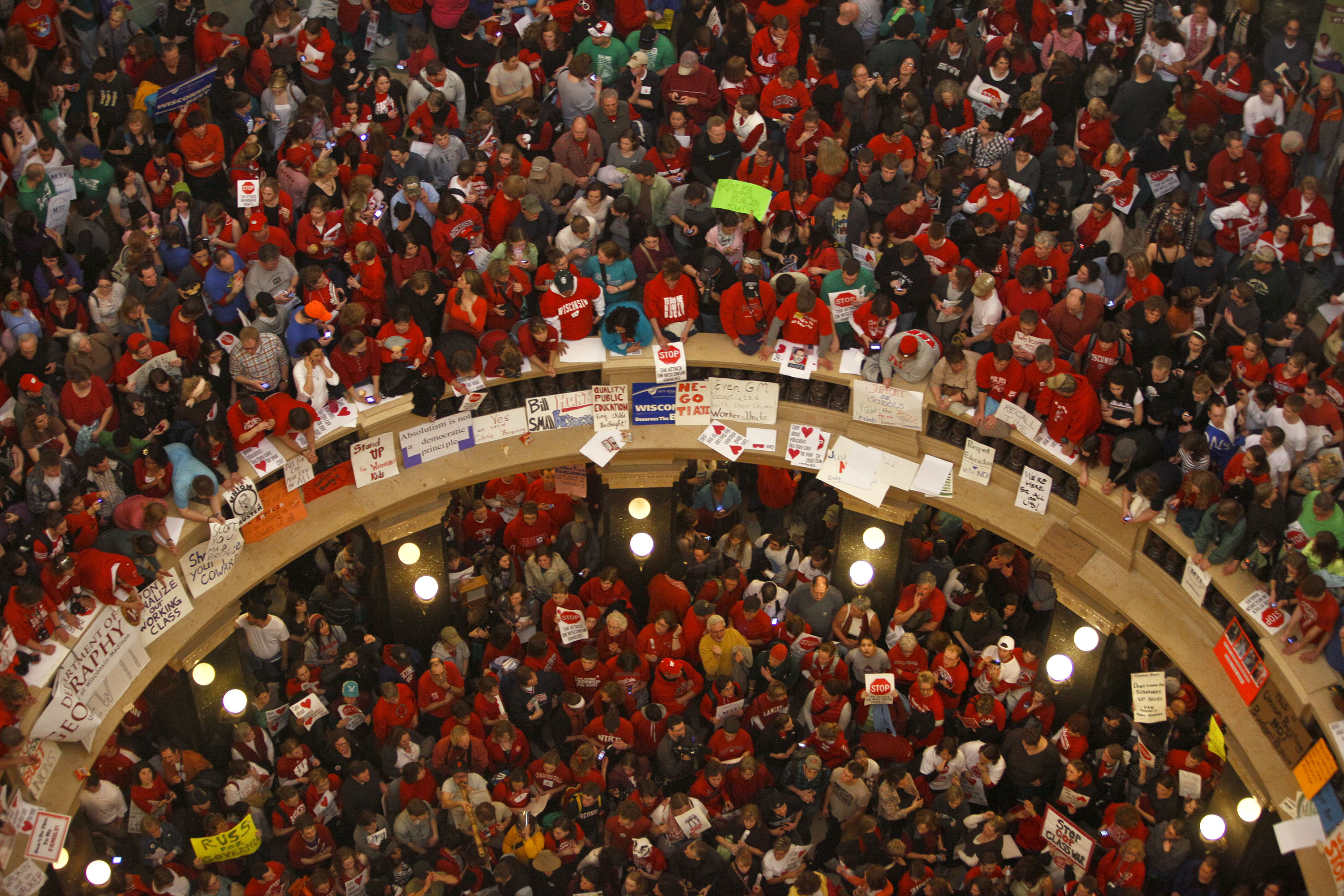
Well, I'll tell you what, uh, those of us that were following state policy at the time remember those just horrific scenes of the angry mob of progressive leftist protesters out there in Madison, Wisconsin, breaking into the state capitol building, trying to stop the people's business.
Jonathan WilliamsGUEST
And of course, what was the people's business that day? It was Governor Scott Walker's huge reforms to protect taxpayers and get Wisconsin back on a solid footing.
Jonathan WilliamsGUEST
Act 10 was a major package of reforms on labor policy, on fiscal issues.

Connie FellmanCORRESPONDENT
In addition to being laid off on December 4th, workers' health care benefits will also end that day.
Connie FellmanCORRESPONDENT
Wisconsin's controversial anti-union law, Act 10, faces a critical showdown this fall to the November 3rd election and a lawsuit heading to the Wisconsin Supreme Court.
Connie FellmanCORRESPONDENT
Passed under former Republican Governor Scott Walker, the law severely restricted collective bargaining for most public sector employees.
Connie FellmanCORRESPONDENT
Public sentiment remains deeply divided.
Connie FellmanCORRESPONDENT
According to a recent Marquette University Law School poll, 54% of registered voters supported restoring collective bargaining to pre-Act 10 standards.
Connie FellmanCORRESPONDENT
while 43 prefer to keep the current law in place.
Connie FellmanCORRESPONDENT
The debate showcases a sharp divide between Wisconsin's two candidates for governor also.
Connie FellmanCORRESPONDENT
Republican Tom Tiffany strongly defends the anti-union law, maintaining that it protects taxpayers, while Democrat David Crowley supports a full repeal of Act 10 and the state's right-to-work laws, arguing that all public workers deserve the right to negotiate fair wages and working conditions through collective bargaining.

Connie FellmanCORRESPONDENT
In addition to being laid off on December 4th, workers' healthcare benefits will also end that day.
Connie FellmanCORRESPONDENT
Wisconsin's controversial anti-union law, Act 10, faces a critical showdown this fall through the November 3rd election and a lawsuit heading to the Wisconsin Supreme Court.
Connie FellmanCORRESPONDENT
Passed under former Republican Governor Scott Walker, the law severely restricted collective bargaining for most public sector employees.
Connie FellmanCORRESPONDENT
Public sentiment remains deeply divided.
Connie FellmanCORRESPONDENT
According to a recent Marquette University Law School poll, 54% of registered voters supported restoring collective bargaining to pre-Act 10 standards, while 43 prefer to keep the current law in place.
Connie FellmanCORRESPONDENT
The debate showcases a sharp divide between Wisconsin's two candidates for governor also.
Connie FellmanCORRESPONDENT
Republican Tom Tiffany strongly defends the anti-union law, maintaining that it protects taxpayers, while Democrat David Crowley supports a full repeal of Act 10 and the state's right-to-work laws, arguing that all public workers deserve the right to negotiate fair wages and working conditions through collective bargaining.
Connie FellmanCORRESPONDENT
Madison's interim independent police monitor is pushing back against a city employment review that accuses her of ignoring multiple rules and delaying key duties.

Connie FellmanHOST
In addition to being laid off on December 4th, workers' healthcare benefits will also end that day.
Connie FellmanHOST
Wisconsin's controversial anti-union law, Act 10, faces a critical showdown this fall through the November 3rd election and a lawsuit heading to the Wisconsin Supreme Court.
Connie FellmanHOST
Passed under former Republican governor Scott Walker, the law severely restricted collective bargaining for most public sector employees.
Connie FellmanHOST
Public sentiment remains deeply divided.
Connie FellmanHOST
According to a recent Marquette University Law School poll, 54% of registered voters supported restoring collective bargaining to pre-Act 10 standards, while 43% prefer to keep the current law in place.
Connie FellmanHOST
The debate showcases a sharp divide between Wisconsin's two candidates for governor also.
Connie FellmanHOST
Republican Tom Tiffany strongly defends the anti-union law, maintaining that it protects taxpayers, while Democrat David Crowley supports a full repeal of Act 10 and the state's right-to-work laws, arguing that all public workers deserve the right to negotiate fair wages and working conditions through collective bargaining.
Connie FellmanHOST
Madison's interim independent police monitor is pushing back against a city employment review that accuses her of ignoring multiple rules and delaying key duties.

Connie FellmanCORRESPONDENT
In addition to being laid off on December 4th, workers' health care benefits will also end that day.
Connie FellmanCORRESPONDENT
Wisconsin's controversial anti-union law, Act 10, faces a critical showdown this fall through the November 3rd election and a lawsuit heading to the Wisconsin Supreme Court.
Connie FellmanCORRESPONDENT
Passed under former Republican Governor Scott Walker, the law severely restricted collective bargaining for most public sector employees.
Connie FellmanCORRESPONDENT
Public sentiment remains deeply divided.
Connie FellmanCORRESPONDENT
According to a recent Marquette University Law School poll, 54 percent of registered voters supported restoring collective bargaining to pre-Act 10 standards.
Connie FellmanCORRESPONDENT
while 43 prefer to keep the current law in place.
Connie FellmanCORRESPONDENT
The debate showcases a sharp divide between Wisconsin's two candidates for governor also.
Connie FellmanCORRESPONDENT
Republican Tom Tiffany strongly defends the anti-union law, maintaining that it protects taxpayers, while Democrat David Crowley supports a full repeal of Act 10 and the state's right-to-work laws, arguing that all public workers deserve the right to negotiate fair wages and working conditions through collective bargaining.

Ben GruberGUEST
Um, I was up until January of this year.
Ben GruberGUEST
Uh, Democratic control means that we overturn Act 10.
Ben GruberGUEST
Um, on that note, I'm also a lead plaintiff on a lawsuit that's, uh, likely headed to the Supreme Court, which found at the circuit court level that, uh, Act 10's collective bargaining restrictions are unconstitutional.
Ben GruberGUEST
However, we still need a legislature willing to undo that mess so that we're not vilifying public school teachers for having healthcare while we're funding, uh, yacht gas for billionaires.
Ben GruberGUEST
So a Democratic trifecta gives us the ability to legislate worker protections.

Joe GigantiHOST
I just ...
Joe GigantiHOST
Which reminds me of Act 10 in Wisconsin.
Joe GigantiHOST
I mean, just, you know, teachers protesting, not showing up for work because they want better pay, supposedly for the kids, but they wanted better pay.
Joe GigantiHOST
So you have a bunch of people that are saying the public school, the government-run school system, run by a government that at best could be described as pseudo-socialist.

Vicki McKennaHOST
Uh, but he also is going to discuss what happens if we basically undo everything that had been done between 2011 and 2018, and that's David Crowley's plan.
Vicki McKennaHOST
What happens when Act 10 goes away? What happened when the Wisconsin REINS Act goes away? What happens when our tax cuts go away? We'll talk about that on tomorrow's show.
4 more episodes mention 2011 Wisconsin Act 10.
Create an account to see the whole feed, search across every transcript, and follow the entities you care about.