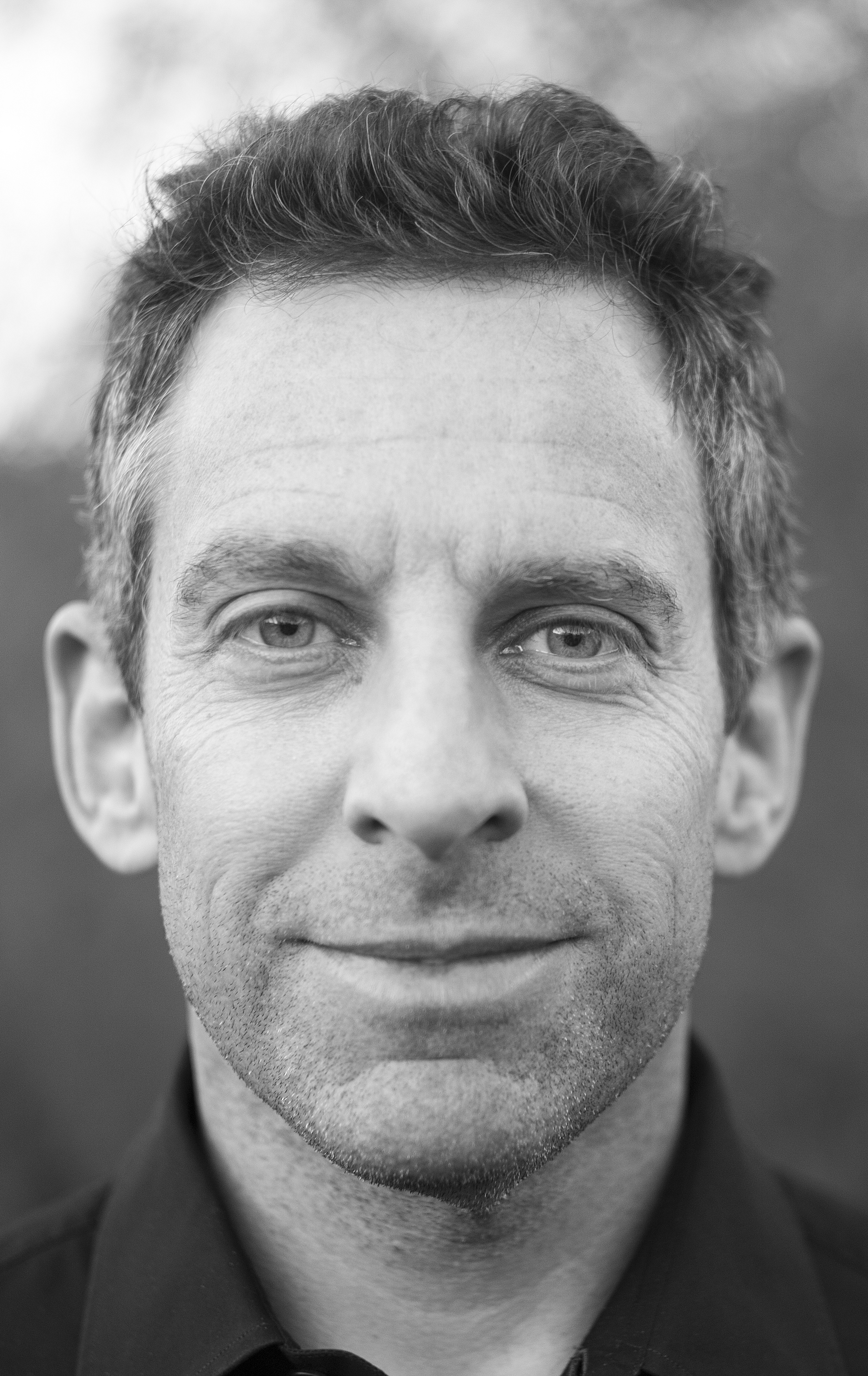
Sam Harris

Sam Harris

American neuroscientist and philosopher

Sep 18, 2026

1:13
categorize that difference?
1:16
Well, I mean, to a significant degree, it's people moving in two opposite directions.
1:20
I mean, like the people who were stuck with a religious worldview, stuck, I mean, literally in many cases traumatized by a fear of hell that had been inculcated into them by their religious parents, but were enamored enough of enlightenment values and secular rationality and science so as to have the the spell break to some significant degree, and they needed some language to help kind of midwife their delivery into the clear light of reason, right? And they also needed...
1:58
And this is where Richard and I have had different jobs.
2:02
I mean, Richard is just... critiquing religion and counterposing it with all that's wonderful about science, right? And so for him, the spiritual attitude that is on offer once you leave religion behind and close the church doors behind you is awe at the beauty of nature and just amazement at everything we are learning and may yet learn about the way the world works and the way the mind works.
2:33
I mean, we are...
2:35
Now, to use Newton's image, I mean, it's like we are children on a seashore playing with shells and the vast ocean of ignorance and potential knowledge just awaits our inspection.

7 MINS LATER

9:41
I think people are hoping that there is yet more juice to squeeze from your conjoined lemons in however way that happens.
0:00
There's tension between the drive to do more, the acceptance of who we are, the wanting to show up in the world and to give it everything that we've got and the gratitude for the things that we already have.
0:11
Yeah, well, it is a constant tension.
0:14
And I think you want to, ultimately, I think you want to be biased on the being side of it.
0:19
I mean, certainly if you've succeeded enough, right? Like if you have a, if you recognize that you've won the lottery on some level and you are in a position now where there are billions of people who would consider their prayers answered if they could trade places with you, right? And there'll be a time in your life where you would give anything to trade places with who you are now, right? Like when you're in your last months of life and you're terminally ill or you've lost someone very close to you.
0:53
When you have this moment in the sun where things are basically going well, right? I think it's appropriate to have a module in your mind which continually pings you, which says, if you can't enjoy this, if this is gonna be wasted on you, you're never gonna be happy.
1:16
You should be able to enjoy this part.
1:19
This is dessert, right? Dessert has arrived.
2:47
I'm not sure if it's true.
2:49
Yeah, except the thing that surprises me is that it should be more obvious than it is to more people that someone's an asshole.
3:00
Right.
3:00
It's like that, like it doesn't matter how fluent you are.
3:04
You're, you're only just declaring your assholery in, in more concise form.
3:10
Right.
3:11
Um, and yeah, So it's kind of a Trumpian moment.
7:01
It wasn't far off that, I think, that the actual tweet was about saying that it was, I think, damaging science and doing a disservice to maybe Dawkins himself and some other stuff.
0:39
haven't seen those Vox Pop conversions, but I saw Andrew Tate's conversion.
0:46
Well, I mean, Islam is just memetically, it's perfect for a specific audience.
0:53
It's a explicitly macho religion, right? It's a no pussies religion, right? It's just a With Christianity, you have to pretend to be happy to be losing for the longest time, and you're basically just waiting for Jesus to come back and rectify this grave injustice.
1:26
The meek shall inherit the earth.
1:27
There's no putting this place right.
1:31
We're not going to win until we see Jesus arrive on trailing clouds of glory.
3:56
The answer is a return to something that's got a bit more Lindy nature to it.
19:21
is there always that noise or does Donald Trump strategically, tactically, instinctively create that noise? Was there that much noise when Biden was president? I don't think so.
19:35
There have been kind of Trump-like reverberations that crossed the four years where he wasn't president.
19:46
We continue to unravel.
19:47
And there's a left-wing version of the Trumpist noise machine.
19:53
But I mean, for Trump specifically, I mean, this is, I think, a kind of unpopular opinion of him, but this is the framing I have always had of him, and I think I still have it.
20:06
I think a lot of his success and his ascendancy and his invulnerability to scandal has less to do with him being some kind of political genius than— And more to do with the situation in which he has found himself, right? So I view him as a – the analogy that has worked for me is that he's kind of an evil version of the Chauncey Gardner character from the Jersey Kosinski book and the being there and the – the film by that name.
20:37
If people remember, Peter Sellers played this character who is just kind of alone in the house, and all he is is the gardener, and he gets a thrust into a situation where everything he says can be mistaken for political wisdom, but he's really an imbecile, right? And he never ceases to be an imbecile, but he's in a context in which everything he does begins to look profound and has a profound effect on the people around him.

23 MINS LATER

43:50
How can that be?
14:05
God,
14:05
it's so crazy.
14:06
It makes me super emotional.
14:07
It's like thinking about it.
14:08
My dad had a, a really bad fall.
14:12
Um, earlier this year.
14:16
And it was like the first time that I think, you know, we had really been face to face with, you know, a parent's mortality.

16 MINS LATER

30:27
your family, be it your biological or your, you know, your chosen family or your people who you can, you know, maybe you can't count on them all the time, but you can always reach out and you can always feel like you can say something to them, even if they aren't going to say anything back to you.
1:13
How would you categorize that difference?
1:16
Well, I mean, to, to a significant degree, it's people moving in two opposite directions.
1:20
I mean, like, they're, they're the people who were stuck with a religious worldview, stuck, I mean, literally in, in many cases traumatized by a fear of hell that had been inculcated into them by their religious parents, but were enamored enough of enlightenment values and secular rationality and science so as to have the, this, the spell break to some significant degree, and they needed some language to, to help kind of midwife their delivery into a, i- into the clear light of, of, of reason, right? And they also needed...
1:58
So, and this is where Richard and I have kind of, have had different jobs.
2:02
I mean, Richard is just critiquing religion and counterposing it with all that's wonderful about science, right? And so for him, the, the spiritual attitude that is on offer when you, once you leave religion behind and, you know, you know, close the church doors behind you, is awe at the beauty of nature and just amazement at, you know, everything we are learning and may yet learn about the way the world works and the way the, the mind works.
2:31
And, um, I mean, we are...
2:35
Now, to, to use Newton's image, I mean, it's like we are children on a seashore playing with shells and the, the vast ocean of, of ignorance and potential knowledge, it just, you know, awaits our, our inspection.
5:41
Pretty reliable, then
0:00
This tension between the drive to do more, the acceptance of who we are, the wanting to, to show up in the world and to, to give it everything that we've got and the gratitude for the things that we already have.
0:09
Hmm.
0:11
Yeah, well it is a constant tension and, and I think you want to...
0:15
Ultimately, I think you wanna be biased on the, the being side of it.
0:19
I mean, certainly when, if you've succeeded enough, right? Like you, if you have a...
0:24
If you recognize that you've won the lottery on some level and you are in a position now where there are billions of people who would consider their prayers answered if they could trade places with you, right? And you, you...
0:38
There, there'll be a time in your life where you would pa- give anything to trade places with who, who you are now, right? Like when you're, you know, when you're in your last months of life and you're, you're terminally ill or you're, you know, you've lost someone very close to you.

7 MINS LATER

7:54
With Andrew Huberman, yeah.
2:47
I'm not sure if it's true."
2:49
Yeah, except the, the thing that surprises me is that it should be more obvious than it is to more people that someone's an asshole, right? It's like that, like it doesn't matter how fluent you are, you're, you're only just r- declaring your assholery in sh- in more concise form, right? Um, and so it, it's kind of a Trumpian moment.
3:15
Like Trump is obviously an asshole.
3:16
He's obviously a, a selfish person, but nobody-- none of his fans care, right? He's like, he's not a compassionate person.
3:23
He's e- he can't even pretend to care about people really, right? He's-- But his, his shamelessness around his selfishness has become a kind of superpower for a certain audience because he's, he's conveying the message, "I will never ju- I, I will never judge you because I'm incapable of judging myself," right? "Like I'm not, I, I'm not holding myself to any kind of standard apart from the gratification of my own desires.
3:51
So, you know, I'm, I'm, in s- in some sense, I have a real integrity because I know I'm selfish." All those people who are pretending not to be selfish, who are pretending to be ethical and compassionate, to care about, you know, uh, uh, the sub-Saharan Africa and, uh, you know, education in developing countries.
4:08
I mean, uh, someone like Bill Gates, right? You know, Bill Gates is somebody who can't get laid, and he's just gonna microchip you with the next vaccine, right? Like that, that's-- This is gonna be a great, uh, quote to export from this podcast.
7:12
some other stuff.
2:11
Beat shit out of everyone
2:11
... came back.
2:12
Yeah, yeah.
2:13
With Islam, there's an expectation that they're gonna conquer the world, right? And there's an imperative to conquer the world, and for Ser- for serious Muslims.
2:21
It's like you, you know, you don't have to be impatient necessarily.
2:24
You can take as long as you want, but this is all, we all know this is moving in one direction, and you need to be a spiritual warrior.
2:31
And if you b- if you take this really far, if you become a jihadist, right, you're, and especially doctrinaire, militant, you know, true believer, well, then you're a kind of spiritual James Bond.
3:59
... more Lindy nature to it.
17:03
But, but is there always that noise or does Donald Trump strategically, tactically, instinctively create that noise? I mean, was there that much noise when Biden was president? I don't, I don't think so.
17:15
Well, there was, you know, there ha- there've been kinda Trump-like reverberations, uh, uh, you know, that, that crossed, you know, the, the four years where he wasn't president.
17:25
I mean, uh, uh, we, we continue to unravel and, and there, there's a left-wing version of the, kinda the Trumpist noise machine.
17:31
But I mean, th- for Trump specifically, I mean, this is k- uh, I think a kind of unpopular opinion of him, but this is the, the framing I have a-always had of him, and I, I think I, I still have it.
17:41
I think a lot of his success and the, you know, his ascendancy and his invulnerability to scandal has less to do with him being some kind of political genius and more to do with the situation in which he has found himself, right? So I, I view him as a...
17:57
The, the, the analogy that, that has worked for me is that he's kind of an evil version of the Chauncey Gardiner character from the, the Jerzy Kosiński book and the, being there and the, and the, the film by that name.
18:08
So this, if people remember, Peter Sellers played this character who is just kind of alone in the house, and he's all he is, is the gardener and, and he, um Gets thrust into a situation where he can be-- everything he says can be mistaken for political wisdom, but he's really an imbecile, right? And he's ne-he never ceases to be an imbecile, but he's in a context in which everything he does begins to look profound and has a profound effect on the people around him.
18:35
Right.
7:26
What is causing, you think, this drift from religiosity in
7:29
Americans? It's a hard question.
7:32
You know, the honest answer is I don't know.
7:34
I think it's, you know, it probably has something to do with more access to information, ultimately.
7:43
I just think that there is a an important asymmetry in the tug of war, which is now many centuries old, between Enlightenment rationality and secularism and a universal conception of human rights and democracy and everything else that's on the good side of that sort of progress that allows for open societies, and religious orthodoxy.
8:11
you know, Iron Age certainties about the unique veracity of a single revelation, right? So it used to be that if you were a Christian, you know, somewhere around the 14th century, the 15th century, you know, it was expected that you could be killed for thought crimes, but, you know, by the religious orthodoxy that governed everything, right? Now, we have fought a a very difficult battle against that kind of theocracy in the West.
8:45
And we have a lot to show for it.

12 MINS LATER

20:34
Have your views shifted at all as this war has progressed?
19:18
But is there always that noise or does Donald Trump strategically, tactically, um, instinctively create that noise? I mean, was there that much noise when Biden was president? I don't, I don't think so.
19:32
There have been kind of Trump-like, uh, reverberations, uh, you know, that, that crossed, uh, you know, the, the four years where he wasn't president.
19:42
I mean, we, we continue to unravel and, and there is, there is a left-wing version of, of, uh, of kind of the Trumpist noise machine.
19:50
But I mean, for, for Trump specifically, I mean, this is k- I think a kind of unpopular opinion of him, but this is the, the framing I have al-always had of him, and I, I think I, I still have it.
20:02
Um, I think a lot of his success and, and, you know, his ascendancy and his invulnerability to scandal has less to do with him being some kind of political genius and more to do with the situation in which he has found himself, right? So I view him as a...
20:20
The, the, the analogy that, that has worked for me is that he's kind of an evil version of the Chauncey Gardiner character from the, the Jerzy Kosiński book and the, and the, uh, being there and the, and the, the, the, um, the film by that name.
20:33
So this-- If, if people remember, Peter Sellers played this character who is just kind of alone in the house, and he's all he is, is the gardener.

25 MINS LATER

46:06
How can that be?

Unknown podcast

Ep.557 ~ The Issue With Postmodernism - Sam Harris ~ Jordan B Peterson

Aug 17 · 11m

0:22
Mm-hmm
0:22
... that's not the, that's not what science does.
0:24
And my point is that morality, and this perhaps something you, you're going to want to, to, um, disagree with, but in my view, morality ha- morality has to relate to the, the suffering and well-being of conscious creatures.
0:41
I mean, not even limiting it to, to humans, but just whatever can possibly suffer or be made happy in this universe is some, is a, a possible theater of, of moral concern.
0:52
And we know that mind, that conscious minds must be arising in some way in conformity to the laws of nature.
1:01
I mean, so whatever is possible for conscious minds is a statement about, at, at bottom, a, a final scientific un- understanding of what minds are and what consciousness is and how those things are integrated with the physics of things.
1:15
Um, and so there r- there have to be right answers to the question of how to navigate from the worst possible suffering for everyone to places on the moral landscape that are quite a bit better than that, where there's, there's beauty and creativity and joy of a sort that we can only dimly imagine.

6 MINS LATER

7:59
... as far as you're concerned?

Unknown podcast

Ep.556 ~ Good and Evil ~ Jordan B Peterson

Aug 17 · 18m

2:49
And so does, is there anything about that claim that you find off-putting?
2:53
Well, I, I would...
2:54
There's some analogies we could use to capture it.
2:57
I mean, I, I do think of these things as kind, as almost facets of a, a single jewel, right? And, and so the facets are different.
3:04
I mean, it's talking about, you can talk about beauty and not talk about love in, in the same conversation.
3:11
That you can have a coherent discussion of, of, of beauty without reference to love and, and vice versa.
3:17
But when you're talking about the, the, the conscious states that, that maximize one's appreciation of all of these things and participation in all of these things, it's easy to, to, to intuit that there's a, there's a common structure to the whole picture.

10 MINS LATER

13:37
Does any of that seem reasonable to you?

Unknown podcast

Ep.555 ~ Objective Morality and Human Value - Sam Harris ~ Jordan B Peterson

Aug 17 · 8m

1:00
Now, is that, is that a reasonable, is that a reasonable conclusion? Have I got that right?
1:05
Yeah.
1:05
I, I think my motive is, will be pretty familiar to you.
1:09
I, you know, this came largely out of the collisions I was having with, uh, people after I wrote my first two books, uh, The End of Faith and Letter to a Christian Nation, where I was noticing, you know, disproportionately on the left, uh, specifically, I mean, we've come full circle now to this moment, you know, in the news cycle.
1:30
Um, but, um, you know, mostly in response to my criticism of, of Islamic extremism and, uh, you know, the, the kind of the urgency with which I was, I was saying that the Islamic doctrines of martyrdom and jihad are, you know, are sincerely believed by millions of people, and these beliefs have real consequences in the world, and they're not good ones, right? And, and we should, we should talk about that honestly.
1:55
What I was getting mostly from the left was, um, you know, what, what struck me as pure masochistic delusion, but it was on its own side a very sophisticated philosophy of, you know, postmodernist truth claims about the, the relativity of everything, uh, which, which, you know, in the minds of its adherents left us with no solid ground to stand on ever when making claims about right and wrong and good and evil.
2:24
Uh, so, you know, I, I mean, the, the point where it, it became, and this is something that I, this is actually a scene I, I, I wrote verbatim in my third book, The Moral Landscape, which is where I, I laid out, you know, my, my argument on this, on this topic.
4:23
Mm-hmm

Unknown podcast

Ep.551 ~ Do People Possess Evil Ideas or Do Evil Ideas Possess People- Sam Harris ~ Jordan B Peterson

Aug 17 · 8m

1:08
Now, is that a fair characterization?
1:12
Well, I, I would say that i- it's not exclusively religious, but insofar as it is religious, it gets even more leverage in a, i- in, in that context and to, to worse ends.
1:23
So for instance, you know, w- what is worse about jihadism than, you know, ordinary forms of terrorism, in my view, i- it is the religious top spin it a- it has based on the, the, its motivating ideas.
1:37
So the fact that it is, is in principle otherworldly, the fact that it is, you know, just anchored to, to prophecy and belief in the supernatural, all of that potentiates it, uh, in the, you know, further in the wrong direction.
1:51
So you like, you know, the troubles in Ireland would've been made worse had the Irish Catholics also been suicide bombers, uh, expecting to go straight to heaven because there was a, a passage in the New Testament which said, "You know, if you die while killing, uh, pagans or Jews or any other non-Christian, uh, you'll, you know, you'll find yourself at the right hand of Christ in the next moment." Right? So like that, like it, it's better that there's not a passage like that in, in the New Testament, and it's better that, that, that, you know, quasi-religious, uh, political, um, source of, of terrorism in the UK was not, uh, potentiated by, you know, a clear connection to religious belief and religious expectation.
4:15
Is that, is that a reasonable way of putting it?
4:18
Well, I, I think I'm...
4:20
It, it, it depends on the specific instance we're talking about, but I, I think what I'm saying is, um, is even more pessimistic than that, is that i- given the requisite beliefs, it's possible to create immense harm consciously, create immense harm without even having bad intentions toward anyone.
38:03
Talk a little bit about the attention economy, what you see as are the threats to our attention, and w-w-what, what meditation, you know, where meditation and, and an attention reset kind of, um, where the Venn overlap is there.
38:21
Well, so, uh, the first thing to acknowledge is that all we really have is our attention.
38:27
You know, the, the quality of our life really is a story of what we're paying attention to and what we can notice, right? The quality of our attention and, and where it is aimed.
38:38
Uh, I mean, that's even true more of, uh, more than of time.
38:42
I mean, most people think that the time is the one non-renewable resource and, you know, that, that's true.
38:46
You, you just can't get this hour back.
38:49
But the quality of the hour is dictated by what you're paying attention to.

9 MINS LATER

47:32
Are there hacks or exercises to get better at presence?

Unknown podcast

Ep.413 ~ The Social Media Problem - Sam Harris ~ Jordan B Peterson

Aug 2 · 9m

0:46
So why did you conclude that?
0:48
Yeah, it's a question I continue to ask myself because, you know, you only have one life or, you know, I would say you only have one life you can be sure of.
0:58
And so why not live it in the happiest manner possible? But I do find that there are certain moments.
1:09
First of all, my interests are wider than can be encompassed just by things like meditation and meditation.
1:17
narrowly focusing on questions about how to live the most meaningful possible life right it's not it's not all just about maximizing mental pleasure or um even one's you know ethical wisdom moment to moment they're just things that interest me that i want to talk about that really don't belong over waking up but they do belong on my podcast so talking about you know physics say right that's just interesting and i like to do that um So there's that.
1:47
As you say, I deleted my Twitter account, which is an important part of the answer to your first question, which is what has gotten better for me in the last 12 months.
1:58
I really am embarrassed to say what a life hack that turned out to be to get off Twitter.

5 MINS LATER

7:34
And part of the reason Twitter is so pathological, perhaps, and is such a snake pit of polarization is because it does encourage that kind of impulsive and immediate response to things that are perhaps of sufficient seriousness so that they should only be taken seriously.

Unknown podcast

Ep.291 ~ We Have A Serious Problem With AI ~ Jordan B Peterson

Jul 23 · 5m

1:38
become a stunning
1:39
problem.
1:41
It's a big problem.
1:42
I can see that the...
1:44
The perfect version of it is at most a year away.
1:48
I mean, it might only be a couple of months away.
1:51
We've experimented with this on our side too.
4:42
that been happening with your meditation app, with your enterprise

Unknown podcast

Essentials: Using Meditation to Focus, View Consciousness & Expand Your Mind | Dr. Sam Harris

Jul 23 · 40m

0:22
What is this thing that we call a self? As far as I know, we have not localized the region in the brain that can entirely account for our awareness of self.
0:33
The problem is we use the term self in so many different ways, right? And there's one sense...
0:40
of that term, which is the target of meditation.
0:43
And you'll hear it from me that this self is an illusion, right? And that there's a psychological freedom that can be experienced on the other side of discovering it to be an illusion.
0:54
And some people don't like that framing.
0:55
Some people would insist that it's not so much an illusion, but it's a construct and it's not what it seems.
1:01
The thing that doesn't exist, certainly doesn't exist as it seems.

20 MINS LATER

21:06
to break it down, meditation into some basic component parts, What are the component parts? And where I'm really going with this is why would those component parts eventually allow for the realization that there is no distinction between actor and observer and so on?
0:29
-that can entirely account for our awareness of self.
0:33
The problem is we, we use the term self in so many different ways, right? And, and there's w- there's one sense of that term which, um, is the target of meditation, and you'll hear it from me, that this self is an illusion, right? And, and that there's a, there's a psychological freedom that can be experienced on the other side of discovering it to be an illusion.
0:54
And some people don't like that framing.
0:55
Some people would, would insist that it's not so much an, an illusion, but it's a, it's a construct, and it's not w-what it seems.
1:01
The thing that doesn't exist, uh, certainly doesn't exist as it seems, and I would w- I would want to argue that it actually is just a proper illusion, is this, the sense that there is a subject interior to experience, in addition to experience.
1:16
So most people feel like they're having an experience of the world, and they're having their... an experience of their bodies in the world.
1:23
And in addition to that, they feel that they are a subject internal to the body.

13 MINS LATER

14:49
Is just the recognition that there's an, a dialogue ongoing internally, is that itself valuable?

Unknown podcast

Ep.281 ~ Watch This Before Going to College ~ Jordan B Peterson

Jul 22 · 9m

2:39
no, but...
2:40
Yeah, but the antidote to fails or failures of science, say, you know, or scientific fraud... is not something other than science.
2:48
It's just more science, real science, good science, scientific integrity.
2:52
And so it is with journalism or any academic discipline or anything that purports to be truth-seeking, we have standards.
2:59
And there's nothing wrong with our standards.
3:03
What's dangerous about the current information landscape where we have just this contrarian universe where anything that is outside the institutions is considered to have some kind of primacy, right? Where everyone is kind of a citizen journalist, a citizen scientist, where you just kind of flip the mics on and talk for four hours, and that's good enough.
3:25
What that's selecting for are the people who have have no standards to even violate, right? I mean, these people are incapable of hypocrisy.
4:25
It's because I think the best way to deal with what she's doing is not to discuss her.

Unknown podcast

Ep.206 ~ Are You Willing To Take the Chance That Morality Is Subjective ~ Jordan B Peterson

Jul 15 · 18m

10:02
And there's a hierarchy of value in consequence of that, that is obliquely associated with the world of fact, because it has to operate in the world of fact, but that isn't fundamentally derived from like data
10:18
that's directly associated with the facts.
10:21
Well, not operationally, but potentially so, just not in fact.
10:27
I'm never claiming when I say that there are objective truths to all of these questions that those objective truths will be delivered by some guy holding a clipboard wearing a white lab coat.
10:41
But there are things we just know to be true, and it would take a lot of explaining to get to the bottom of how we know them to be true.
10:50
But, I mean, they're very simple claims.
10:56
We know that life in... you know, the best and most refined and most ethically, you know, positive sum developed world context, right? You know, you and me and our most conscientious friends at the nicest resort after having done a great day's work, we're enjoying a great meal and talking creatively and positively about how to improve the world, we know that's a better game than trying to find some child soldiers to torture the neighbors in some malarial hellhole in sub-Saharan Africa so that we can extract the...
16:24
We
17:23
yeah i mean it was it was inspiring honestly it
17:26
was and i think for me too like a part of my personality is like i'm a people pleaser i'm also like always looking for like you know these like Big brother, father figure.
17:38
No offense, Casey is my actual big brother.
17:40
I'm like always drawn towards these people, right? And also like I am an ambitious person.
17:50
And when that's reflected in somebody else and they're driving you and pushing you, it just like kind of unlocked something in me.
17:58
So yeah, there were times where I was like definitely trying to like impressed this person and i don't think that was necessarily always a bad thing um because it activated this work ethic in me that i've always had but it kind of like turned supercharged it a little bit um you know Yeah, we had a complicated relationship.
18:26
It was complicated.

25 MINS LATER

43:23
yeah

Scroll for more appearances

We value your privacy

We use cookies to understand how you use our platform and to improve your experience. Click “Accept All” to consent, or “Decline non-essential” to opt out of non-essential cookies. Read our Privacy Policy.