1997 Asian financial crisis
EventWikipedia
12
MENTIONS
6
EPISODES
6
PODCASTS
Search complete. 12 mentions across 6 episodes found for "1997 Asian financial crisis".
Sep 26, 2026

Keith YapHOST
And I think many countries were affected from the fallout in the US.
Keith YapHOST
How did that episode shape the way you thought about your career after
OliviaUNKNOWN
that crisis?
Keith MagnusGUEST
Again, a very stressful, intense period, 2007, 2008.
Keith MagnusGUEST
And I wound back to myself in that hospital bed in 1998, looking at the future.
Keith MagnusGUEST
And then, you know, the early training and the concept of being a trusted advisor was something that I most enjoyed.
Keith MagnusGUEST
And that was the career that I had set out to build, to be a trusted advisor.
Keith MagnusGUEST
So Ralph, Ralph Schlossstein, who was then, he was the co-founder of BlackRock.

Tom BodrovicsHOST
Um, but Peter, before we continue, I'd like to put maybe a little bit of a finer point on that.
Tom BodrovicsHOST
You've of course kind of lived through four different cycles over there, the AFC, SARS, the, the GFC-
Peter AlexanderGUEST
Okay.
Peter AlexanderGUEST
Yeah

PeterHOST
Is there any catastrophe that happened when financial stability is no
Norhana EndutGUEST
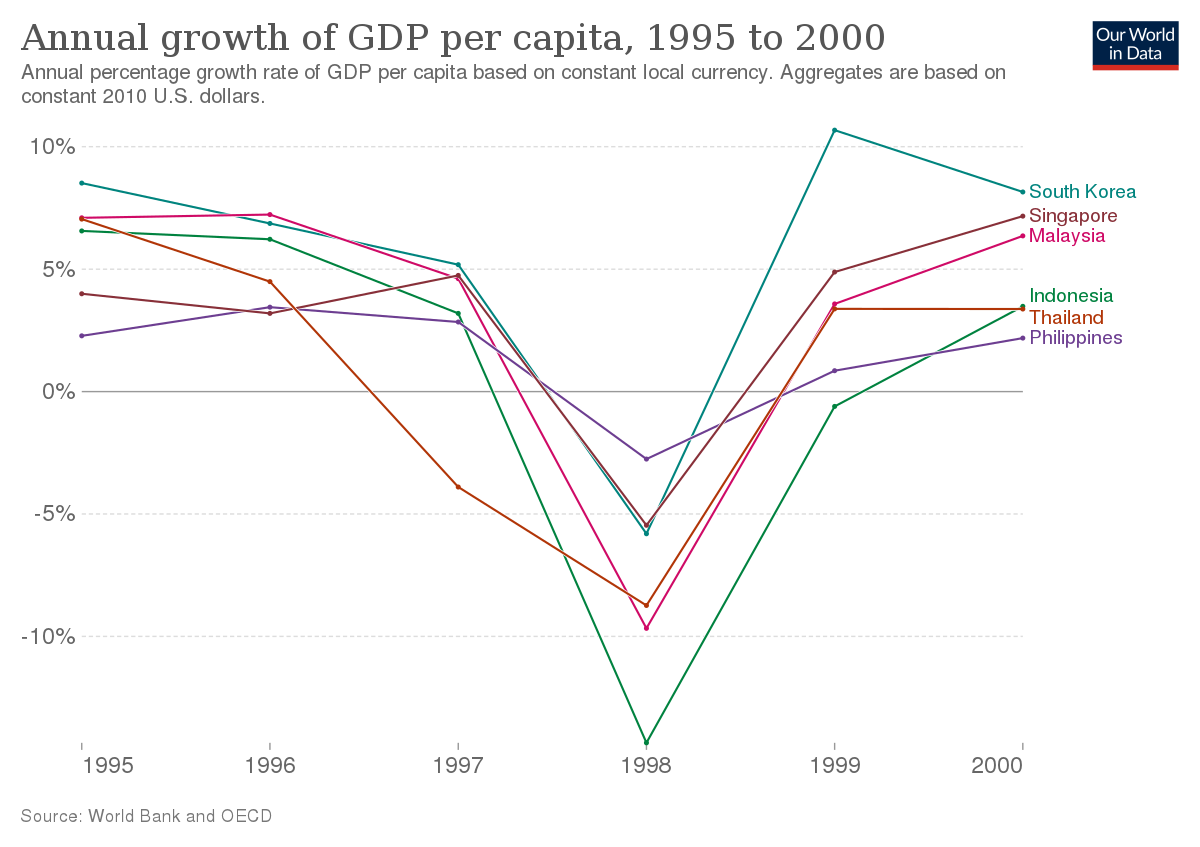
more? 1997, the Asian financial crisis is what it looks like when you lose financial stability.
Norhana EndutGUEST
Banks are not able to actually lend money.
Norhana EndutGUEST
Credit being pulled back.
17 MINS LATER
Norhana EndutGUEST
right.
Norhana EndutGUEST
So perhaps it's unfortunate that a large part of our generation is probably very young in 1997.
Norhana EndutGUEST
So 1997, the Asian financial crisis is what it looks like when you lose financial stability.
Norhana EndutGUEST
And at that time, if you look back at history, or you can Google and ask AI.

Chuan Hoe TeoHOST
Oh, 2000.
Chuan Hoe TeoHOST
AFC already, right? Not SaaS yet? I don't know.
Guang Jin YeoHOST
The second week of April is where the dot-com crash happened.
Guang Jin YeoHOST
Oh, yeah, yeah, yeah.

Patrick BoyleHOST
Since that peak, the market has lost a quarter of its value and entered a bear market, which brings us back to where we started, down 25% from the peak and still up almost 60% on the year.
Patrick BoyleHOST
The KOSPI is currently more volatile than it was in the 1997 Asian financial crisis and the global financial crisis in 2008.
Patrick BoyleHOST
According to the FT, Korean market volatility has been so extreme that the stock exchange paused trading 37 times this year, compared with three times in all of last year.
Patrick BoyleHOST
If you listened to the news, you'd believe that the Korean market has become a speculative casino run by irrational over-leveraged day traders, pumping up local team stocks on internet hype.
27 MINS LATER
Patrick BoyleHOST
The obvious escape would be to open the currency up, let it trade freely offshore, and let global markets sort out the imbalance.
Patrick BoyleHOST
But Korea won't do it, and the reason is a scar.
Patrick BoyleHOST
In 1997, during the Asian financial crisis, known locally as the IMF trauma, the won lost half of its value in months.
Patrick BoyleHOST
and the country needed an IMF bailout to avoid default.

Drago DjourovHOST
He's a business correspondent in Mumbai when Indira Gandhi is assassinated in 1984.
Drago DjourovHOST
Bureau Chief for the Business Times when President Suharto falls, IMF Asia Pacific spokesperson out of Washington during the Asian financial crisis in the late 90s.
Drago DjourovHOST
He's since held senior roles with Standard Chartered Bank, IMF and Chatham House in Singapore, London and Washington.
Drago DjourovHOST
Right now, among other things, he's a trustee at the Institute for Human Rights and Business and on the advisory panel for the Commonwealth War Graves Commission.