Cray
Computer companyWikipedia
13
MENTIONS
8
EPISODES
8
PODCASTS
Search complete. 13 mentions across 8 episodes found for "Cray".
Sep 17, 2026

Tony KynastonHOST
yeah, right.
Cameron ReillyHOST
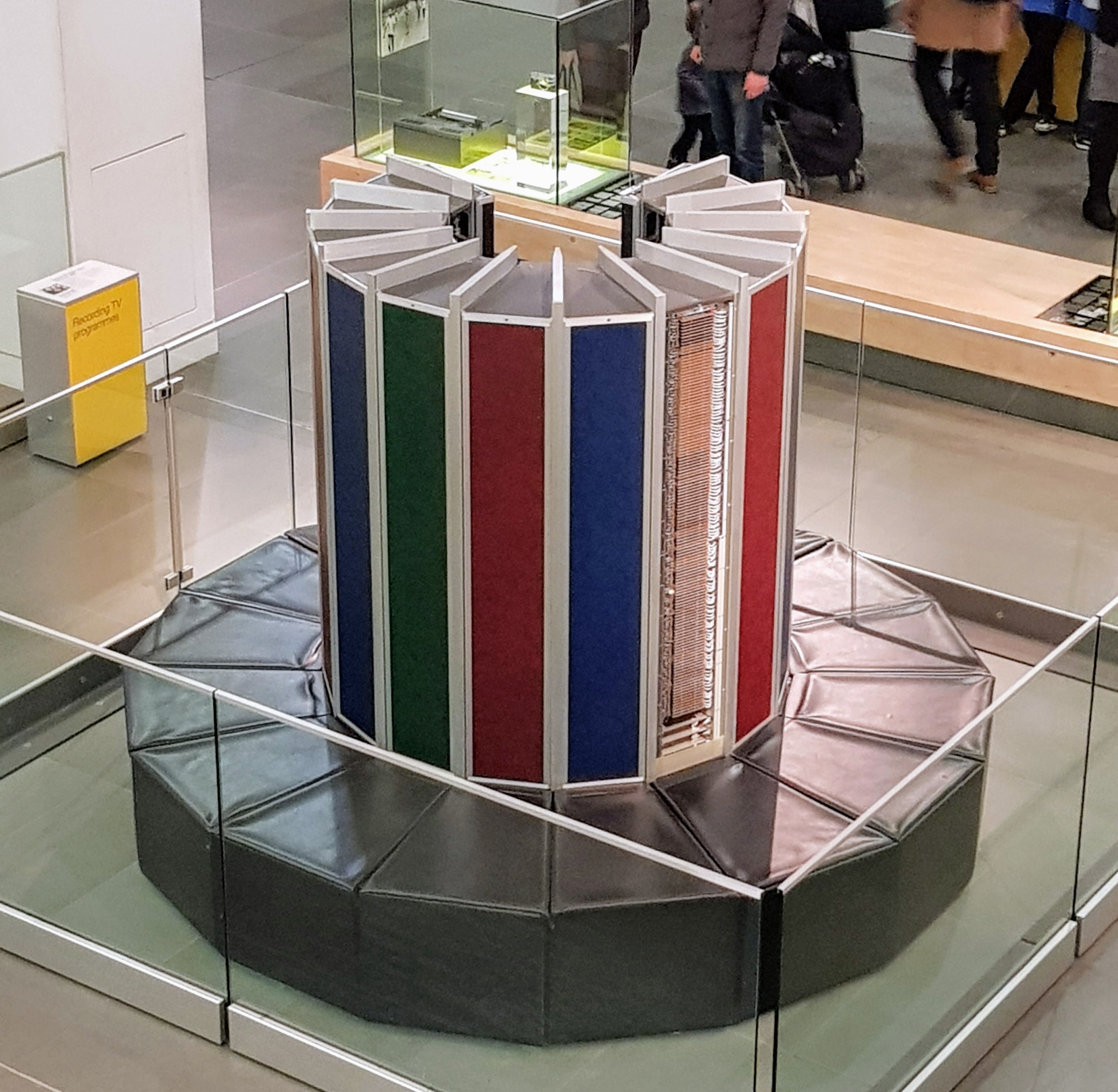
One of the founders of CDC was Seymour Cray, developed some of the fastest mainframes in the world.
Cameron ReillyHOST
During the 1970s, he left and founded Cray Research and pretty much is the father of supercomputers.
Cameron ReillyHOST
So, you know, pretty much all of the AI stuff that's going on today, you can trace back to Seymour Cray one way or another.
Cameron ReillyHOST
I remember my...
Tony KynastonHOST
Jensen Huang of his day.
Cameron ReillyHOST
I'll come down and we'll build a tunnel under your new home when you move in.
Cameron ReillyHOST
See if the elves come to us.

John GustafsonGUEST
So one of the rules of the HPL benchmark based on LINPACK is that it has to use 64-bit representation of floating point.
John GustafsonGUEST
It does not have to be a standard floating point because that benchmark has been around since the days of things like the Cray-1.
John GustafsonGUEST
I've actually written a paper about this that's being refereed right now.
John GustafsonGUEST
But the original benchmark was to solve a 100 by 100 set of equations with 64-bit floats and see how fast you could do that using just standard Gaussian elimination with pivoting.
John GustafsonGUEST
And then the, because they really struggled to build a 48 times 48 integer multiplier for the significance.
John GustafsonGUEST
And in fact, they did a sloppy job of it and left off the least significant bits.
John GustafsonGUEST
As a result, on a Cray-1, you could take A times B and get a different answer from B times A.
John GustafsonGUEST
Interesting.

ToddAUDIENCE
Maybe the servers, because as far as I understood it, there were some special chips that had to be really cool.
ToddAUDIENCE
Like, you know, I remember the Cray supercomputer and all that.
ToddAUDIENCE
Apparently, these quantum computers need to be cool, but things keep getting miniaturized.
ToddAUDIENCE
And she isn't supposed to be making me think about it.

Bill DallyGUEST
... that they have is they have, they have a, they have a pretty neat interconnection network with the, uh, with the training TPUs of the 3D torus.
Bill DallyGUEST
I built a lot of supercomputers, you know, both at MIT and with Cray in, in the '90s, with 3D torus networks-
Dave PattersonMODERATOR
Yeah
Bill DallyGUEST
... and so I'm, I'm very fond of that, and I can see the hand of the co-author of my book, Brian James-

Glenn LockwoodGUEST
Cori, like Gordon, was a super cool, very innovative system.
Glenn LockwoodGUEST
Cori was a Cray XC30, I want to say.
Glenn LockwoodGUEST
But it was the first large-scale deployment of Intel's Knights Landing processor.
Glenn LockwoodGUEST
I'm sure you remember that and how exotic it was.
NicoleHOST
blast from the past there.
Glenn LockwoodGUEST
Yeah, we've talked about this plenty in its heyday in the mid-2010s.
Glenn LockwoodGUEST
But Cori was, it shipped with this burst buffer technology called DataWarp that was co-developed between NERSC, Los Alamos National Lab, and Cray.
Glenn LockwoodGUEST
And DataWarp was designed to solve this problem that Flash was too expensive to put everywhere.

Michael KennedyHOST
What a different time it is for universities, and I think w- they're going through a, a similar upheaval, I guess, is the word.
Michael KennedyHOST
When I was in university, and we're talking, like, '90s, there was a giant Cray supercomputer or maybe a, a, a couple of supercomputers at the heart of the university in some basement, and you could get access to that if you needed mega computing resources.
Michael KennedyHOST
And now it's just, you know, scaled into some ginormous cloud infrastructure, and the limit is really just how much are they gonna give you, not what, what does the university have in its basement or something like that, which is really interesting.
Shaun ChuahGUEST
Well, uh, I mean, there are still some universities that are trying to build their own clusters.

Artificial IntelligenceNARRATOR
The machine that knows everything.
Artificial IntelligenceNARRATOR
T.T.M.O. unveils the Crayon Telecluster.
Artificial IntelligenceNARRATOR
A room-sized oracle that files away every encyclopedia ever printed and answers back in plain English.
Artificial IntelligenceNARRATOR
The hardware, TT, M, O's Cray Intelli cluster is a complete state-of-the-art solution that allows you to discover everything known to man.

David LeitchHOST
And when I was reading about the weather forecasting system, it seems that it's making quite a difference in weather forecasting.
David LeitchHOST
The-- I believe the Bureau used to run its system, or used to run s- has a supercomputer, a Cray supercomputer, which as it turns out is quite energy intensive [chuckles].
David LeitchHOST
And that, uh, the Europeans and Google and everyone have, have tried to apply AI machine learning to weather forecasting.
David LeitchHOST
And since May, uh, our weather forecasts also make use of such a system.